
Hamed Abbaszadegan, MD

July 10, 2026
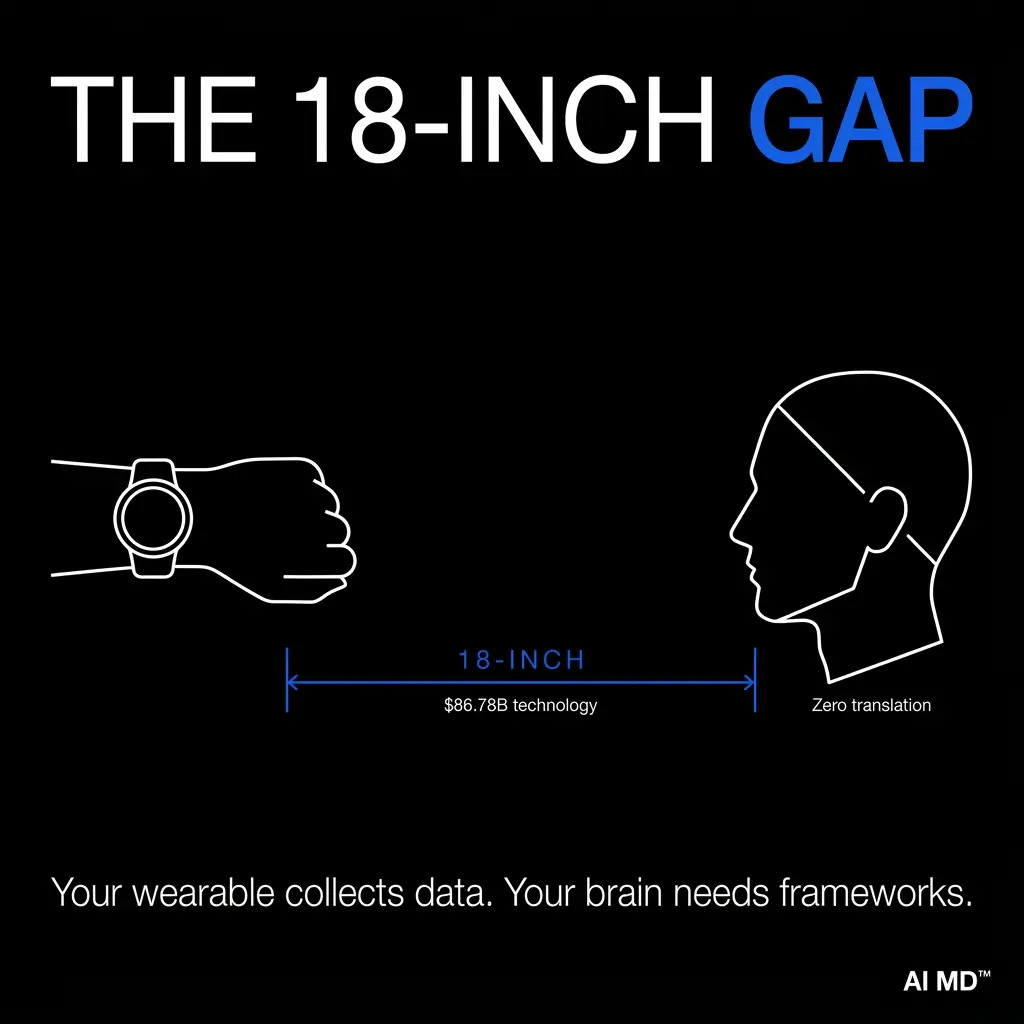
The wearable health technology market hit $86.78 billion in 2025. Projected to reach $231.43 billion by 2034. You're wearing the technology. You're collecting the data. But here's what nobody tells you: the problem isn't your device.
The problem is the 18-inch gap between your wrist and your brain.
Foundation models trained on 2.5 billion hours of wearable data from 162,000 individuals reveal something critical: behavioral metrics predict health outcomes more effectively than raw sensor signals alone.
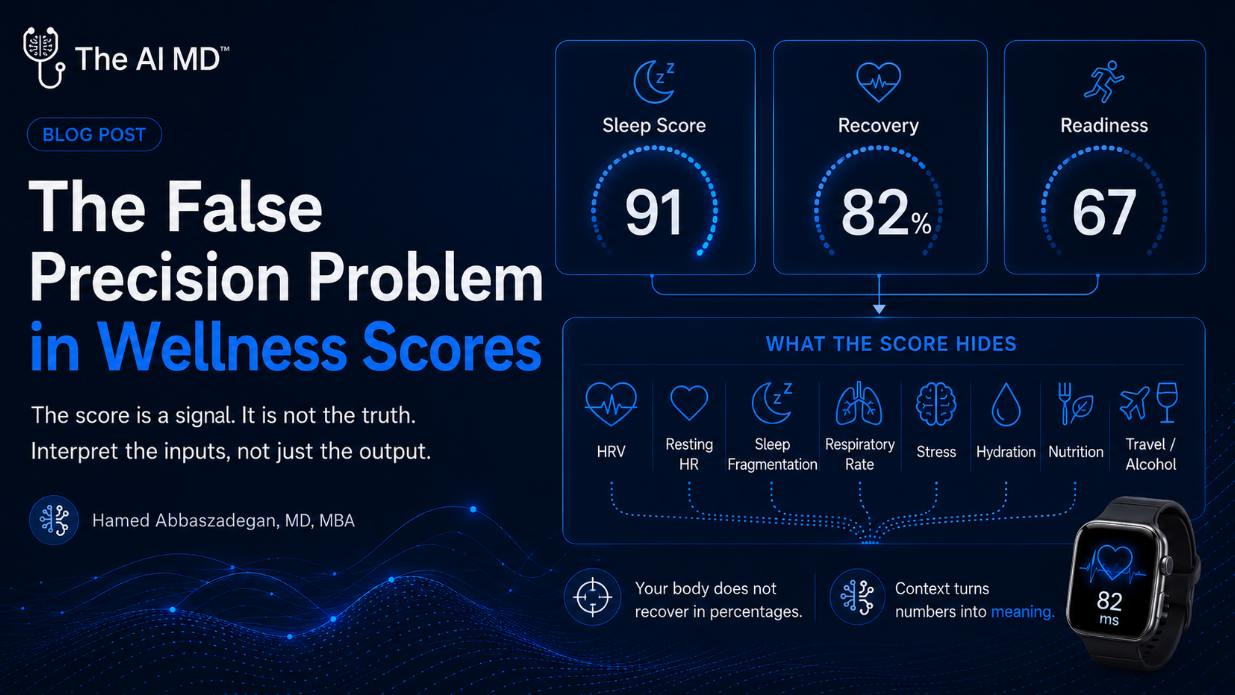
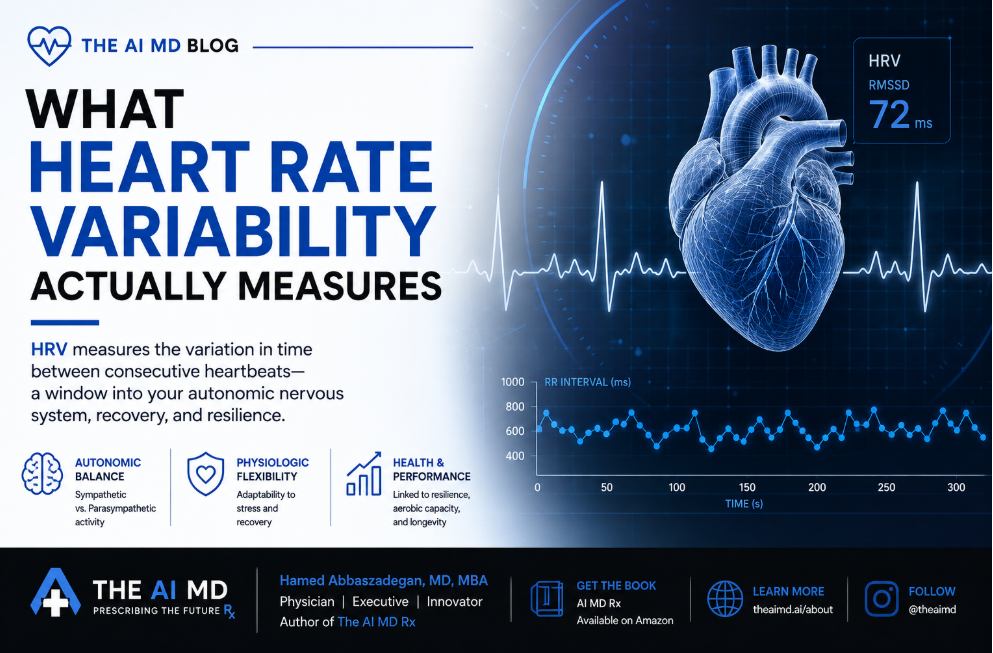
Translation: your heart rate variability number means nothing without context.
Your sleep score is noise without interpretation.
Your recovery metric is useless without a framework to act on it.
I spent over a decade bridging clinical operations, health technology strategy, and data science. Double board-certified in Internal Medicine and Clinical Informatics. Former Program Director of the Clinical Informatics Fellowship at University of Arizona College of Medicine Phoenix. I've watched this pattern repeat: people buy the device, collect the data, stare at the numbers, and then...nothing. The translation layer between data and action doesn't exist for most users.
Wearable devices generate vast streams of health data, but making sense of these measurements requires complex numerical reasoning beyond the reach of conventional interpretation.
You're not failing. The system is.
Your Ring tells you your HRV dropped 15 points overnight. What does that mean?
Your Wearable strap says your recovery is 42%. What do you do with that information?
Your Wearable watch flags an irregular heart rhythm. Should you panic or ignore it?
The data exists. The clinical-grade precision exists. FDA-cleared sleep apnea detection exists in a ring you wear 24/7. But the bridge between measurement and meaningful action is missing.
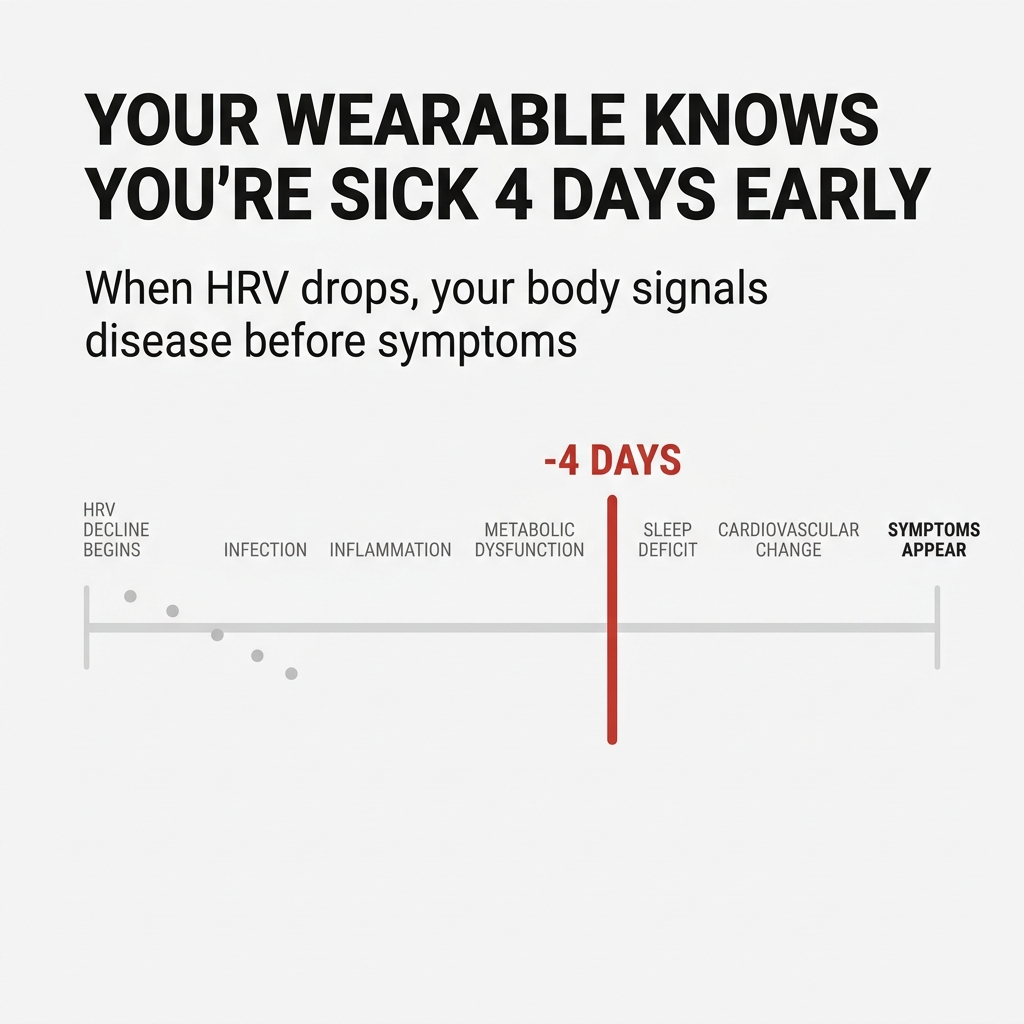
Smart wearables prove powerful in early detection by enabling continuous, non-invasive monitoring that helps identify early warning signs of cardiovascular disease, diabetes, respiratory illnesses, and neurological disorders—well before clinical symptoms appear. This is the paradigm shift happening right now. Not fitness tracking. Not step counting. Not sleep optimization. Reverse-engineering disease states before they manifest.
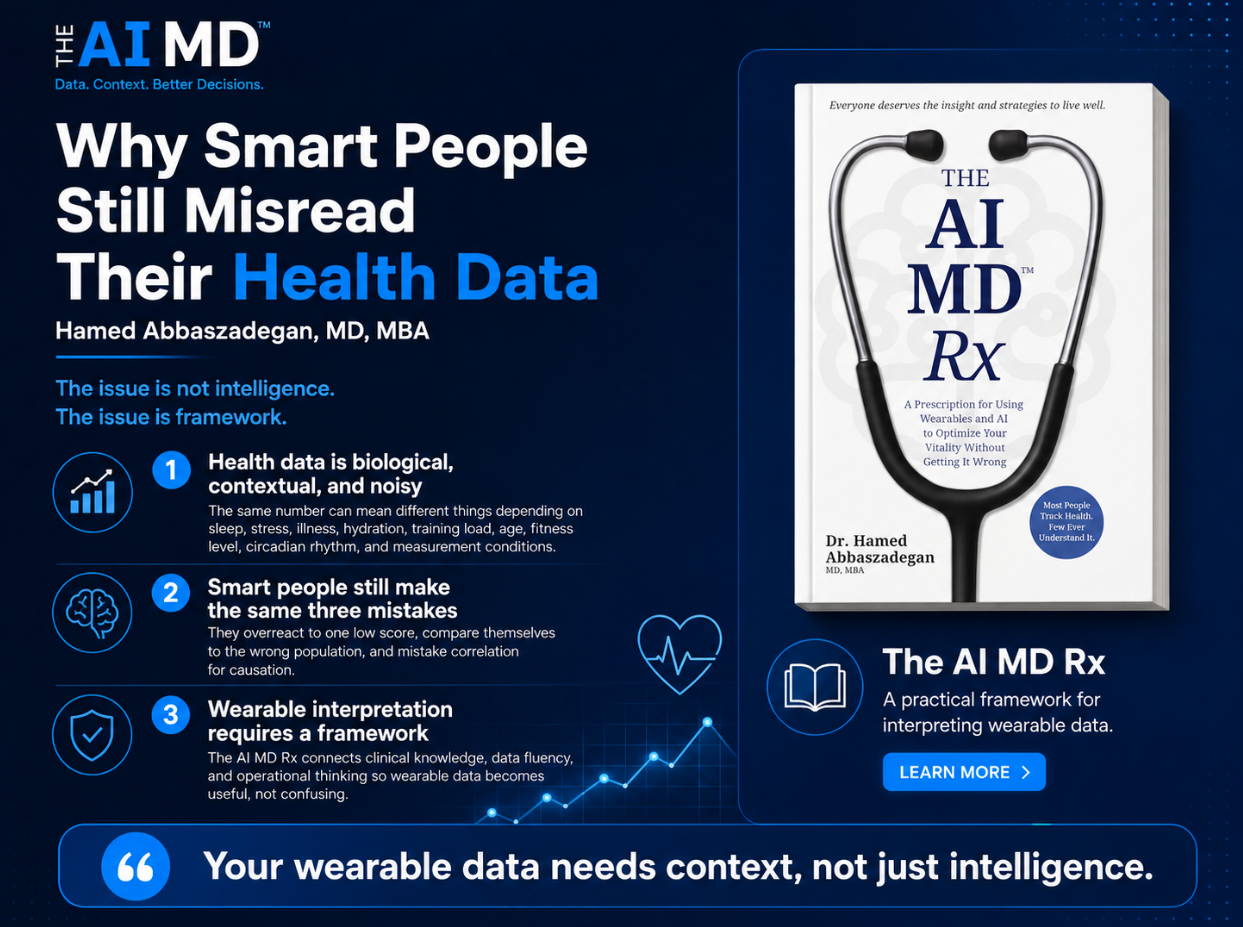
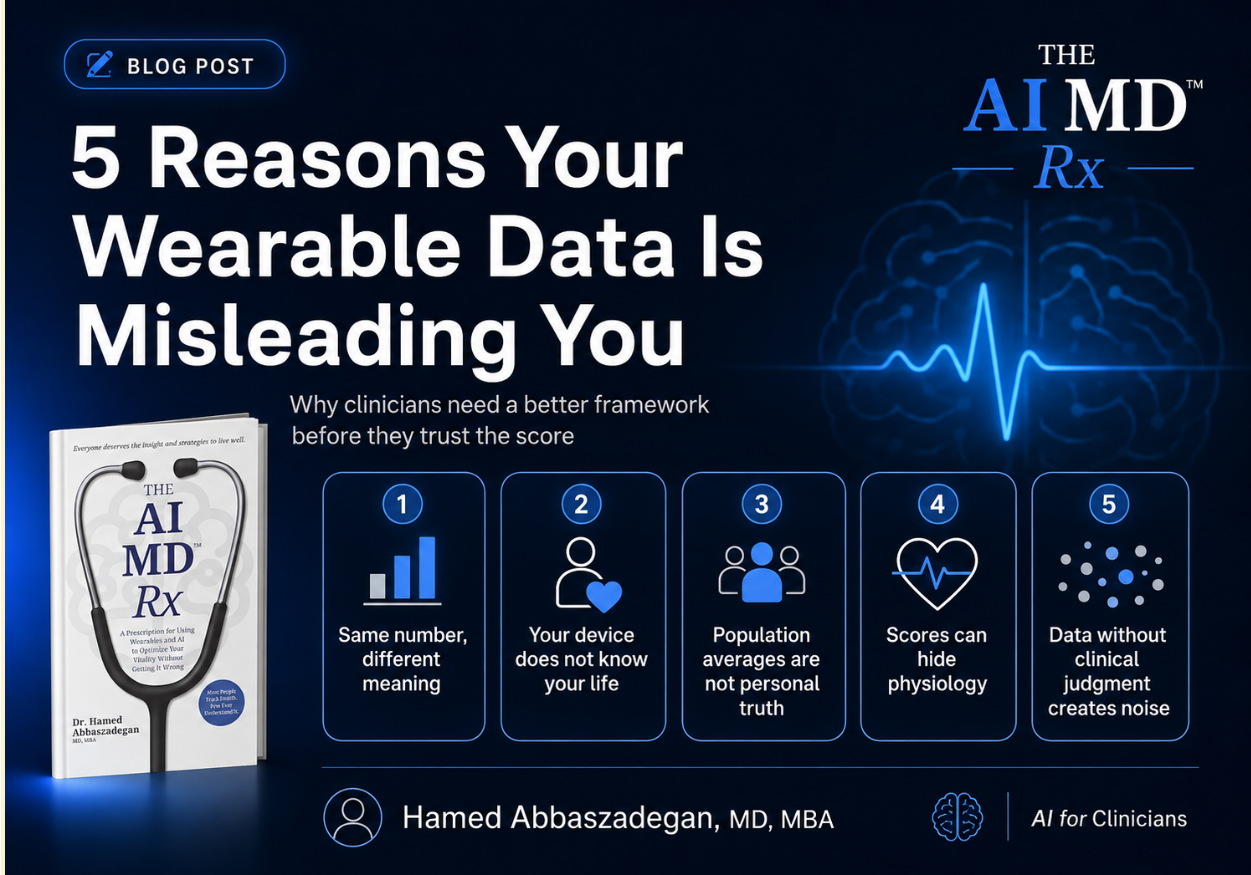
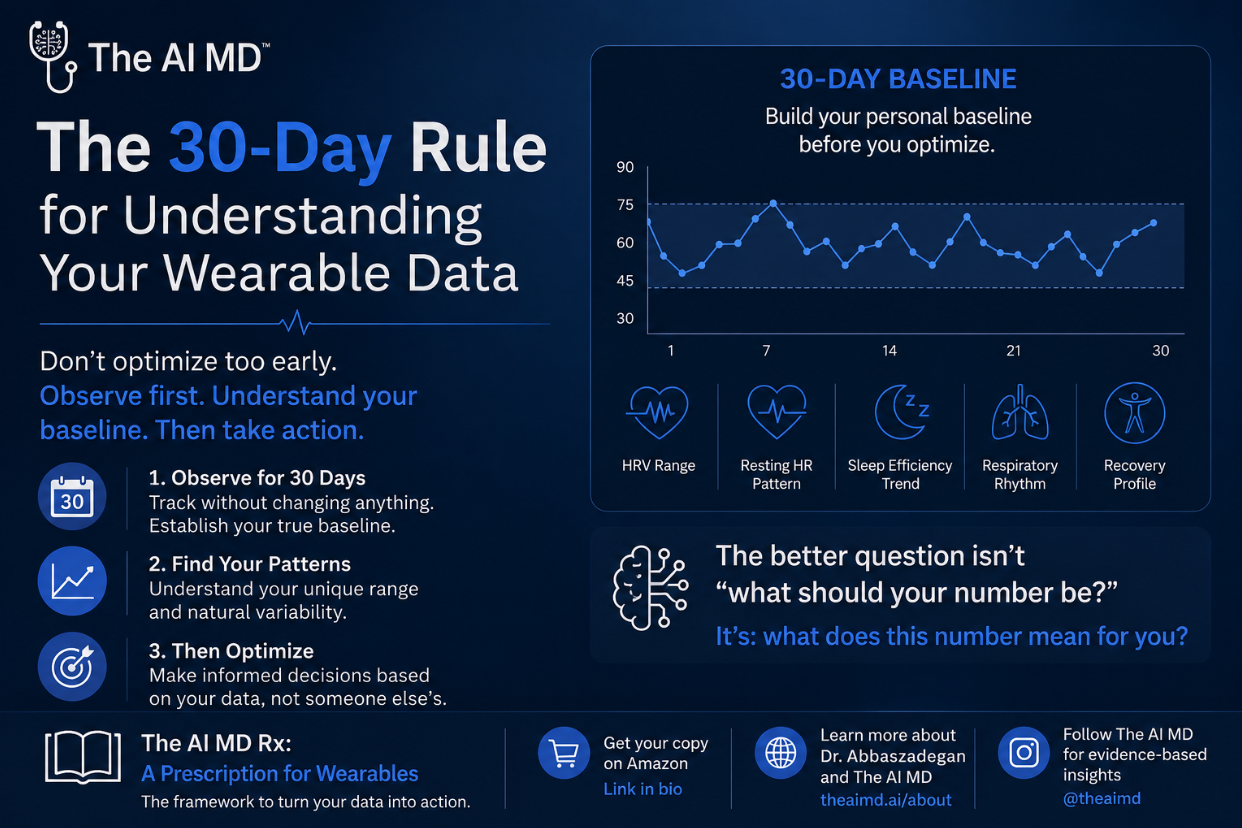
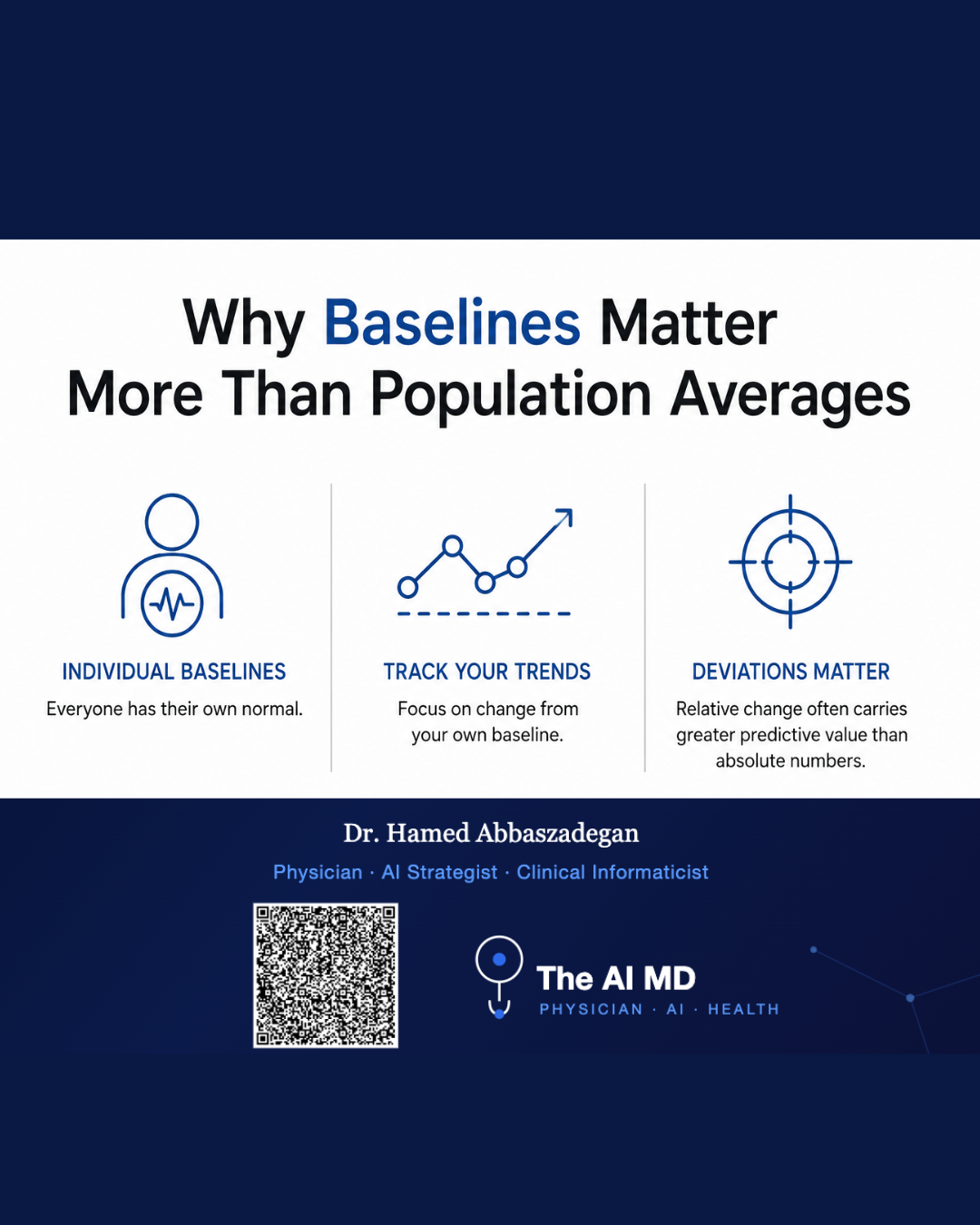
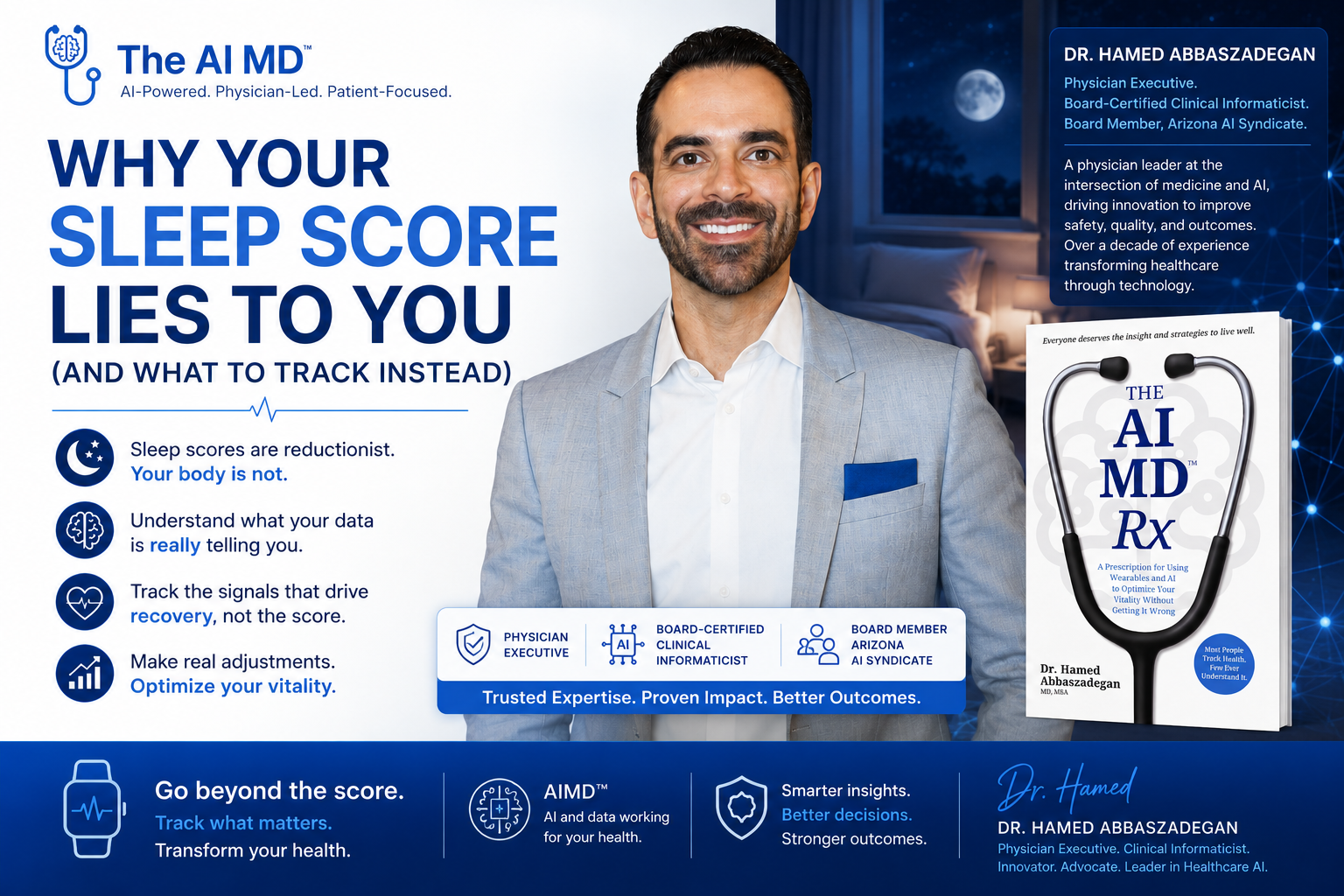
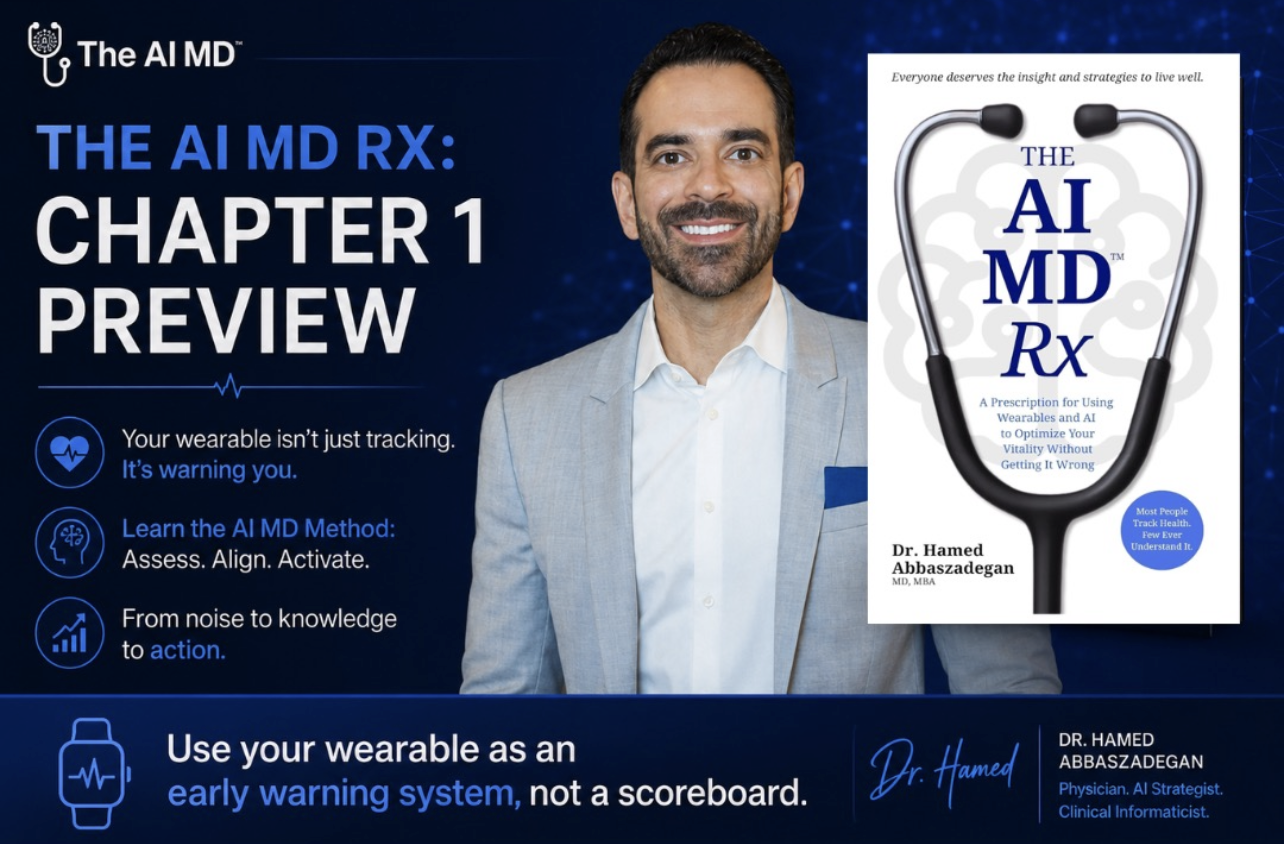
I wrote The AI MD Rx because I watched people drown in data while missing the actual signal. The book delivers what the industry refuses to provide: frameworks that translate real-time wearable data into actionable optimization strategies. Chapter by chapter, you learn how to interpret your metrics through a clinical lens. Not population averages. Not generic wellness advice. Your personal baseline, your relative changes, your behavioral and environmental context.
The focus shifts from "What's my number?" to "What does this pattern mean for my future health state?"
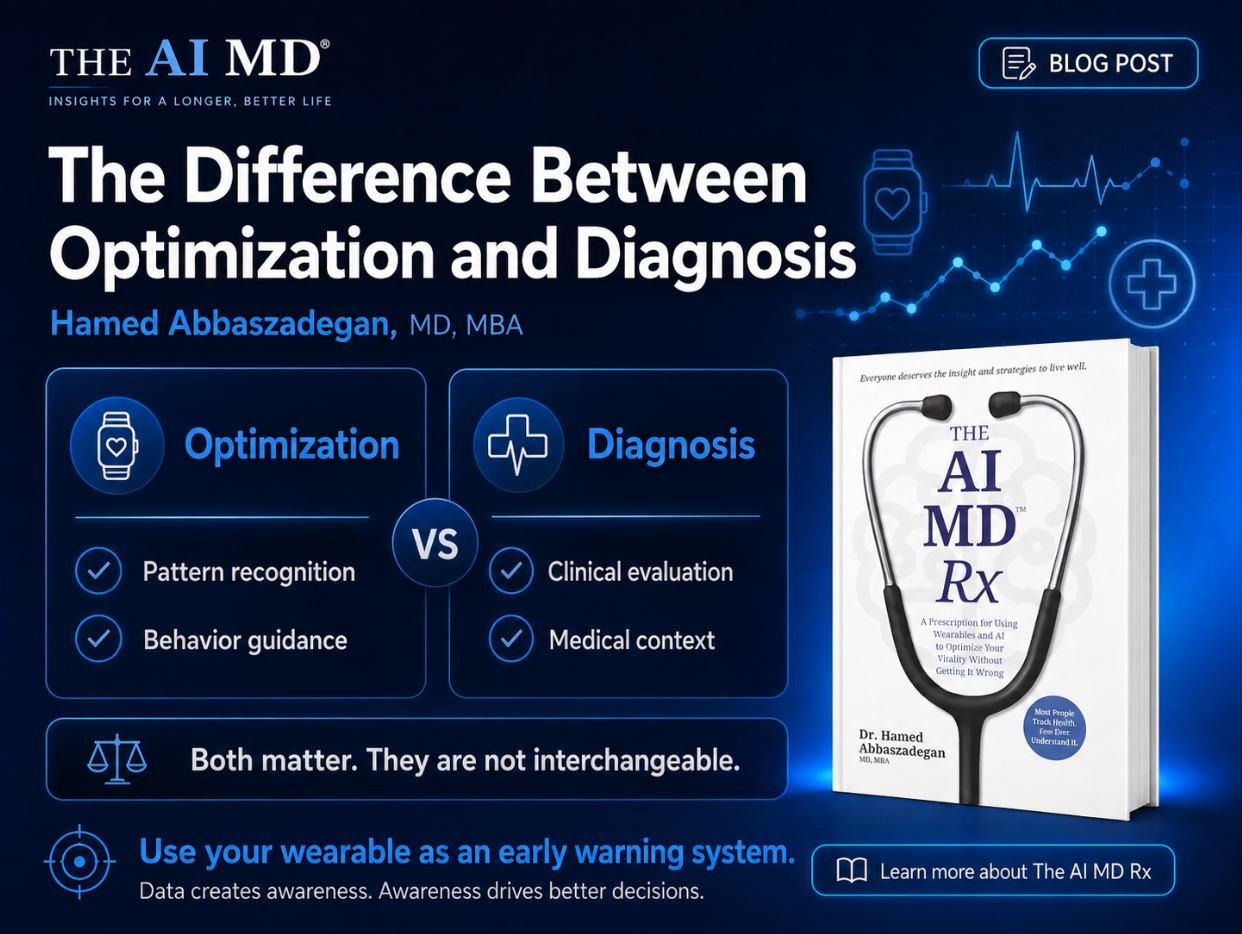
Over 50% of wearables now leverage AI for more precise health tracking and predictive health insights, particularly in chronic disease management. The technology caught up. Your device can detect atrial fibrillation, measure blood oxygen saturation, track respiratory rate variability. But accuracy without interpretation is just expensive noise.
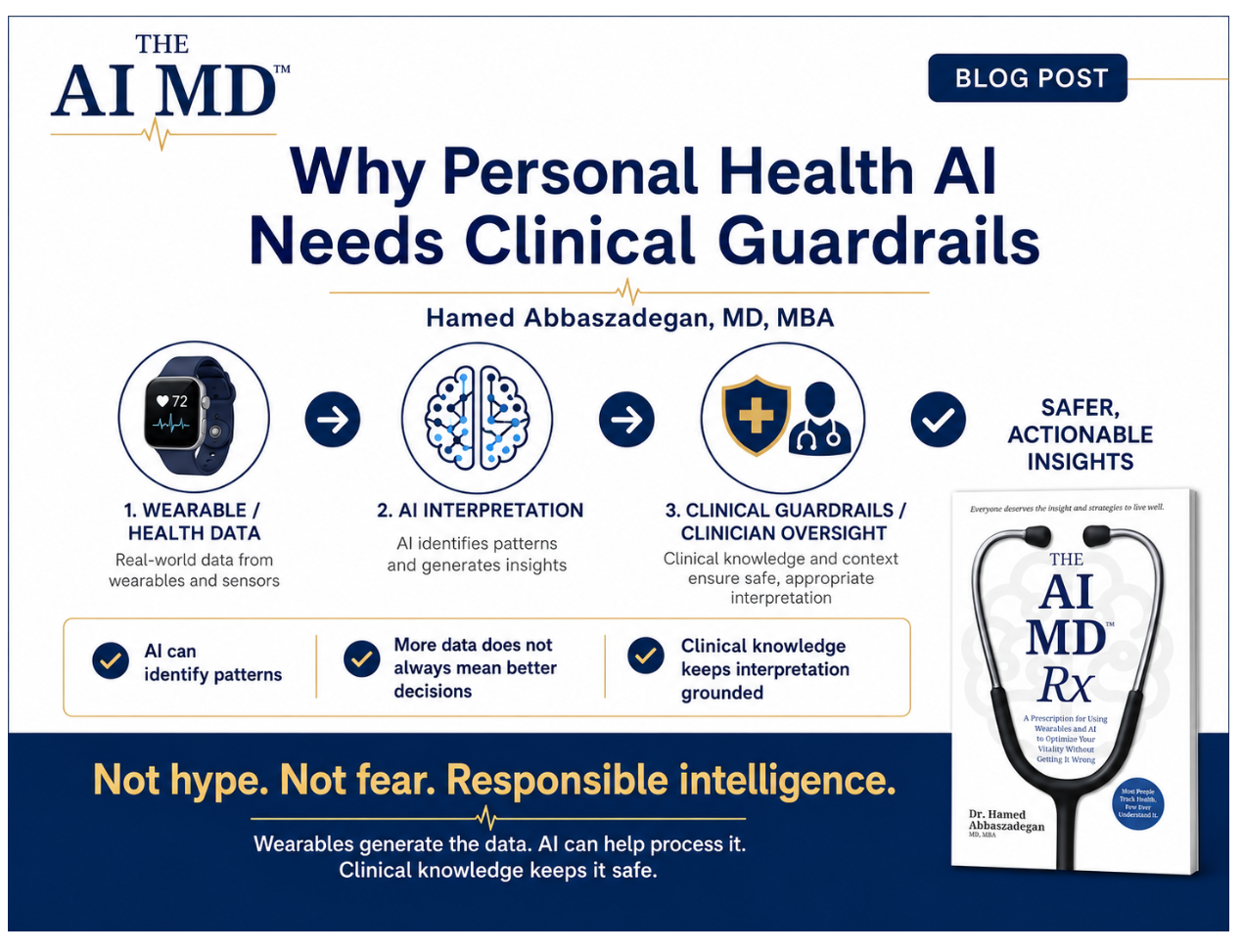
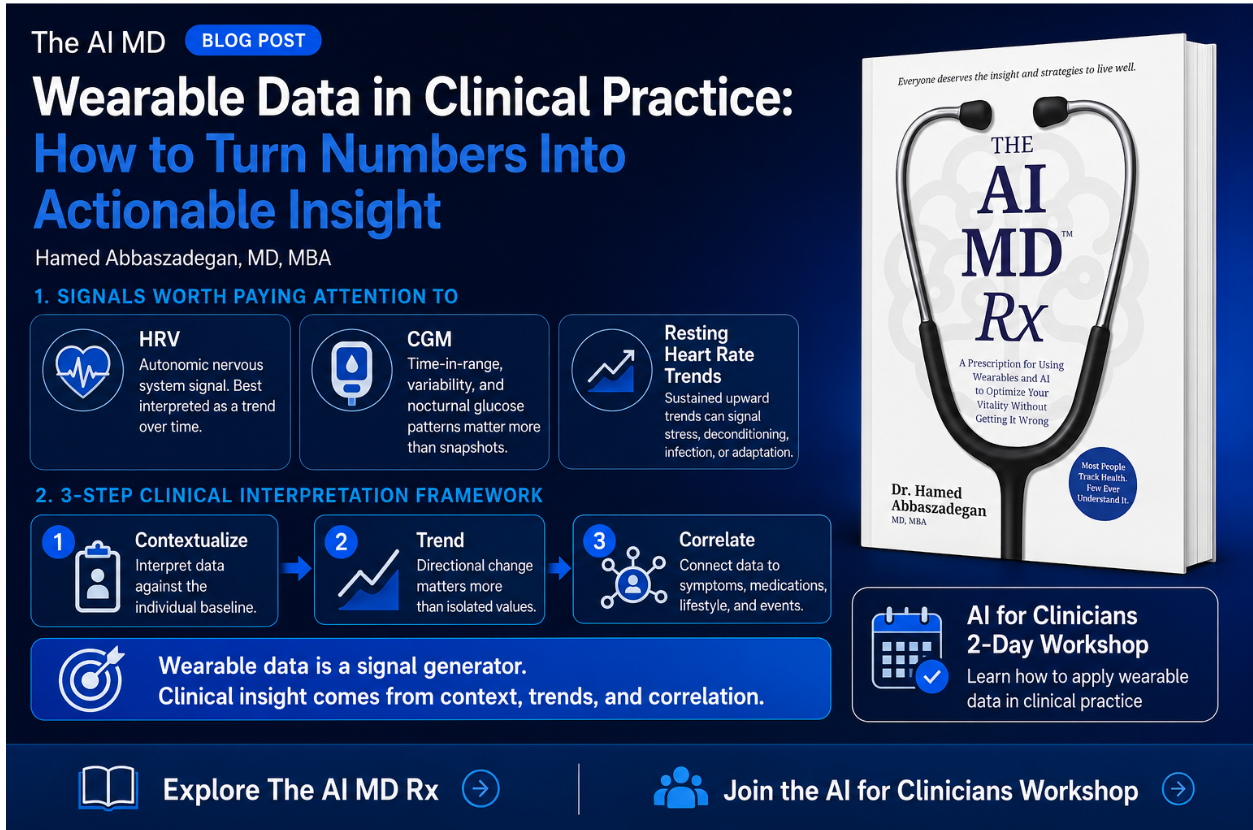
You need three layers to make wearable data meaningful:
Most physicians don't have the data science background. Most data scientists don't have clinical training. Most wellness coaches don't have either.
I operate at the intersection of all three. Not three separate skill sets. One integrated capability.
The FDA issued updated guidance in January 2026 reducing oversight of low-risk AI-enabled wearables and wellness devices. Regulatory tailwinds are here. The market is expanding. AI-driven health prediction is accelerating. But here's what 87% of consumers already know: they're willing to pay more for brands they trust. Accuracy, battery life, and data privacy shape trust more than any other factors. When metrics feel inconsistent, users lose confidence. They stop engaging with the device. The data stream dies.
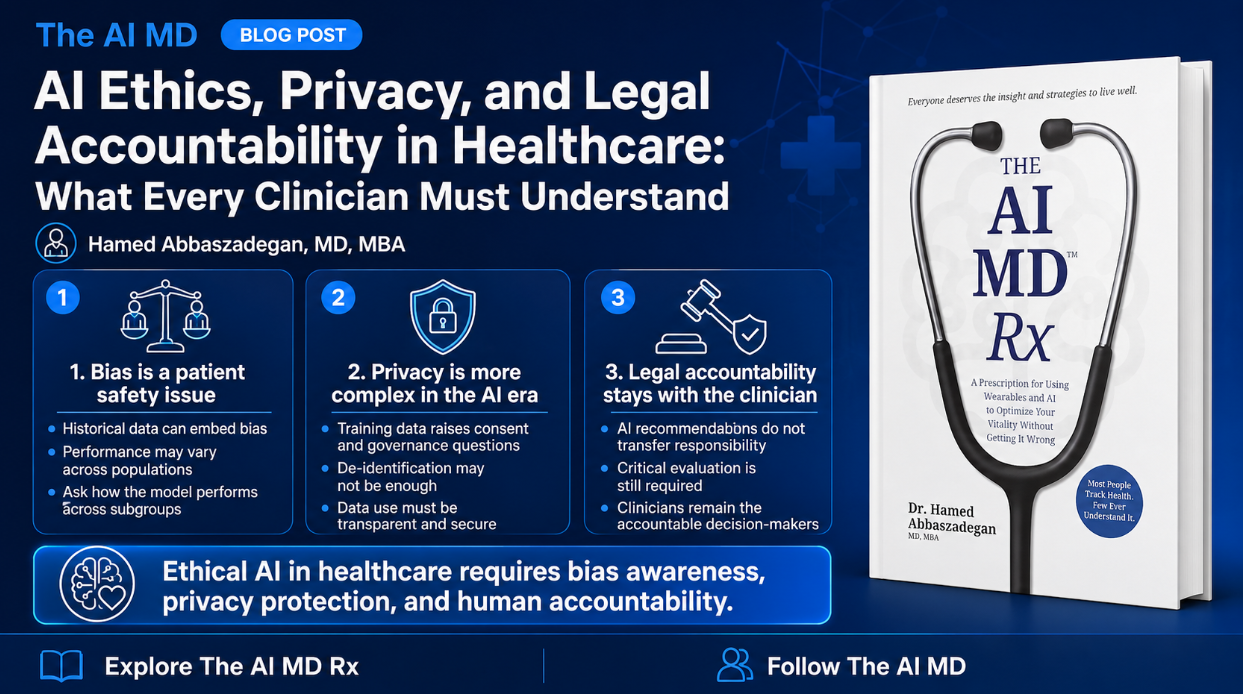
I developed AI governance standards for healthcare operations through Healthcare Standards Institute because speed without safety isn't progress. Standards enable scale.
This isn't theoretical. Governance builds the foundation for sustainable innovation. It's why clinical-grade precision meets consumer accessibility in my work.
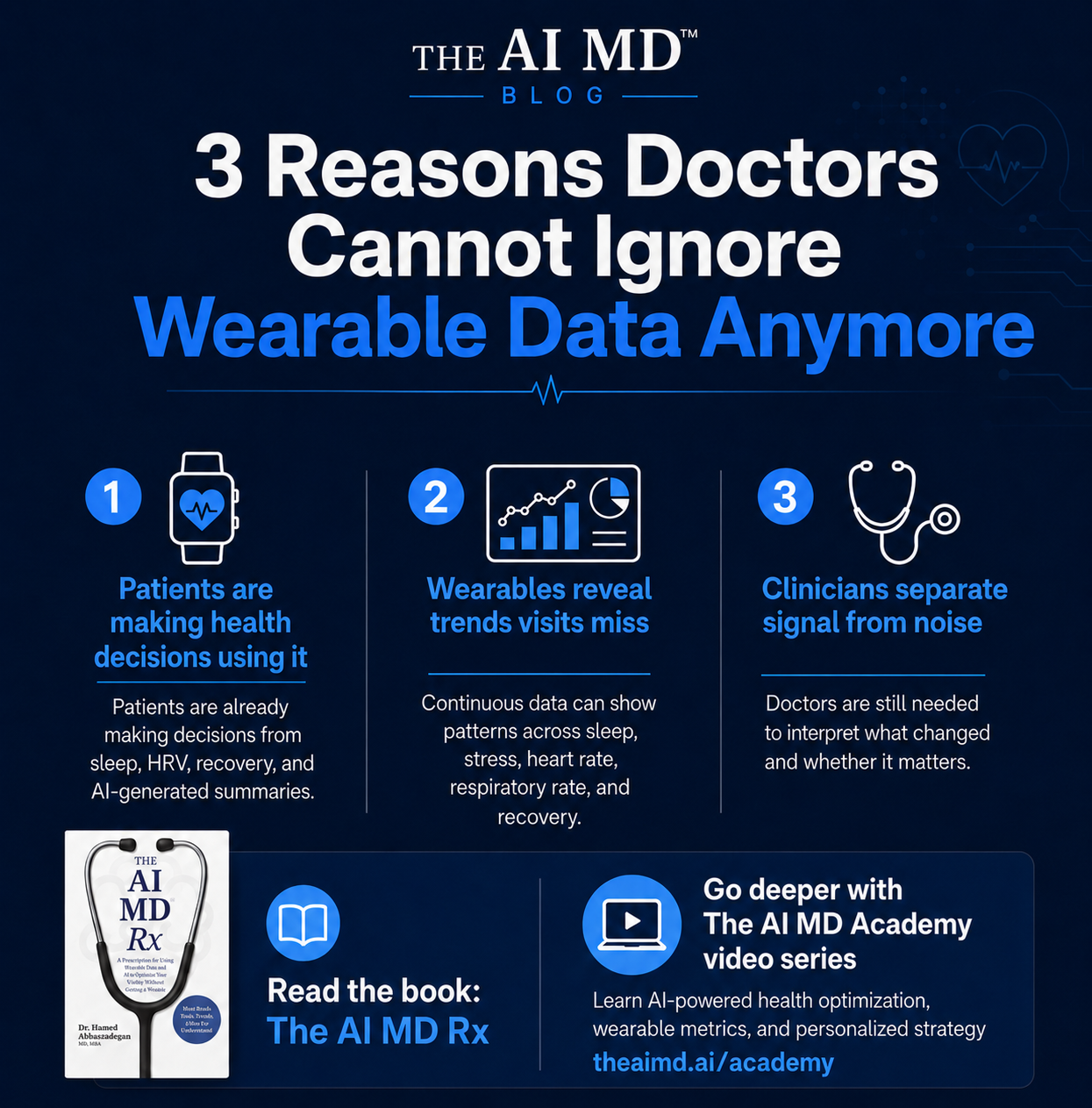
Wearables are reshaping healthcare delivery by shifting the paradigm from reactive treatment to proactive prevention, empowering individuals to take control of their health while supporting clinicians with timely, data-driven decision-making. You're not waiting for your annual physical anymore. You're not hoping symptoms appear so you can finally get diagnosed. You're monitoring continuously. You're detecting early. You're intervening before pathology forms. But only if you know how to read the signal. Consumer expectations evolved from basic fitness monitoring to robust personalized health intelligence. You demand meaningful insights that translate into actionable takeaways. The industry is catching up slowly. The devices improved. The AI models improved. The regulatory environment improved.
What's still missing? The expert who can translate your specific data into your specific action plan.
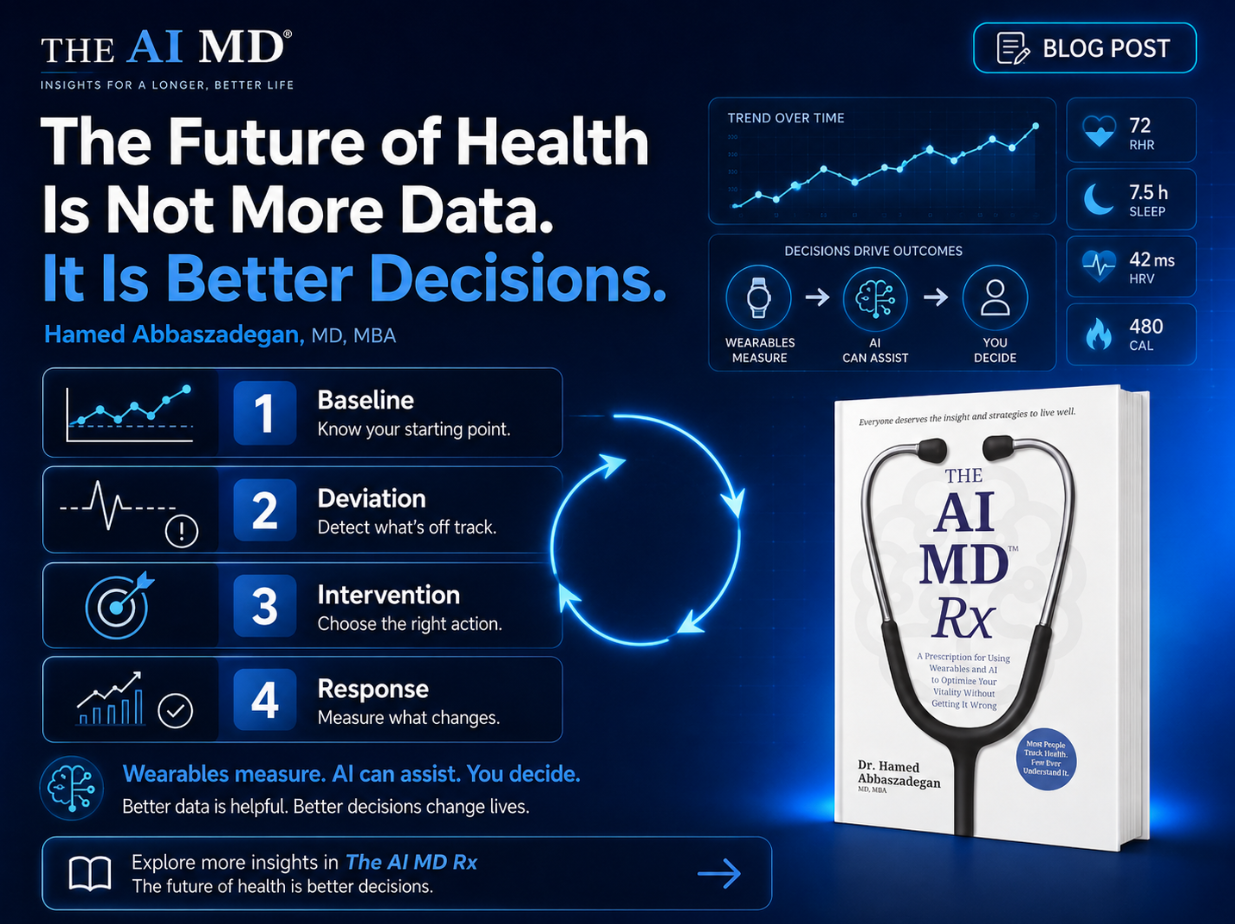
You're collecting data every single day. Your wearable generates thousands of data points while you sleep, work, exercise, and recover. That data represents the most detailed continuous health monitoring ever available to individuals outside of hospital intensive care units. The question isn't whether the technology works. The question is whether you have the framework to use it. The AI MD Rx delivers that framework. Not theory. Not academic research. Not wellness platitudes. Structured interpretation protocols developed from a decade of clinical informatics implementation, data science application, and operational deployment at scale. You learn how to establish your personal baseline. How to recognize meaningful deviation from that baseline. How to distinguish signal from noise. How to design interventions before disease states develop.
The book is live. The frameworks are ready. Your wearable is already collecting the data.
The only missing piece is the translation layer between what you're measuring and what you should do about it.
I'm not selling you another device. I'm not promising a magic algorithm. I'm not offering generic wellness coaching. I'm offering the clinical expertise, data science fluency, and operational knowledge required to make your existing wearable data meaningful. The biosimulator I developed bridges wearable data streams and simulated future health states. Not theoretical modeling. Actionable prediction. You reverse-engineer disease before it forms. You optimize based on real-time physiological feedback. You become your own data scientist, coached by someone who understands both the clinical implications and the computational possibilities.
This is the future of preventative medicine. Not waiting for symptoms. Not reacting to diagnosis. Predicting outcomes and intervening early. The technology exists. The data exists. The frameworks exist. What you do next determines whether your wearable becomes the most powerful health tool you own or just another expensive step counter.
The problem isn't your device. The problem is the 18-inch gap between your wrist and your brain.
Get The AI MD Rx on Amazon and start translating your data into action.
Your wearable is already doing its job. Now it's time to do yours.
📖 Get your copy on Amazon:
https://www.amazon.com/AI-MD-Rx-Prescription-Wearables/dp/B0H38BTM83
🌐 Learn more about Dr. Abbaszadegan and The AI MD:
https://theaimd.ai/about
📲 Follow The AI MD for evidence-based insights on AI, digital health, wearable technology, longevity, and the future of medicine:https://www.instagram.com/theaimd/
📖 Get your copy on Amazon:
https://www.amazon.com/AI-MD-Rx-Prescription-Wearables/dp/B0H38BTM83
🌐 Learn more about Dr. Abbaszadegan and The AI MD:
https://theaimd.ai/about
📲 Follow The AI MD for evidence-based insights on AI, digital health, wearable technology, longevity, and the future of medicine:https://www.instagram.com/theaimd/




%20(1880%20x%20940%20px)%20(3%20x%204%20in)%20(1).png)


.png)


Stay Connected
If you’d like these insights delivered straight to your inbox, you can sign up below. You’ll receive evidence-based perspectives on AI in healthcare, practical implementation guidance, and updates on speaking engagements and media appearances.