
Hamed Abbaszadegan, MD, MBA

August 4, 2026

The healthcare AI market is accelerating fast. New tools launch every month. Vendor presentations are polished. Case studies are compelling. Performance statistics are prominently featured. And most healthcare organizations are making adoption decisions without a structured framework for evaluating whether the AI they are buying actually does what it claims to do.
That gap between marketing and reality is where patient safety is at risk. It is also where budgets get wasted, clinician trust erodes, and promising technology fails to deliver measurable outcomes.
Here is what a rigorous, evidence-based evaluation framework looks like and why every clinician and healthcare leader needs one.
Most AI tool evaluations in healthcare are somewhat suboptimal because they ask the wrong questions. They focus on features and not on performance or patient populations.
Vendor-provided performance statistics are almost always derived from internal validation studies using the vendor's own training data. You need to ensure performance is disclosed across different systems or EHRs. The source of data for training also must be understood.
The clinician evaluator who understands this asks different questions from the start.
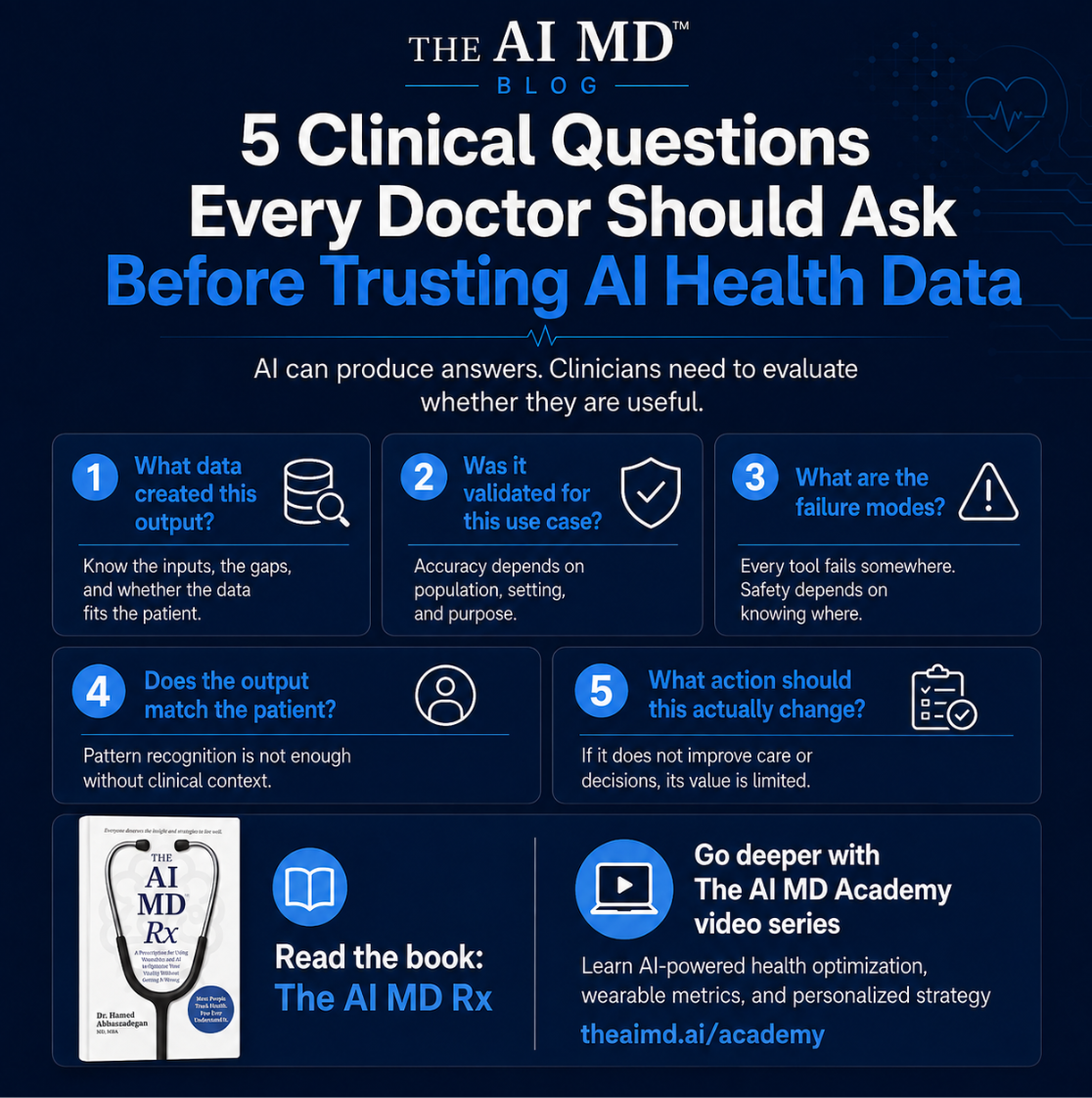
1. What data was it trained on? Training data composition determines model performance characteristics. A diagnostic AI trained predominantly on data from academic medical centers may underperform in community hospital settings. Ask for demographic breakdown, geographic distribution, and temporal range of training data. If the vendor cannot answer this question clearly, that is itself a signal.
2. How was it validated? Internal validation on held-out training data is the minimum bar. External validation on independent datasets from different health systems is the meaningful bar. Prospective clinical validation testing in real clinical environments is the gold standard. Ask which type of validation the vendor has conducted.
3. What are the failure modes? Every AI system fails in predictable patterns. The question is whether those patterns have been characterized and disclosed. Asking a vendor to describe the conditions under which their model performs poorly is powerful. Vendors who have done rigorous safety work can answer this question. Vendors who have not, cannot.
4. How does it handle distributional shifts? Clinical populations change. Patient demographics evolve. Disease prevalence shifts. An AI model trained on pre-pandemic data may perform differently in a post-pandemic clinical environment. Ask how the vendor monitors for and addresses performance drift over time.
5. What is the regulatory status? AI tools that function as medical devices require FDA clearance or approval under the Software as a Medical Device (SaMD) framework. Many AI tools in healthcare operate in regulatory gray zones. Understanding whether a tool has formal regulatory status and what claims that status does and does not cover is essential for risk management.
To recap, here are the 3 things worth remembering: AI tool performance in the real clinical environments can give you validation statistics. The five evaluation questions listed above form a minimum due diligence framework. Healthcare organizations that build structured AI evaluation capability protects its patients, its budget, and its clinician trust simultaneously.
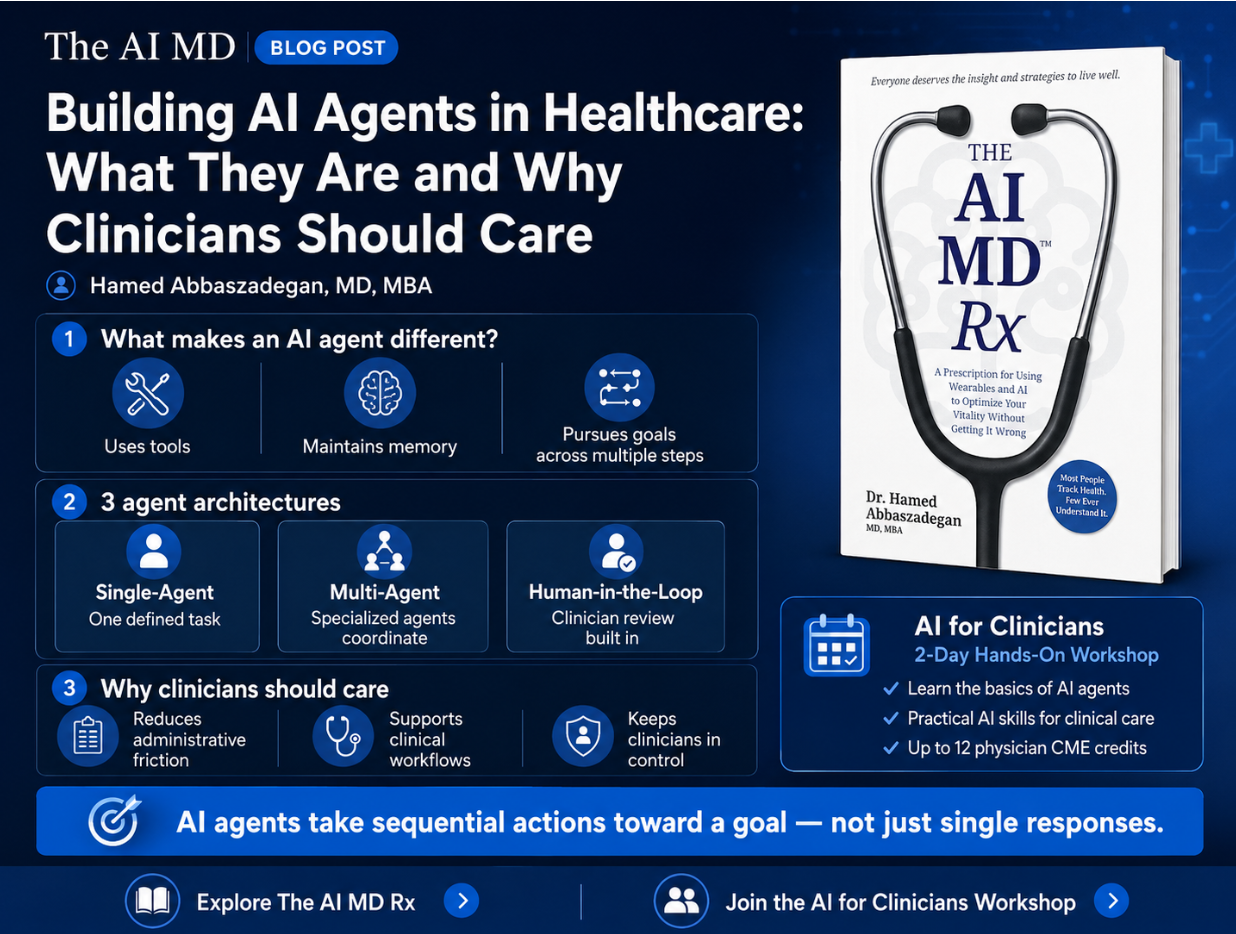
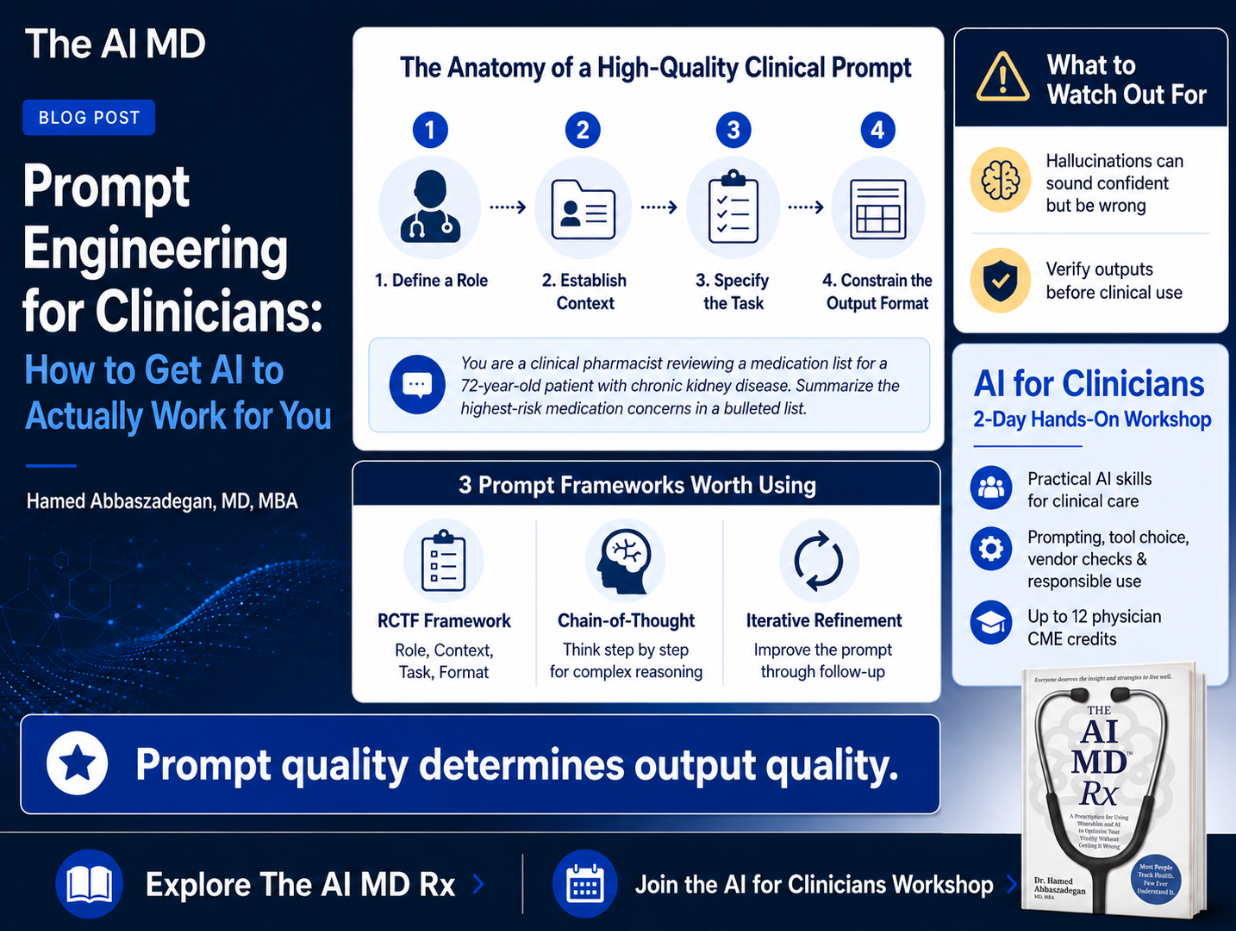
Learn more on AI in clinical environments at the next in-person workshop:
https://www.eventbrite.com/e/ai-for-clinicians-tickets-1988199096017?aff=oddtdtcreator



%20(1880%20x%20940%20px)%20(3%20x%204%20in)%20(1).png)


.png)


Stay Connected
If you’d like these insights delivered straight to your inbox, you can sign up below. You’ll receive evidence-based perspectives on AI in healthcare, practical implementation guidance, and updates on speaking engagements and media appearances.