3 Reasons Doctors Cannot Ignore Wearable Data Anymore

3 Reasons Doctors Cannot Ignore Wearable Data Anymore

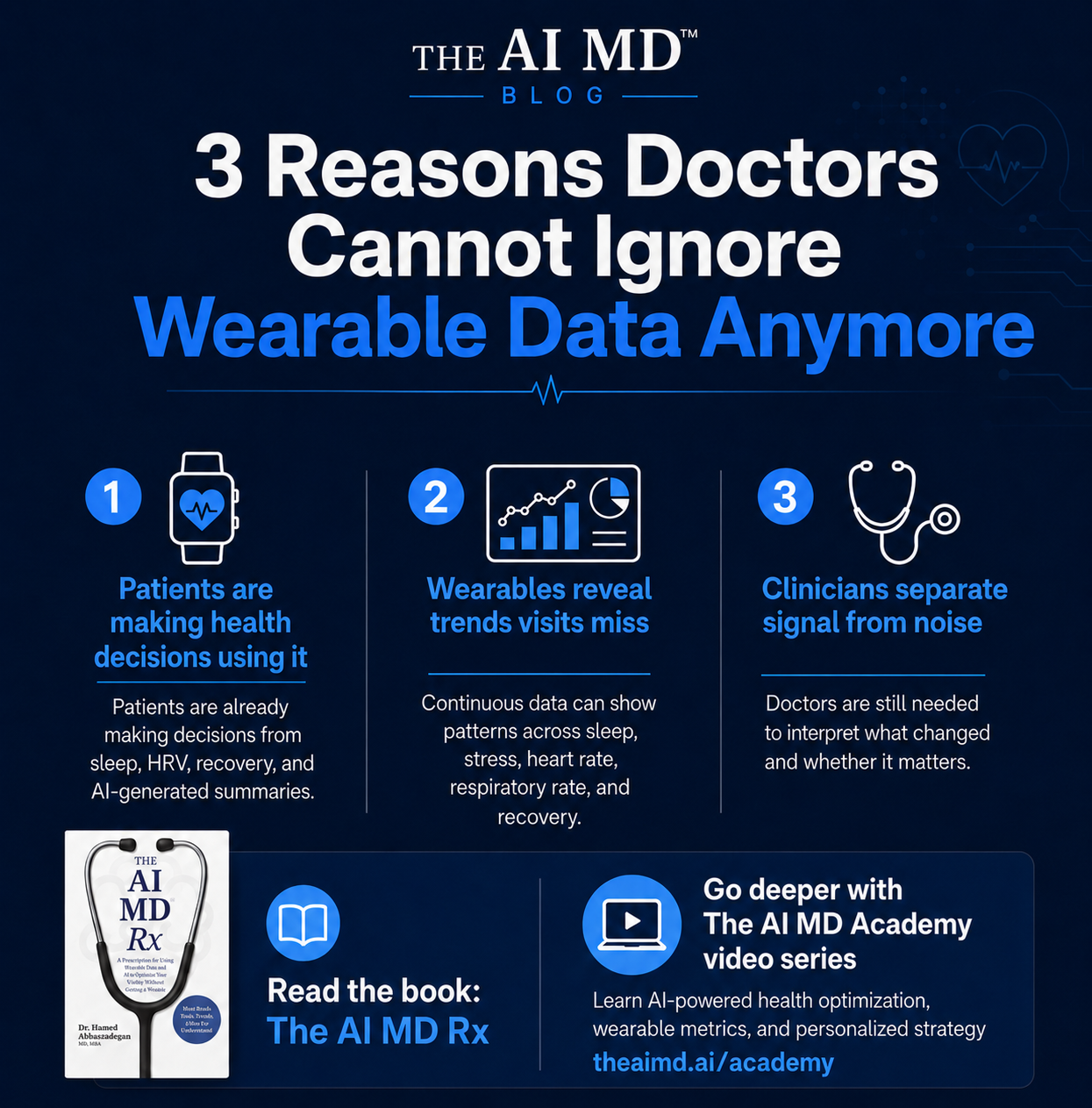
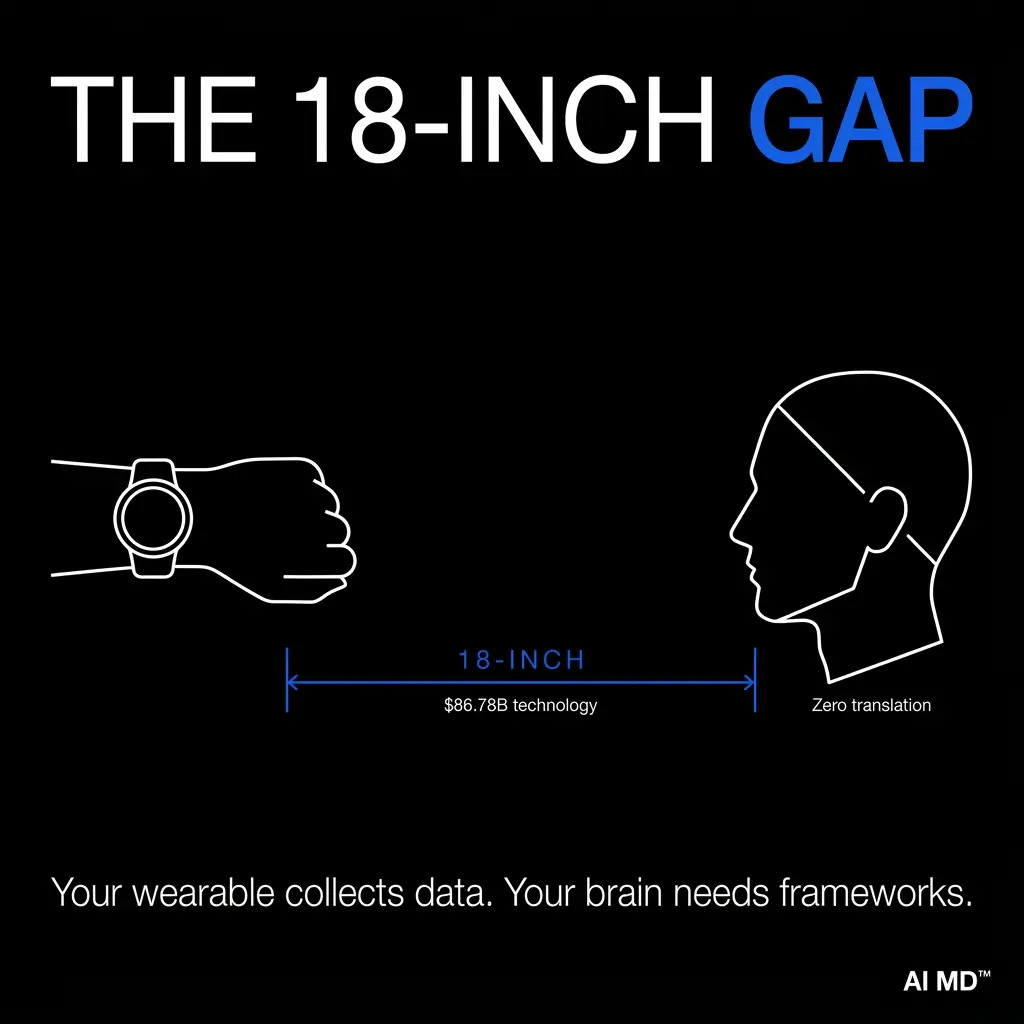
Patients are already tracking their physiology. The question is whether clinicians are leveraging that data into their clinical decision making.

Here are three reasons doctors cannot ignore wearable data anymore:

1. Patients are already using it to make health decisions

Patients are not waiting for medicine to decide whether wearable data matters. They are already using it. They are changing workouts, adjusting sleep, worrying about HRV, reacting to recovery scores, and asking AI tools what their numbers mean.

Connecting the dots for people as to what applies to them and what is false interpretation due to their specific clinical syndrome is what we have been doing since the dawn of time. The current state of AI is an opportunity to catapult guidance for people.

2. Wearables can reveal trends traditional visits miss

Wearables create continuous physiological context. They can show patterns across sleep, stress, recovery, respiratory rate, heart rate, and activity that may never appear during a brief clinical encounter. 

The question is not whether every wearable metric is diagnostic. The question is whether the trend adds useful context. I personally take special note on sleep given wearables are grossly inaccurate. The way to appease the inaccuracy is to add a consumer headband that can measure brain wave activity and give more accurate time within sleep stages.

3. The clinician is still needed to separate signal from noise

A wearable can tell a patient that something changed. It cannot always explain whether that change matters or if it is expected given the clinical circumstance. There is a reason why the word benign is used = not harmful. 

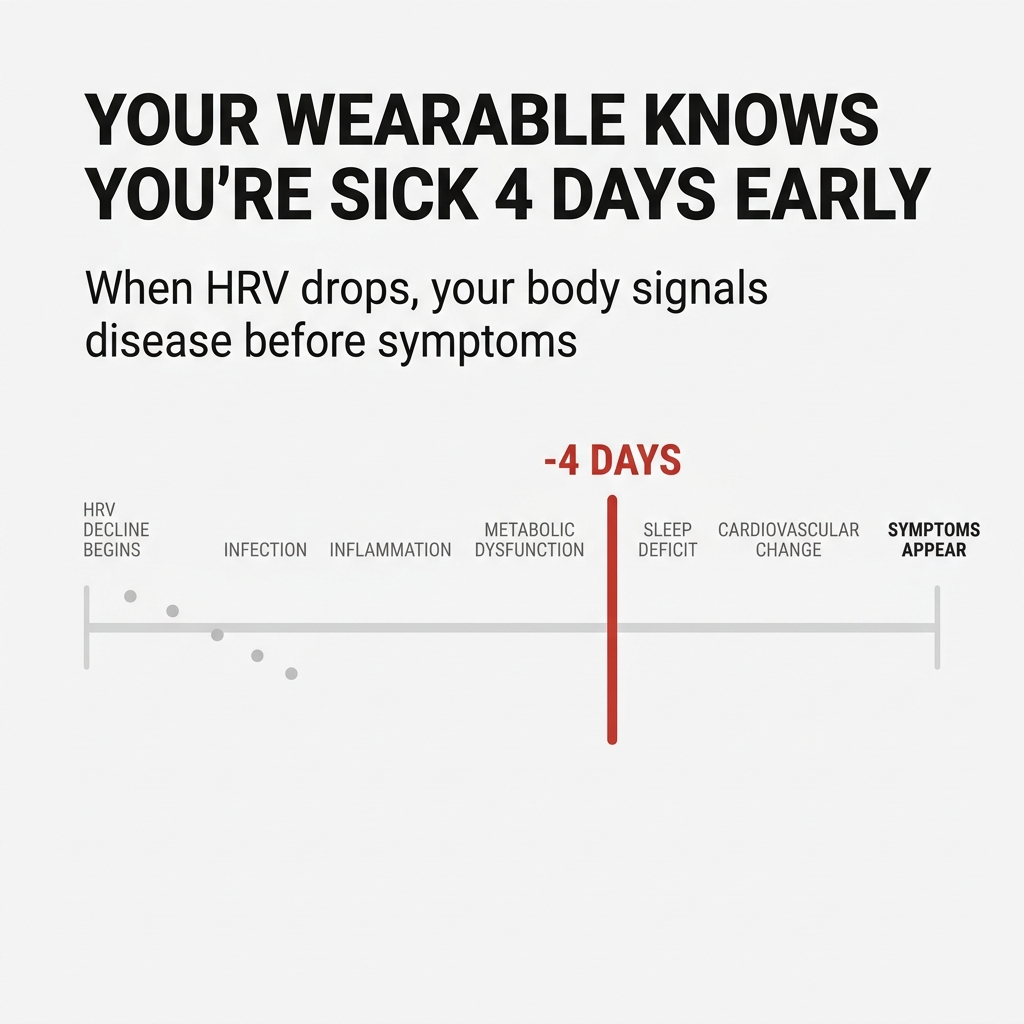
A rising resting heart rate may reflect illness, overtraining, stress, poor sleep, medication effects, or travel. A low HRV reading may be noise for one person and a meaningful trend for another.

This is where doctors are essential to interpret the signal.

Ready to move beyond the score?

Your wearable is collecting data every day, but the real value comes from knowing how to interpret it. Sleep, HRV, resting heart rate, recovery, respiratory rate, and other health metrics are only useful when you understand your personal baseline, recognize meaningful trends, and know what actions make sense.

The AI MD™ helps you turn health data into clearer decisions.

📖 Start with the book:
Get The AI MD Rx: A Prescription for Using Wearables and AI to Optimize Your Vitality Without Getting It Wrong and learn the framework for making sense of your wearable data.
https://www.amazon.com/AI-MD-Rx-Prescription-Wearables/dp/B0H38BTM83

🎥 Go deeper with the Academy:
Enroll in The AI MD™ Academy video series to learn how to apply AI-powered health optimization, interpret key wearable metrics, and build a personalized strategy for sleep, recovery, energy, performance, and long-term vitality.
https://theaimd.ai/academy

🌐 Explore more articles and learn more:
Read more insights on AI, wearables, digital health, longevity, and the future of medicine.
https://theaimd.ai

Your data is only the beginning.
The framework is what turns it into action.

#AIForClinicians #TheAIMD #WearableTechnology #HealthcareAI #ClinicalInformatics #DigitalHealth #HealthData #ResponsibleAI #MedicalEducation #CME

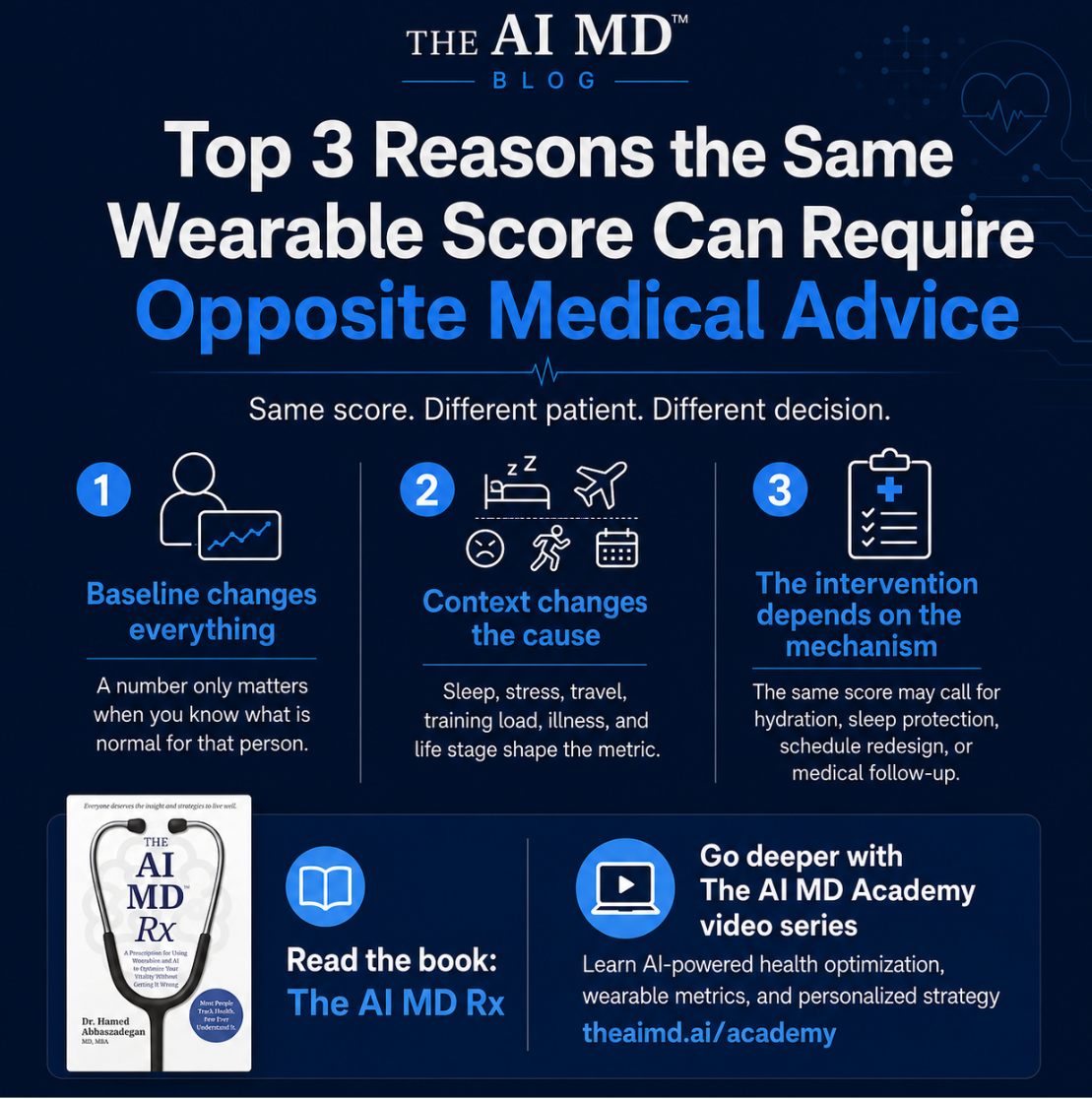
Top 3 Reasons the Same Wearable Score Can Require Opposite Medical Advice

Read More

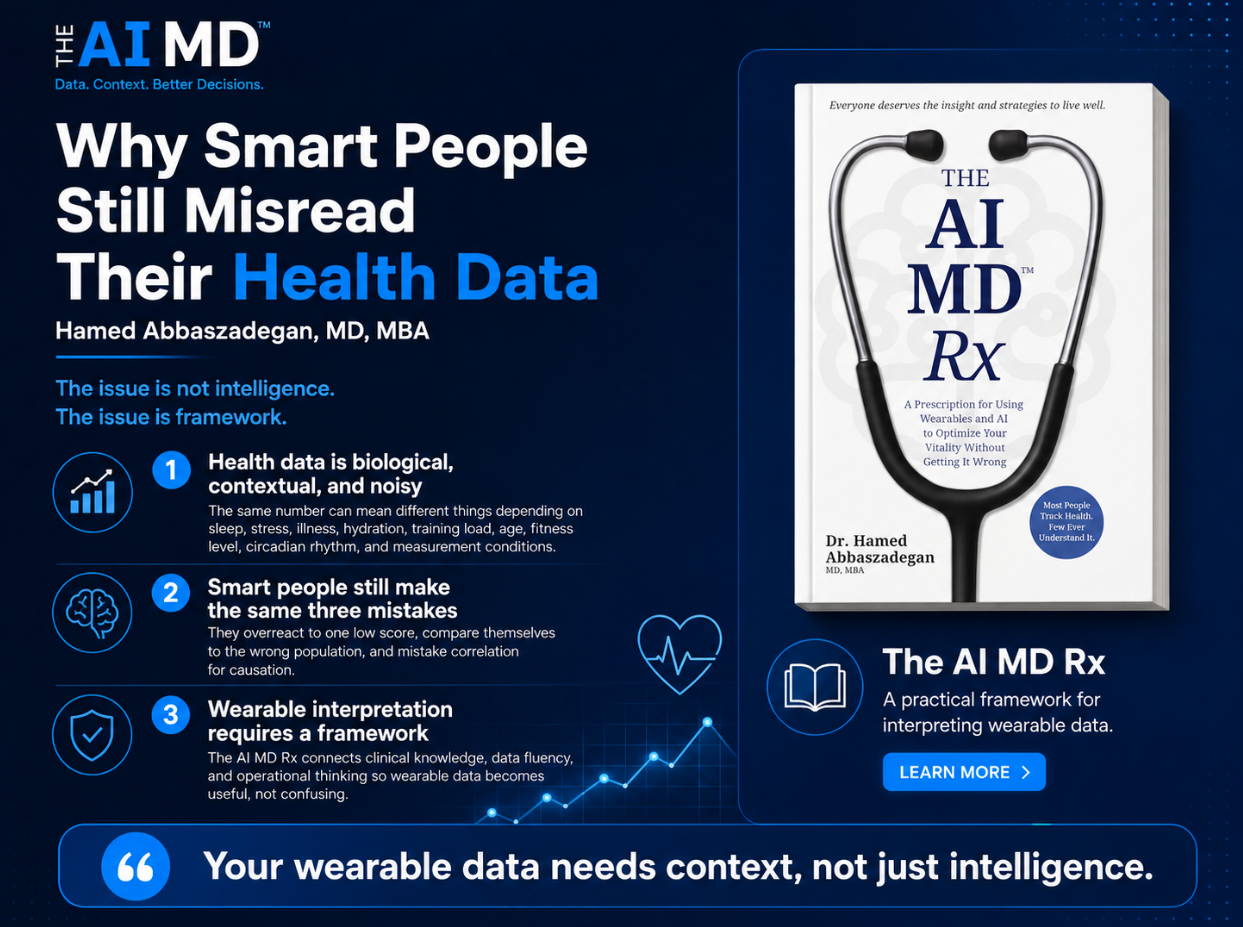
Why Smart People Still Misread Their Health Data

Read More

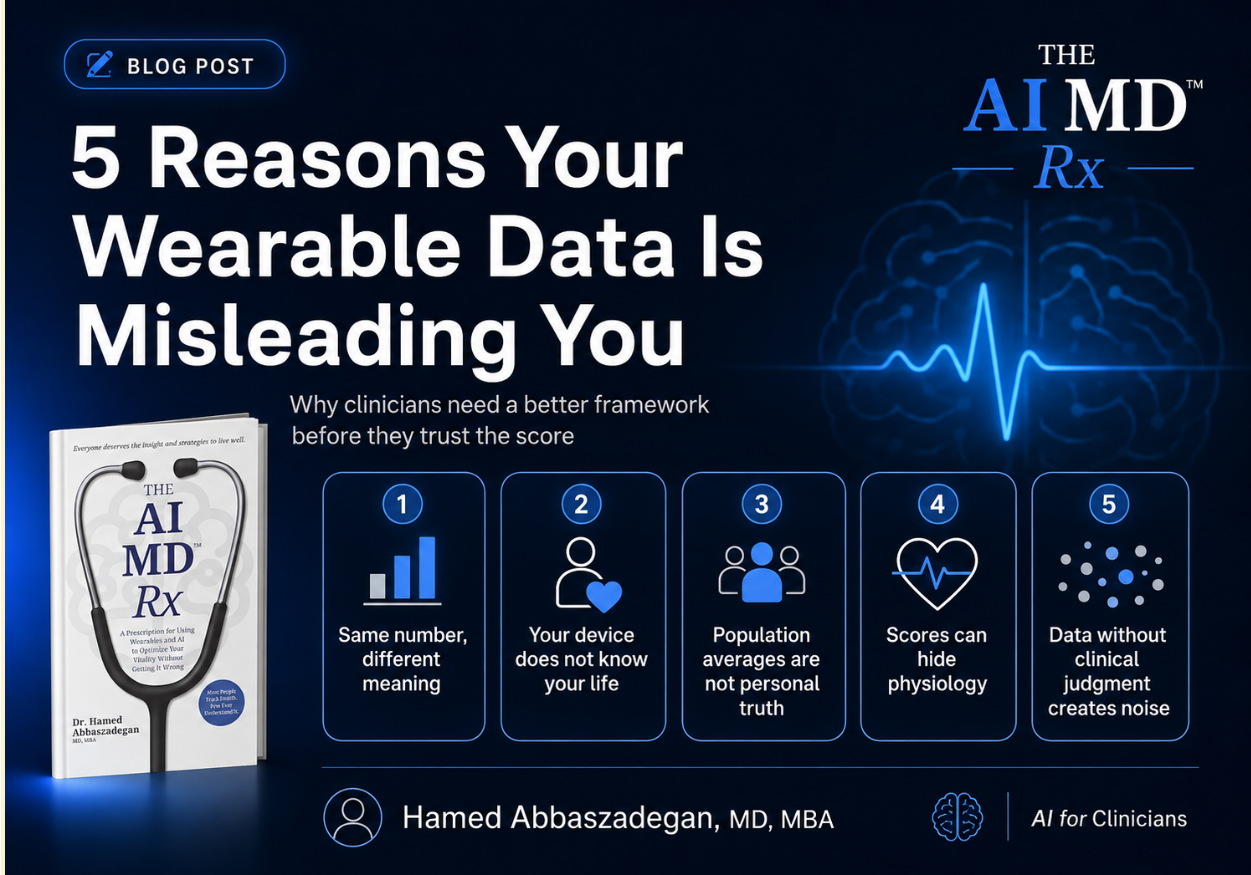
5 Reasons Your Wearable Data Is Misleading You

Read More

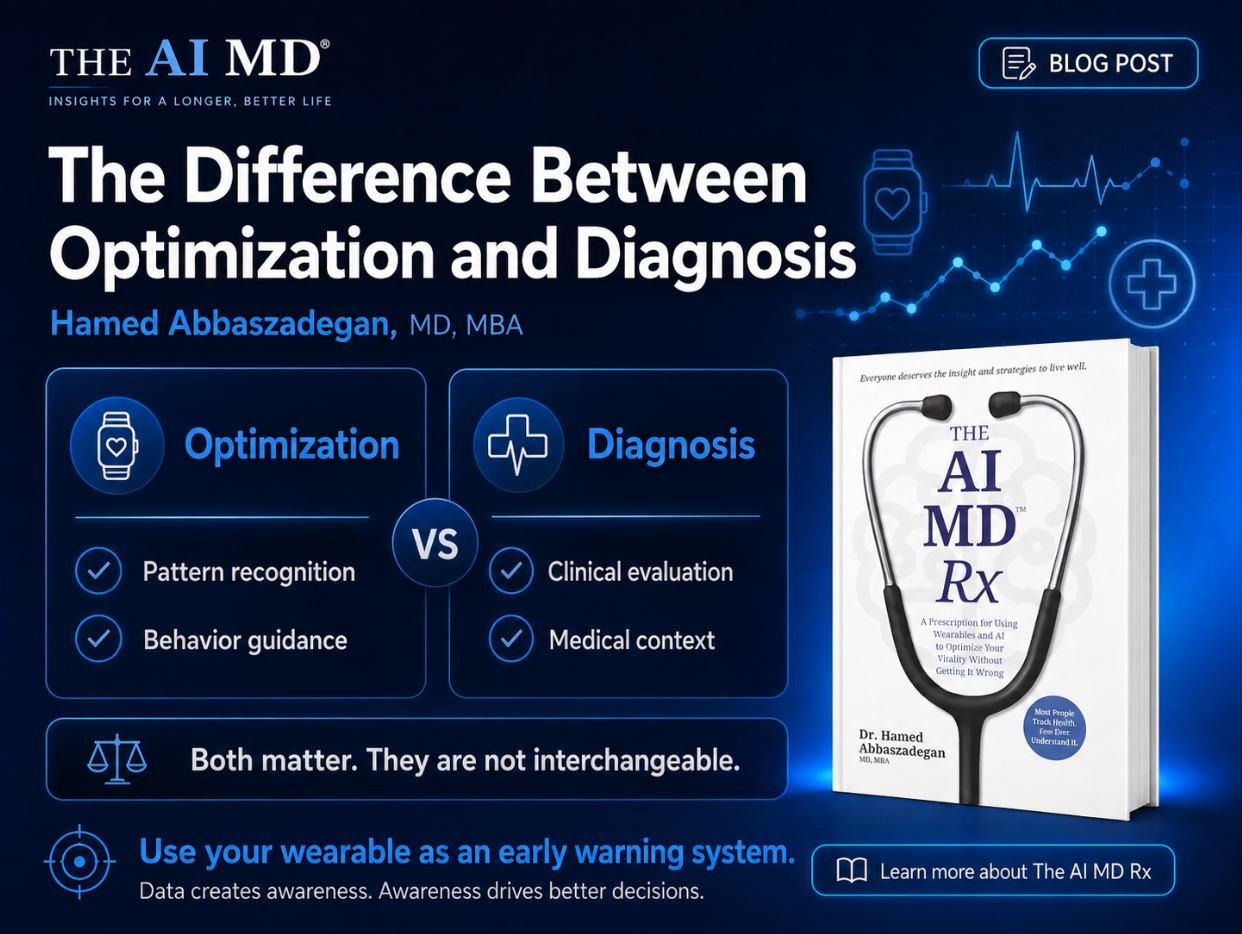
The Difference Between Optimization and Diagnosis

Read More

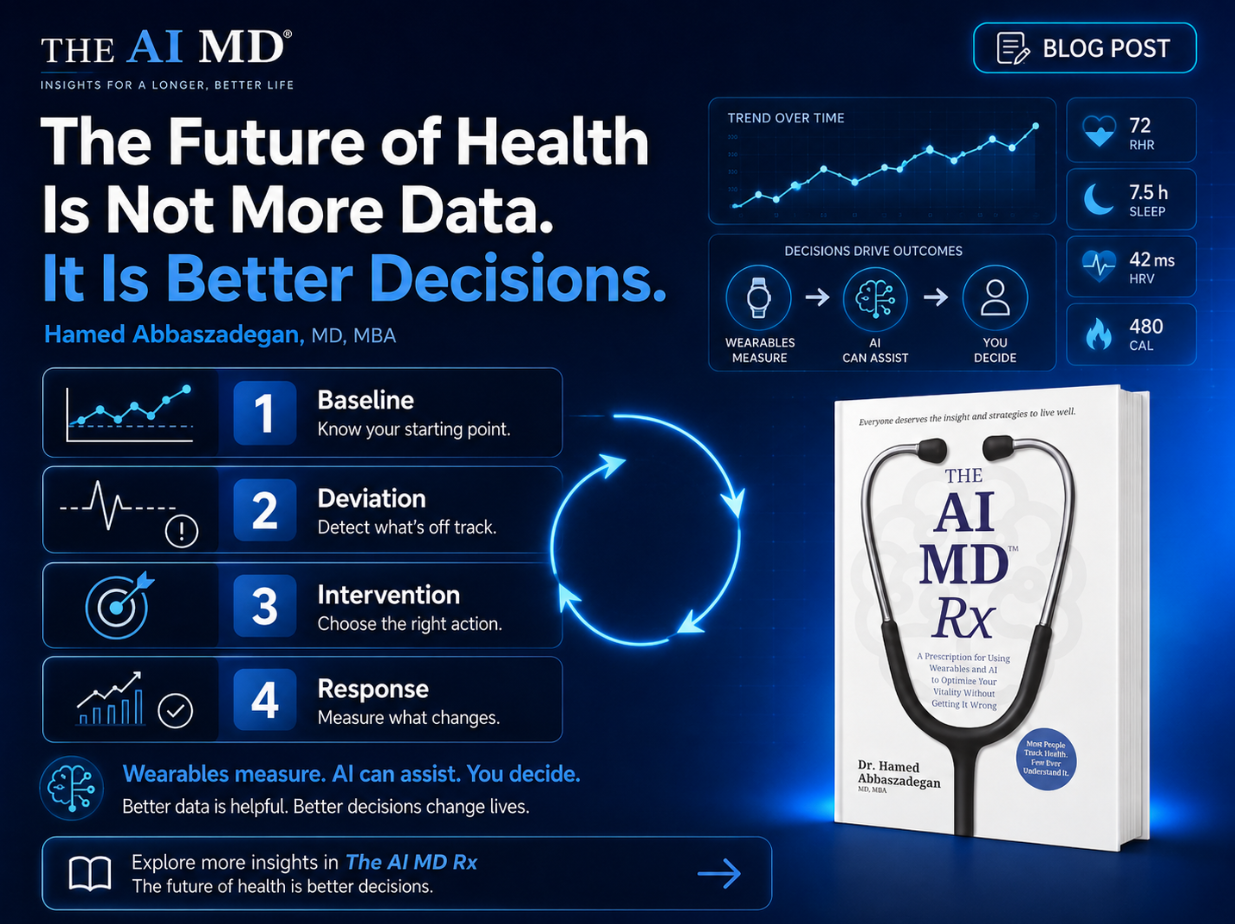
The Future of Health Is Not More Data. It Is Better Decisions.

Read More

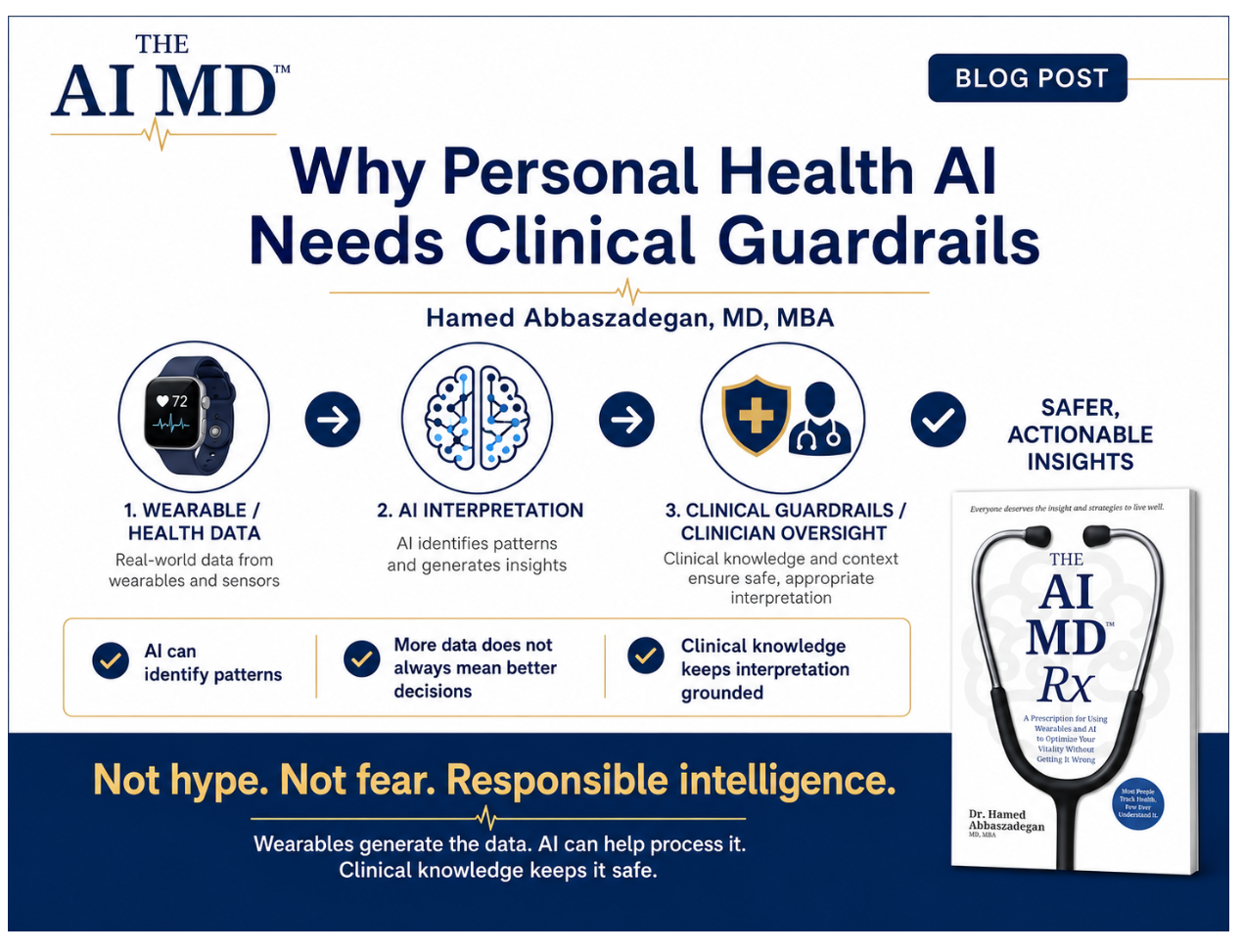
Why Personal Health AI Needs Clinical Guardrails

Read More

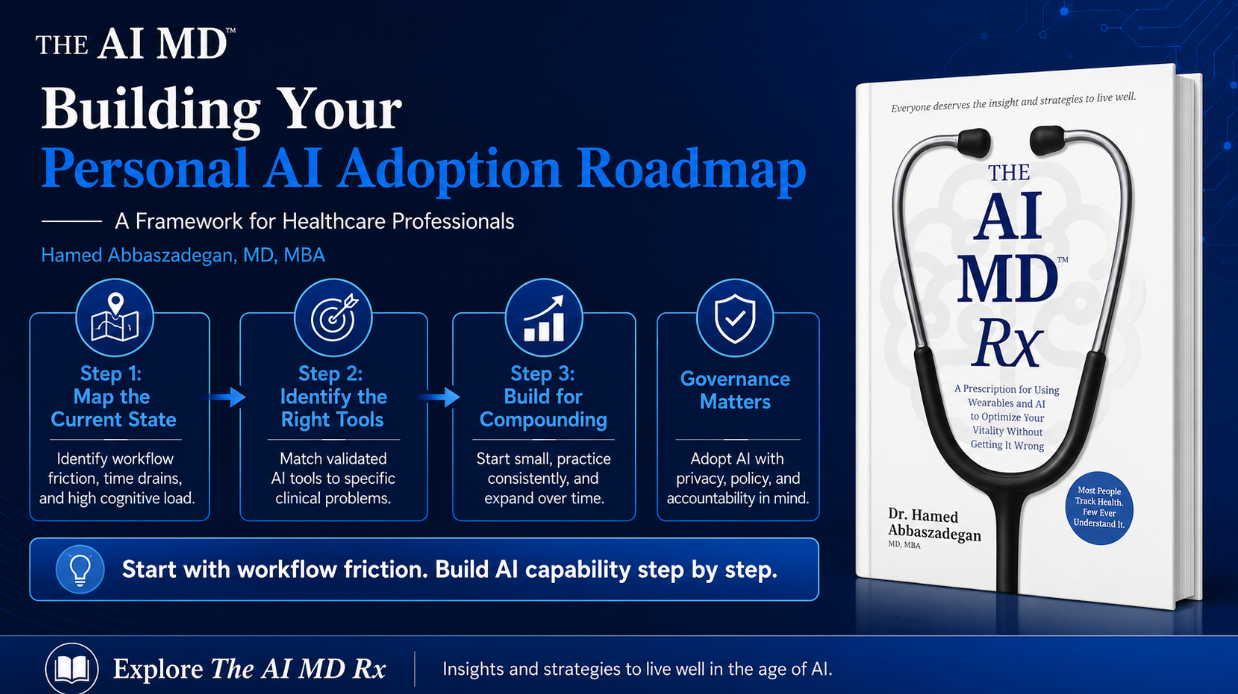
Building Your Personal AI Adoption Roadmap: A Framework for Healthcare Professionals

Read More

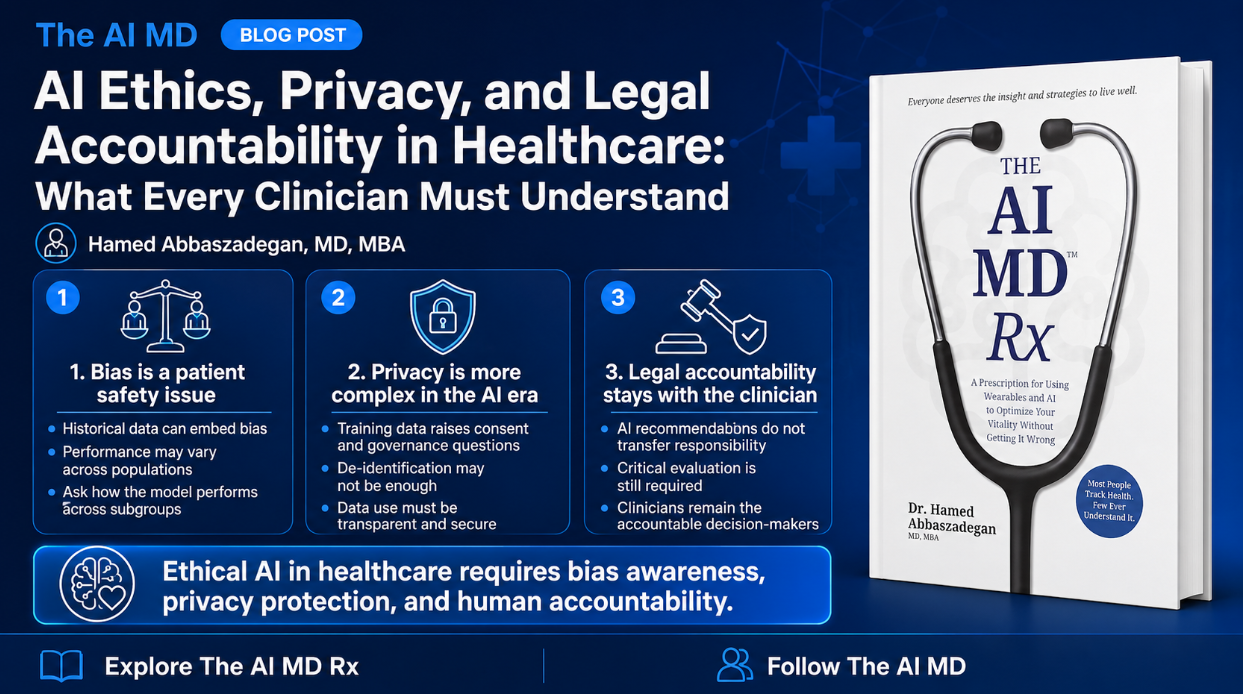
AI Ethics, Privacy, and Legal Accountability in Healthcare: What Every Clinician Must Understand

Read More

Clinical Decision Support Systems: How to Navigate Them Without Losing Your Clinical Judgment

Read More

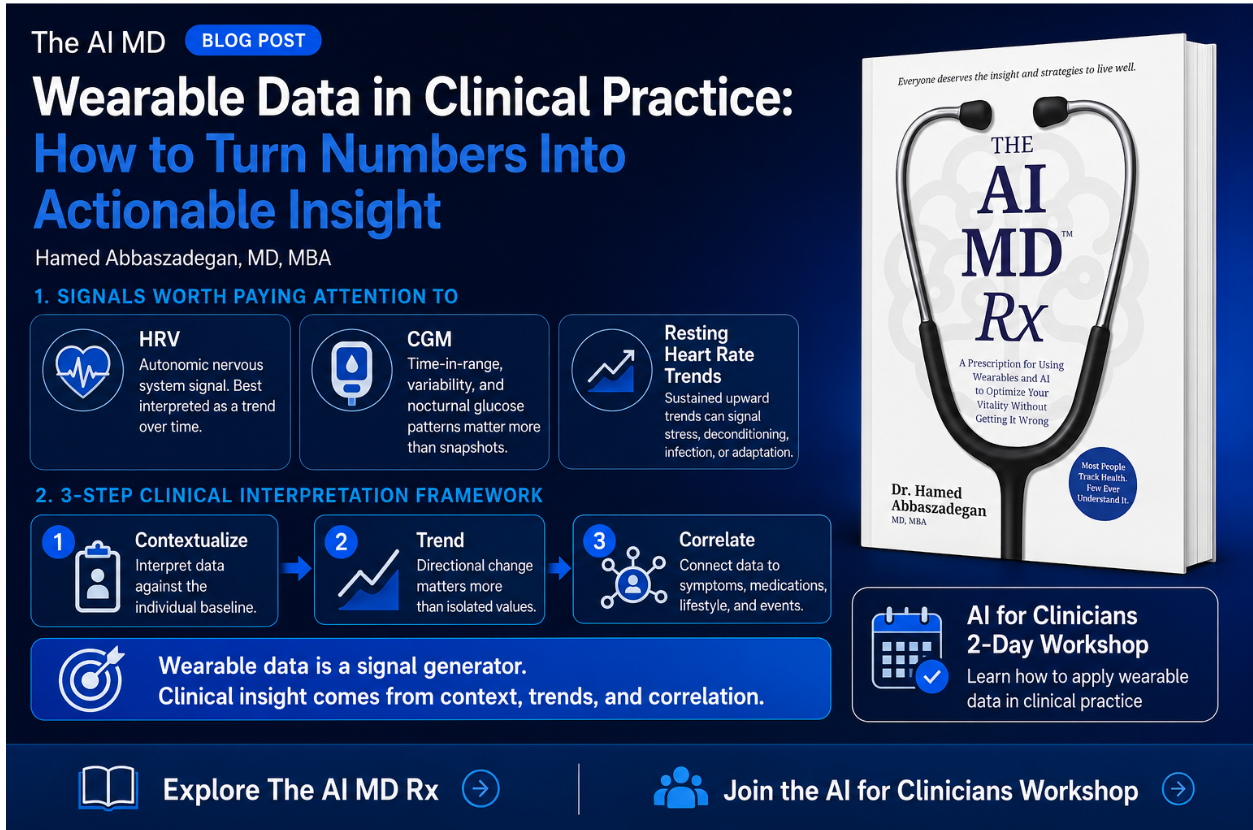
Wearable Data in Clinical Practice: How to Turn Numbers Into Actionable Insight

Read More

How to Evaluate AI Tools Without Getting Fooled by the Pitch

Read More

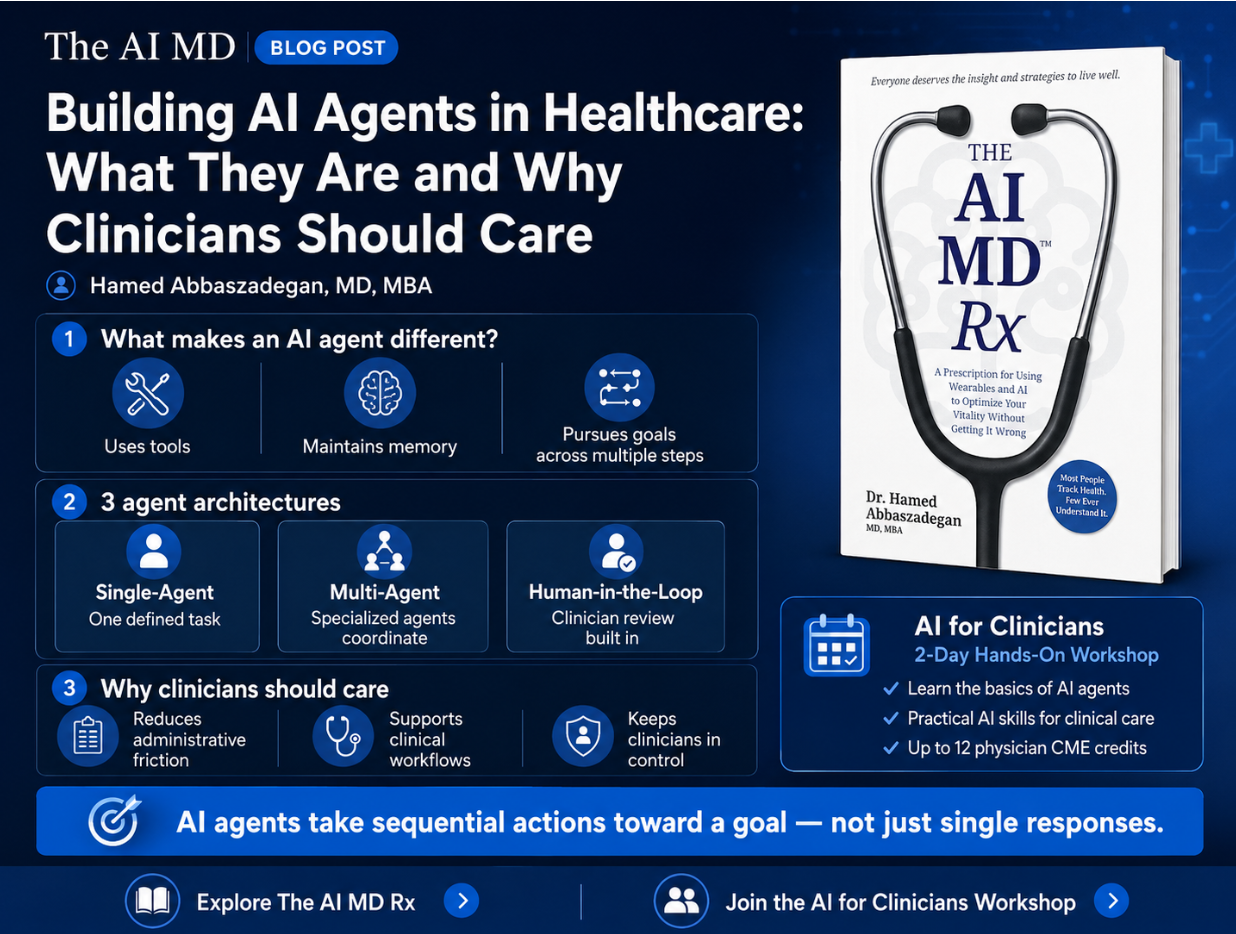
Building AI Agents in Healthcare: What They Are and Why Clinicians Should Care

Read More

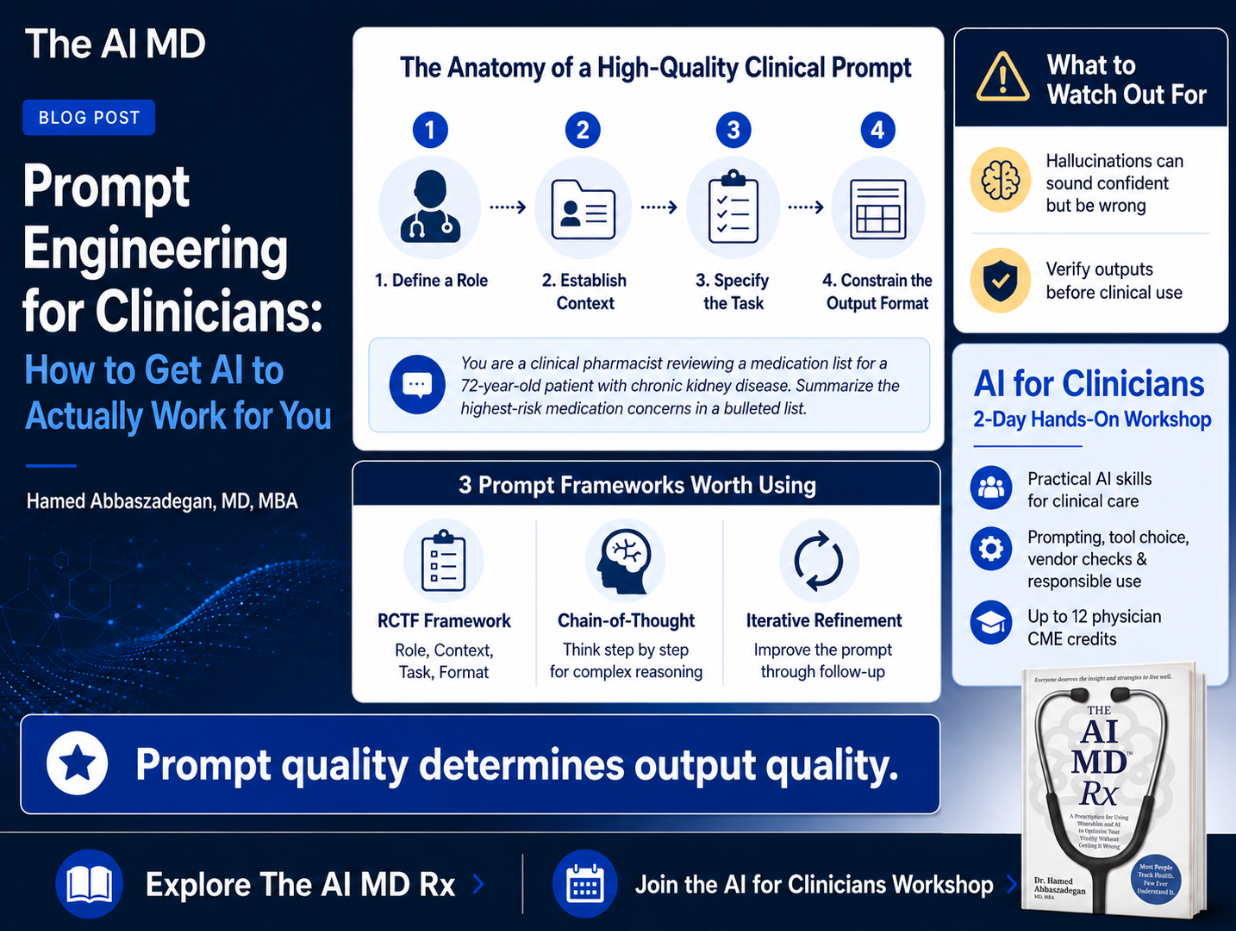
Prompt Engineering for Clinicians: How to Get AI to Actually Work for You

Read More

The AI Landscape in Healthcare: What Every Clinician Needs to Know Right Now

Read More

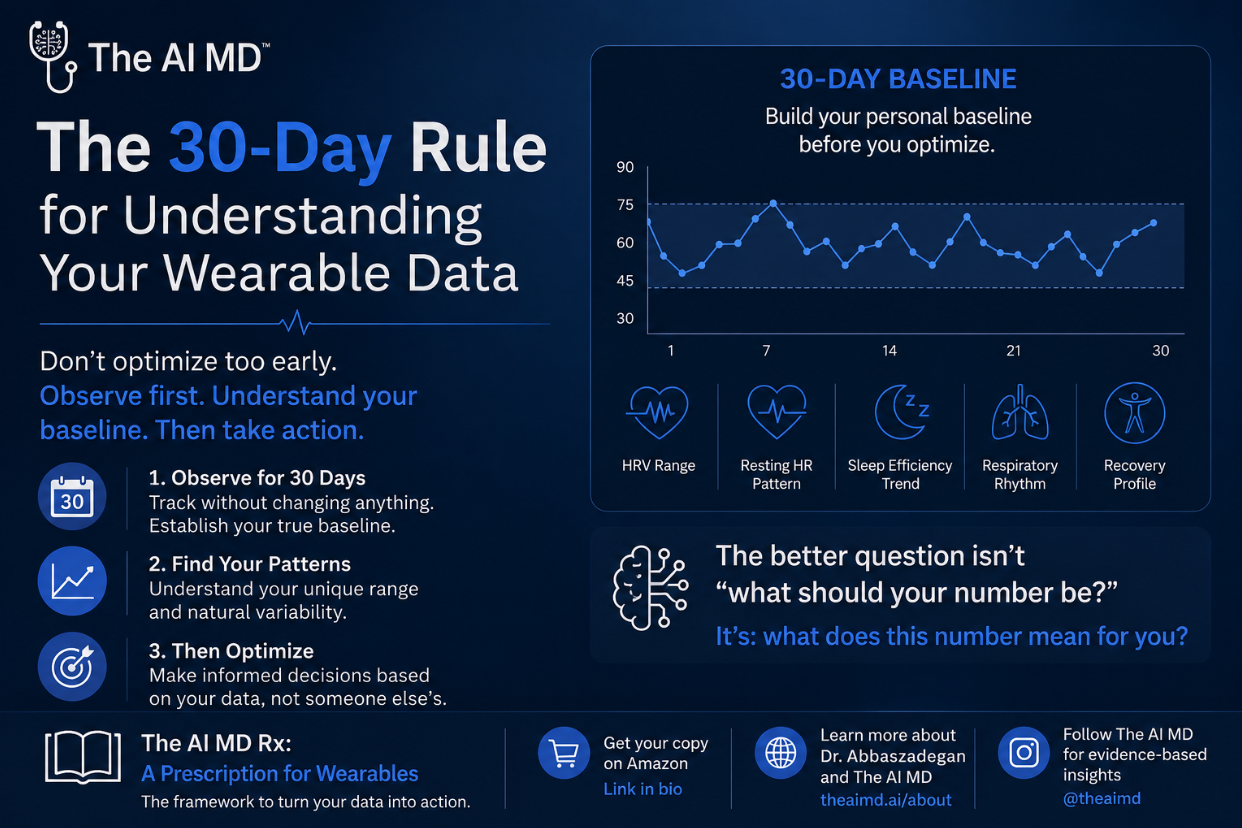
The 30-Day Rule for Understanding Your Wearable Data

Read More

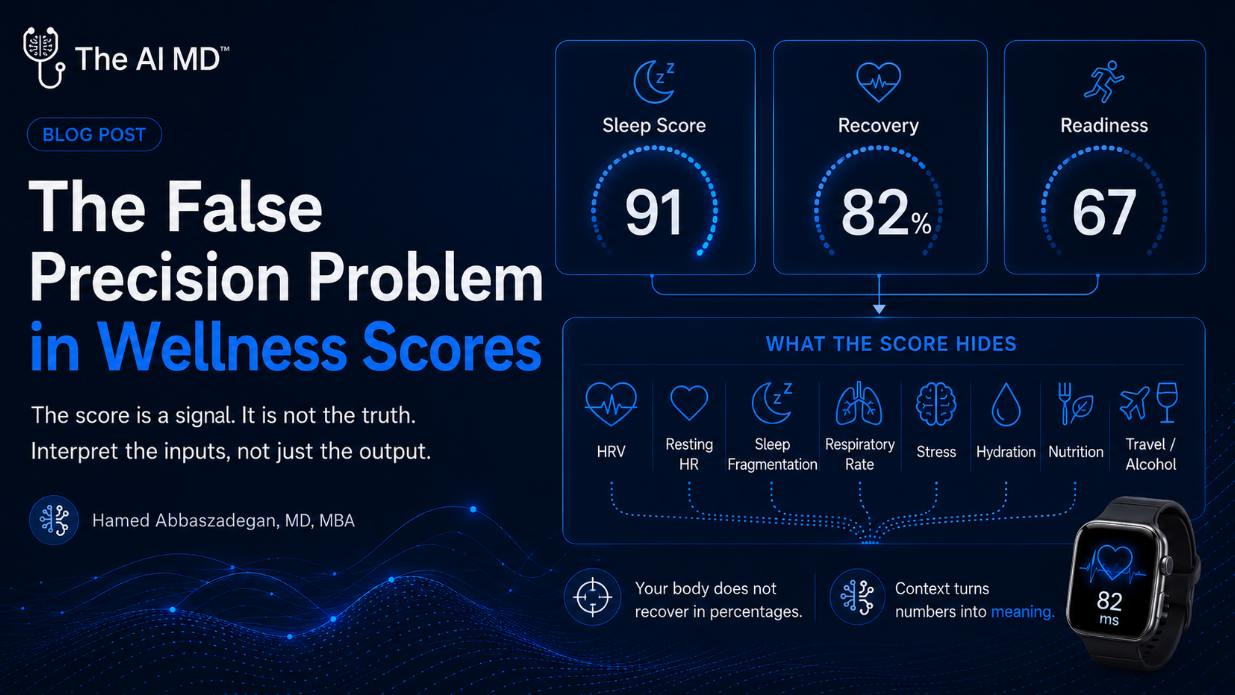
The False Precision Problem in Wellness Scores

Read More

What Clinical Informatics Taught Me About Reading My Own Health Data 

Read More

The 72-Hour Window: When Your Wearable Data Becomes Predictive

Read More

Why Athletes and Executives Need Different Wearable Strategies 

Read More

The Sleep Architecture Problem

Read More

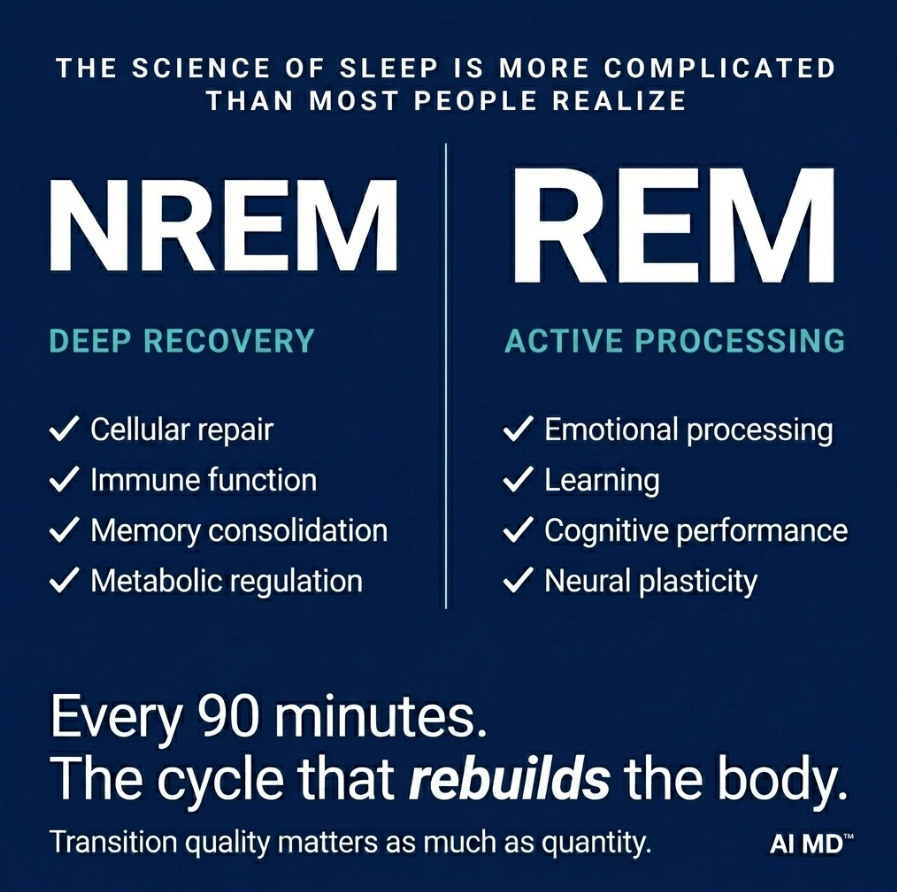
The Science of Sleep Is More Complicated Than Most People Realize

Read More

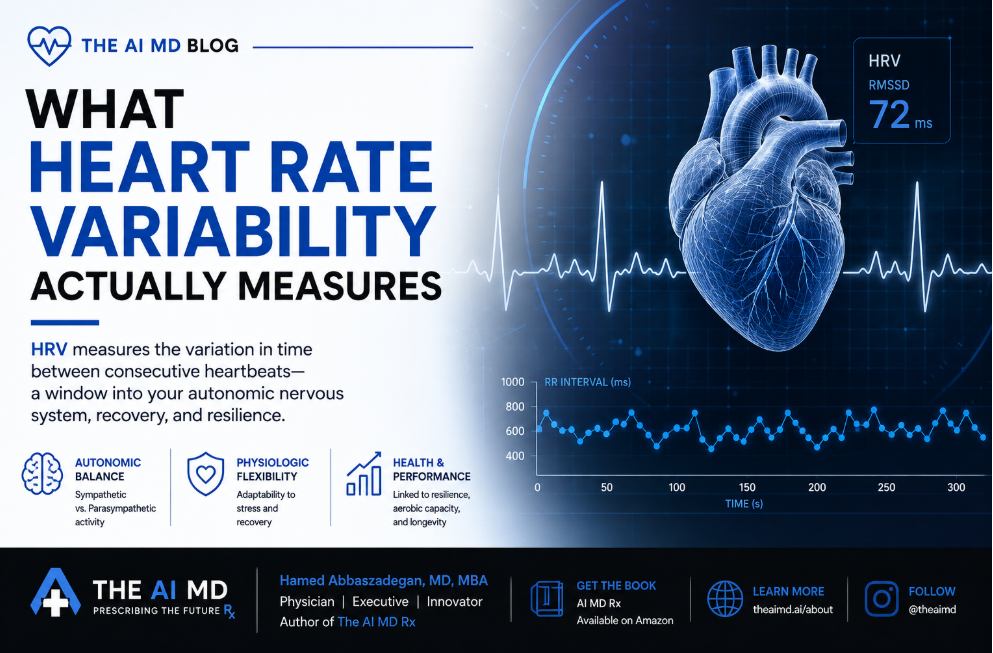
What Heart Rate Variability Actually Measures

Read More

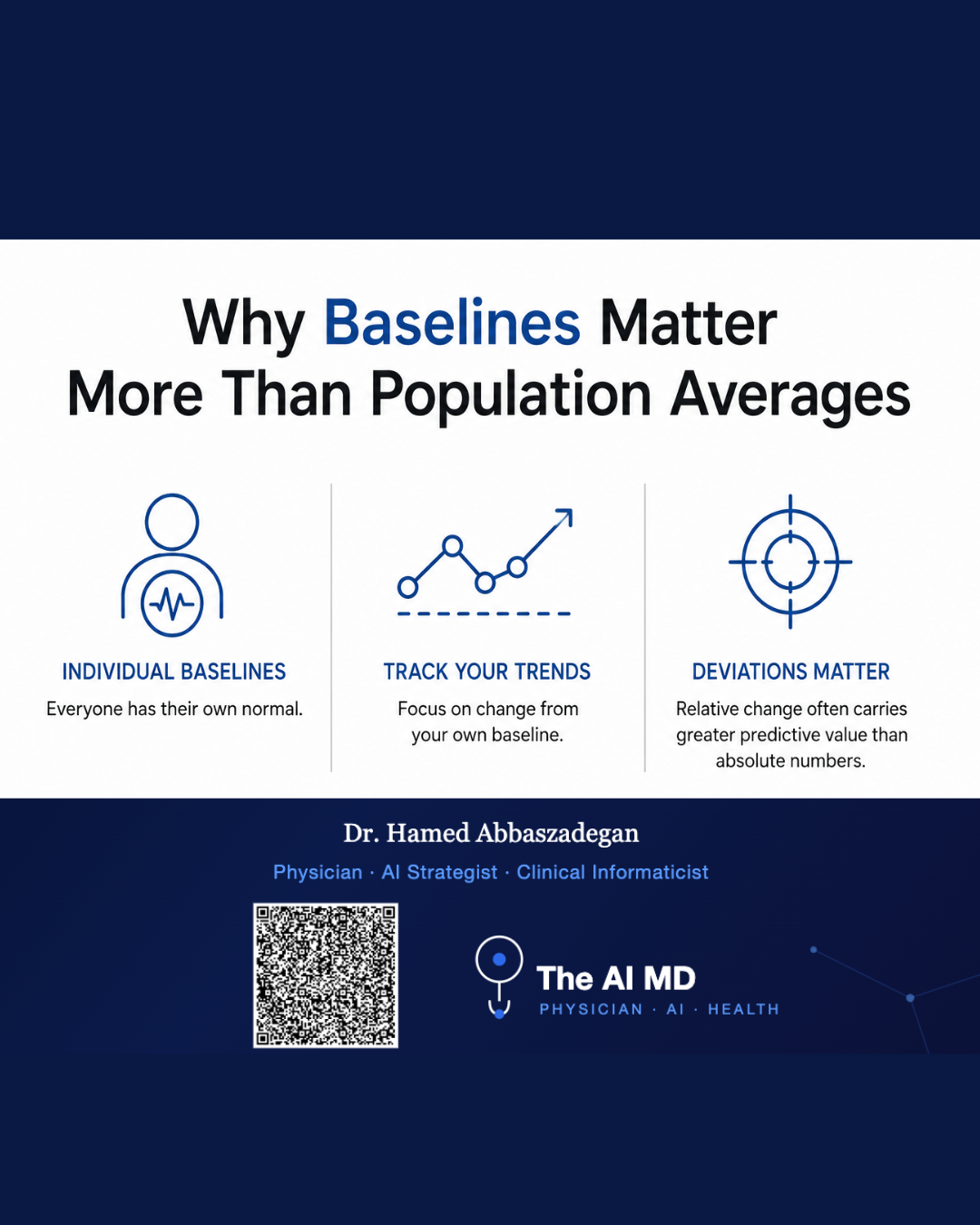
Why Baselines Matter More Than Population Averages

Read More

Why Your Sleep Score Lies to You (And What to Track Instead)

Read More

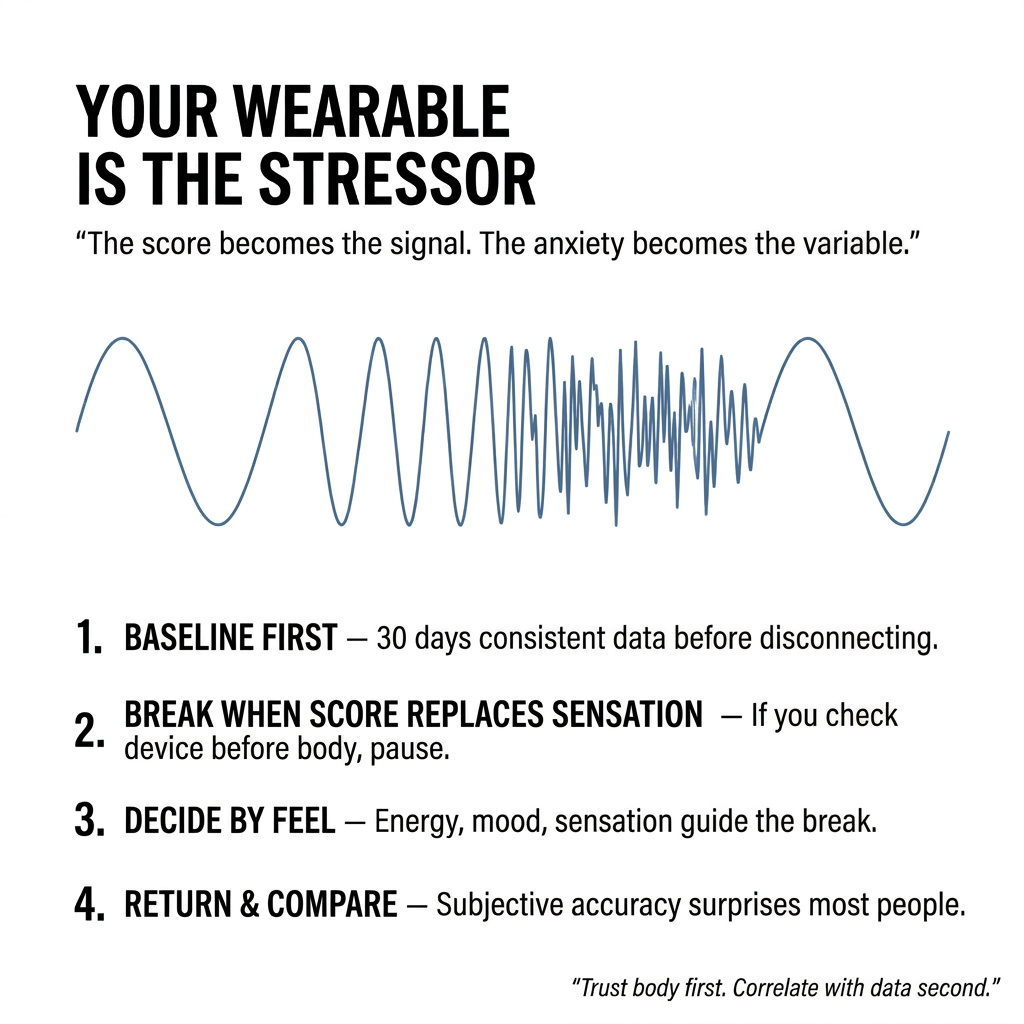
The Wearable Holiday

Read More

Why Your Doctor Ignores Your Wearable Data

Read More

The AI MD Rx: Chapter 1 Preview

Read More

June 3, 2026

Your Wearable Data Isn't Broken—Your Interpretation Framework Is

Your wearable is collecting thousands of health data points every day, but data alone does not improve health. This article explores why the future of preventive medicine depends on translating wearable metrics into meaningful action, helping individuals move from passive tracking to proactive, data-driven health decisions.

Read More

Why Your HRV Stays Low and What the Research Actually Says About Fixing It

When someone shows me their wearable data and says "my HRV is low," I don't look at the number first.I look at the trend.The raw number means nothing in isolation. Your baseline HRV could be 30 or...

Read More

AI Medicine's Real Revolution Happens Outside Hospitals

The conversation about AI in medicine focuses on the wrong location.Diagnostic algorithms in radiology departments. Drug discovery platforms in pharmaceutical labs. Surgical robots in operating...
Read More

How AI Is Transforming Clinical Decision Support in Modern Healthcare

The Insights Hub exists to bridge the gap between emerging technology and real-world healthcare practice. Here, Dr. Hamed Abbaszadegan shares clear, actionable perspectives on complex developments in healthcare AI, grounded in clinical informatics expertise and over a decade of leadership at the intersection of medicine and technology.

Read More

Stay Connected

If you’d like these insights delivered straight to your inbox, you can sign up below. You’ll receive evidence-based perspectives on AI in healthcare, practical implementation guidance, and updates on speaking engagements and media appearances.

Thank you! Your submission has been received!
Oops! Something went wrong while submitting the form.