
Hamed Abbaszadegan, MD, MBA

July 10, 2026
Sleep is not simply the absence of wakefulness. It is an active biological process involving highly orchestrated changes throughout multiple organ systems.
During sleep, the brain cycles through distinct stages characterized by different patterns of electrical activity, neurotransmitter release, autonomic nervous system function, and physiological recovery.
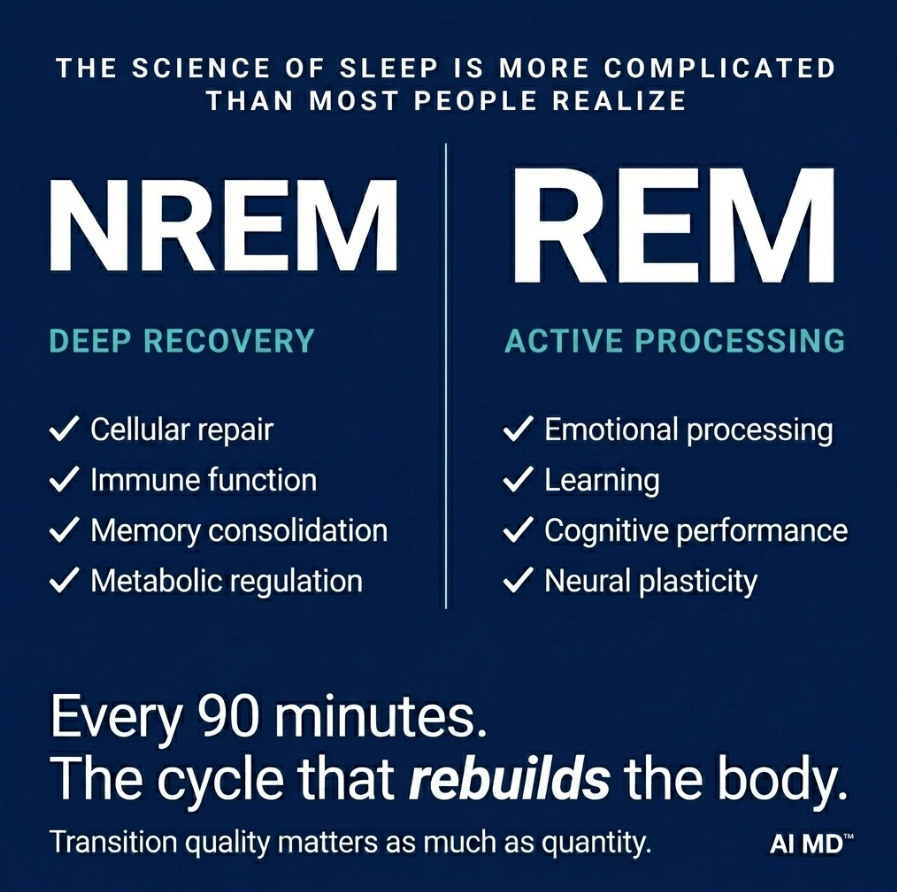
Non-rapid eye movement (NREM) sleep consists of progressively deeper stages that support cellular repair, immune function, memory consolidation, and metabolic regulation.
Rapid eye movement (REM) sleep plays a critical role in emotional processing, learning, cognitive performance, and neural plasticity.
Throughout the night, healthy adults cycle between these stages approximately every 90 minutes. Importantly, the quality of these transitions often matters as much as the quantity of sleep itself.
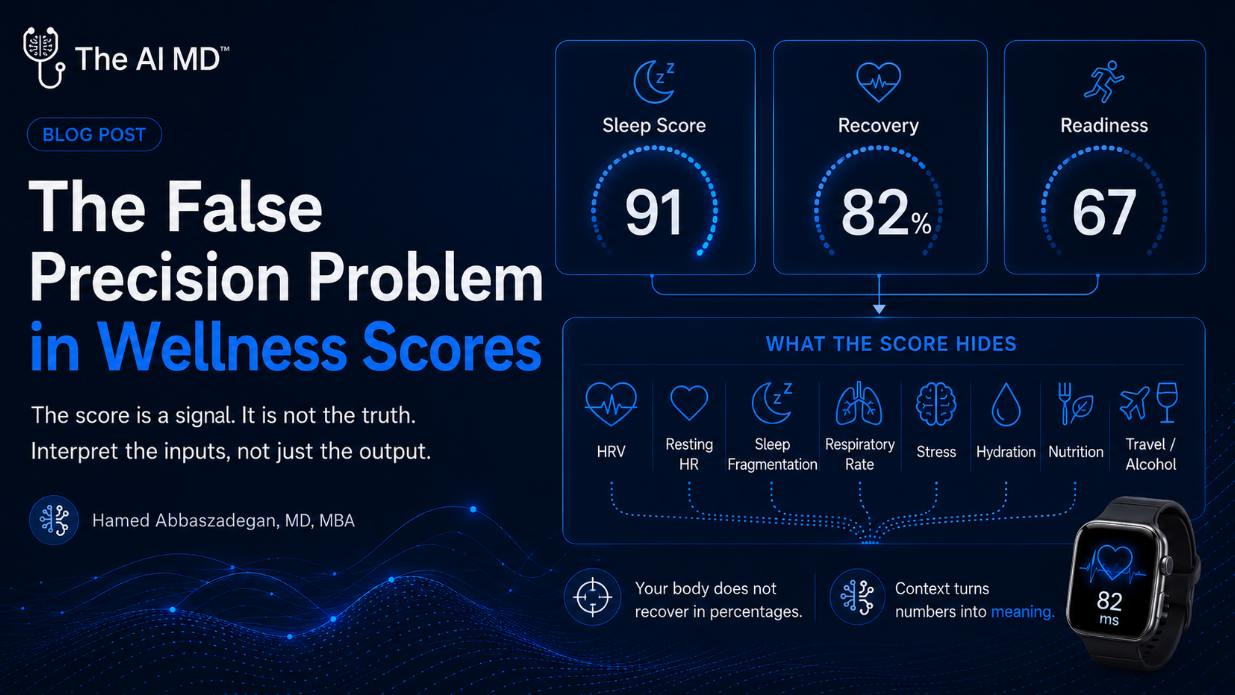
A person who sleeps eight hours with significant fragmentation may experience substantially less physiological recovery than someone who sleeps seven hours with stable sleep architecture.
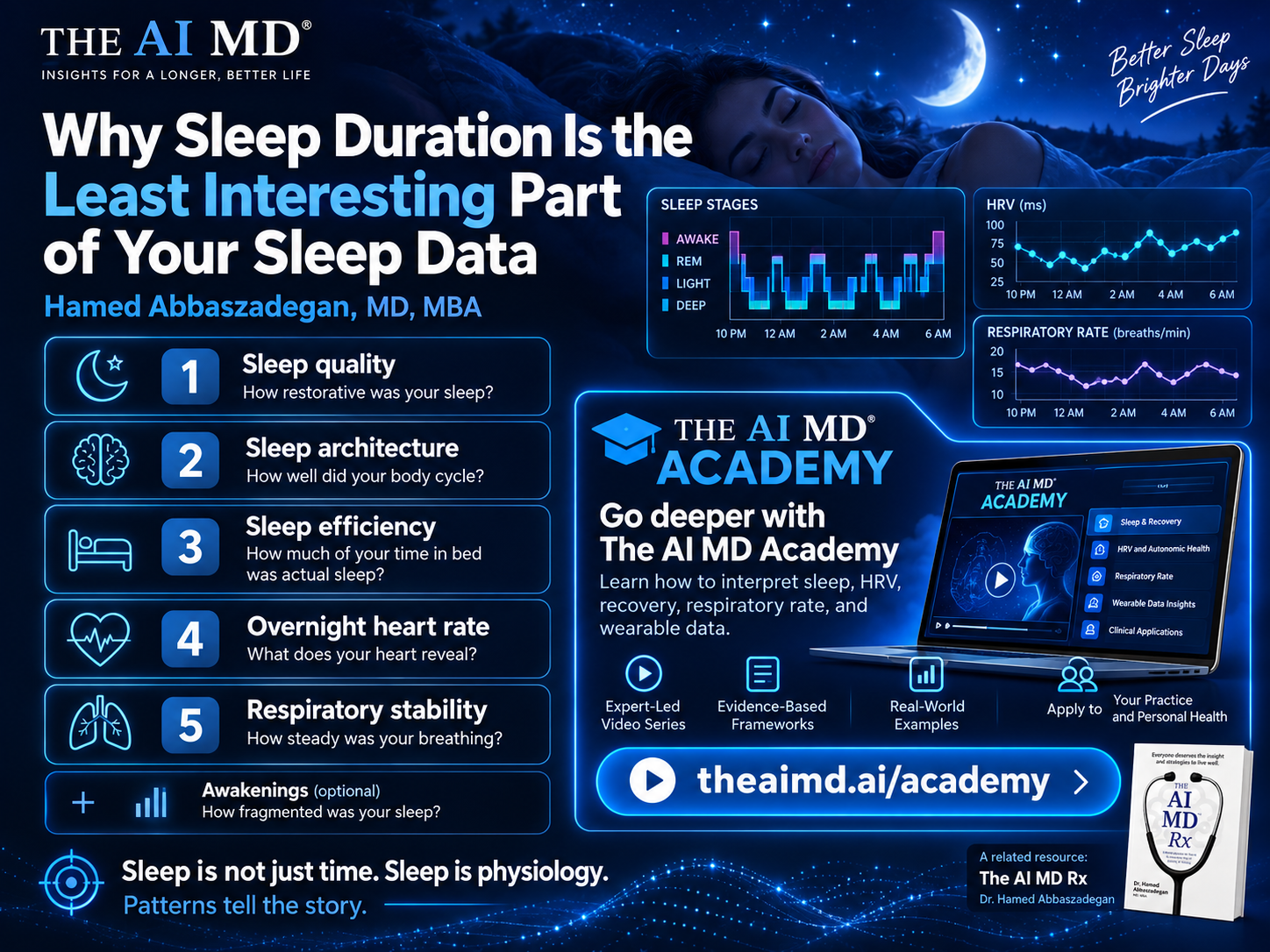
Unfortunately, most sleep scores struggle to capture these nuances. Understanding how to accurately capture your sleep stages can be accomplished with a dual wearable technology approach. Specifically a traditional wearable plus a home headband EEG (electroencephalogram) device.
Traditional commercial wearable devices (wrist/ring optical based devices) read the sleep stages incorrectly as high as 50% of the time. There are other limitations as far as misclassification of wakefulness during sleep periods and problems tracking sleep outside of nighttime. Consumer headbands achieve more accuracy compared to optical measurements alone.
Learning this approach can help you understand what aspects of your sleep would benefit from specific changes to optimize your sleep.
📖 Get your copy on Amazon:
https://www.amazon.com/AI-MD-Rx-Prescription-Wearables/dp/B0H38BTM83
🌐 Learn more about Dr. Abbaszadegan and The AI MD:
https://theaimd.ai/about
📲 Follow The AI MD for evidence-based insights on AI, digital health, wearable technology, longevity, and the future of medicine:
https://www.instagram.com/theaimd/






%20(1880%20x%20940%20px)%20(3%20x%204%20in)%20(1).png)


.png)


Stay Connected
If you’d like these insights delivered straight to your inbox, you can sign up below. You’ll receive evidence-based perspectives on AI in healthcare, practical implementation guidance, and updates on speaking engagements and media appearances.