
Hamed Abbaszadegan, MD, MBA

July 10, 2026
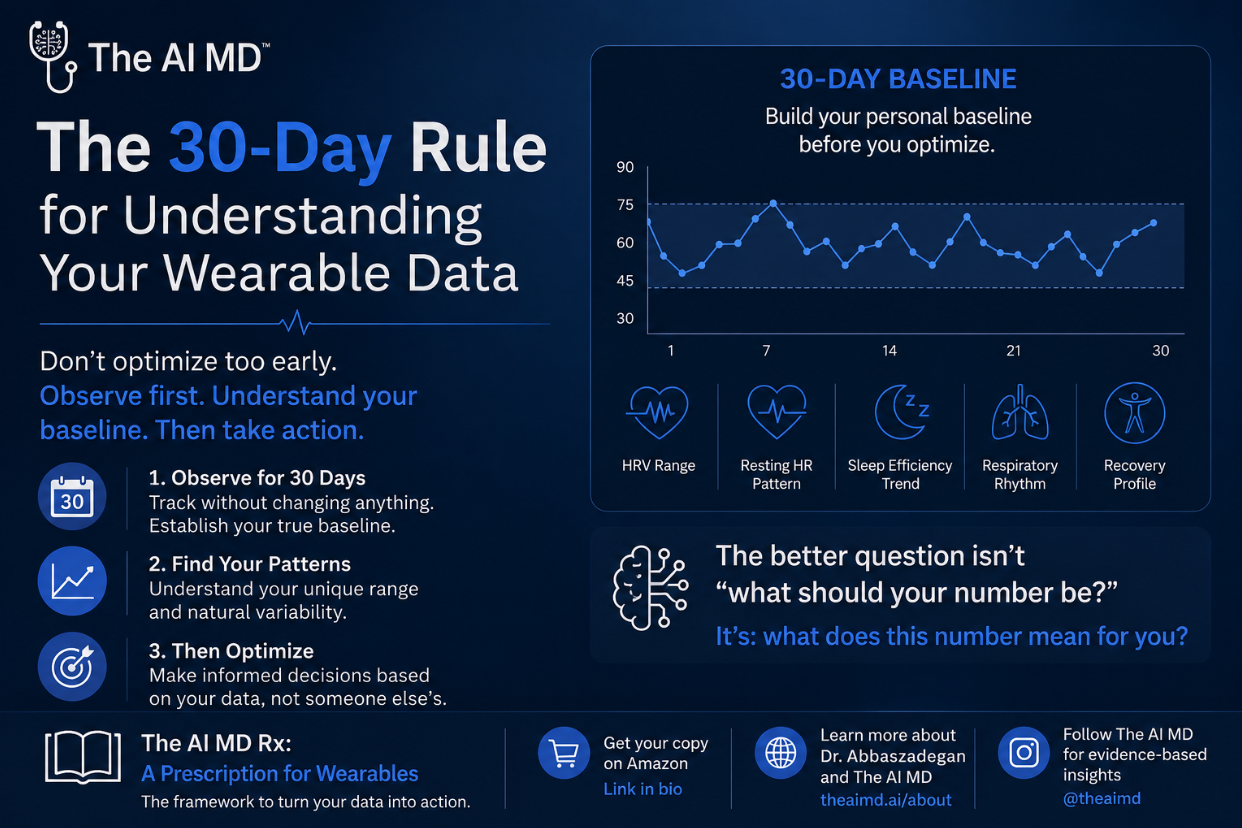
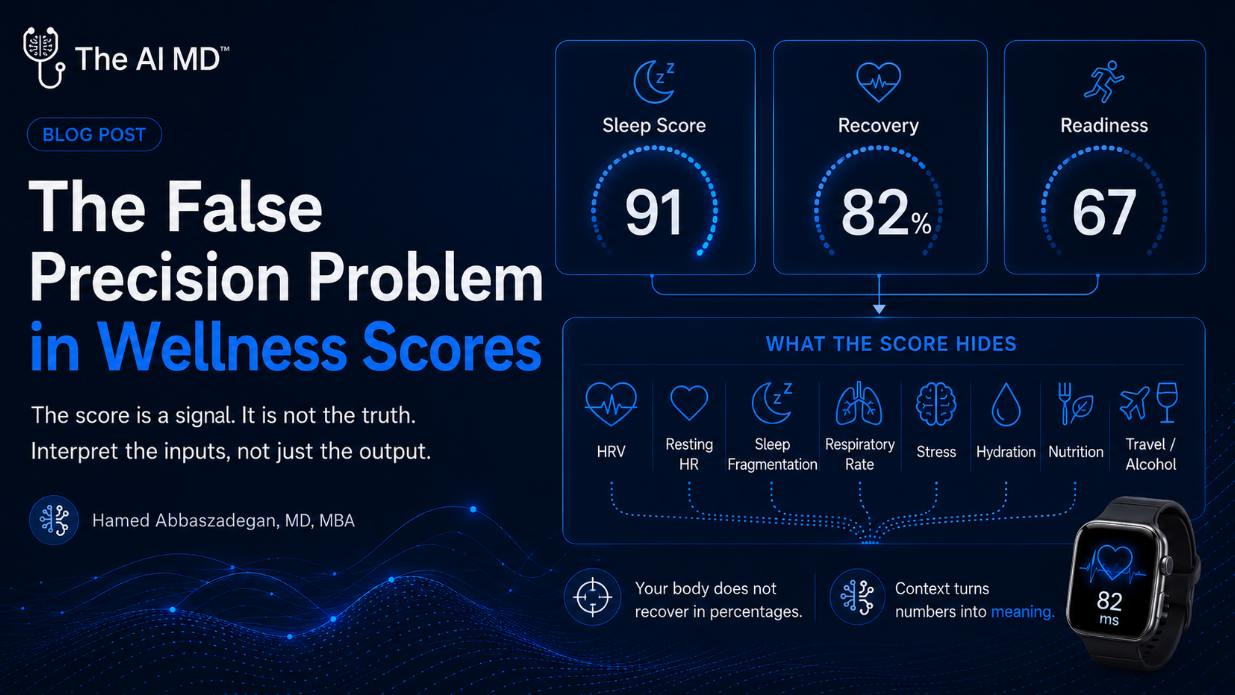
Most people make decisions from wearable data too early.
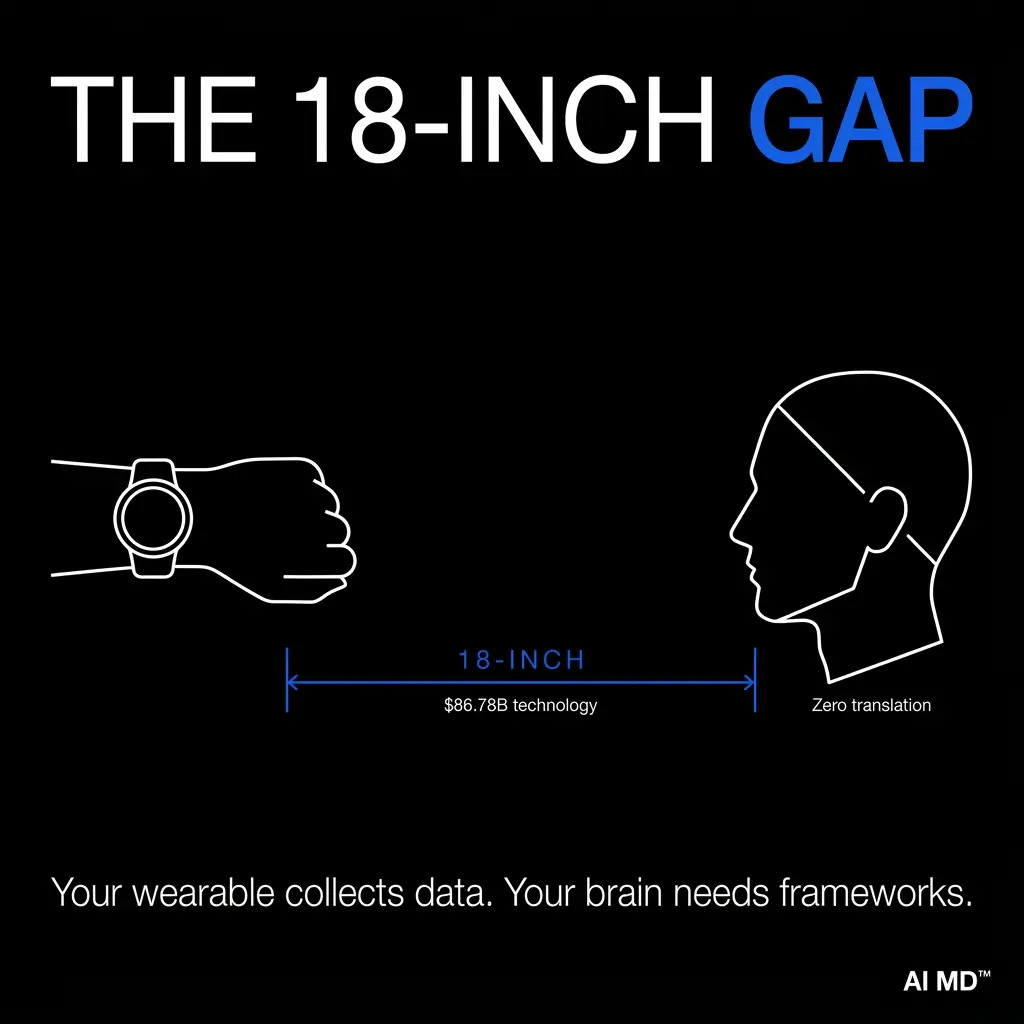
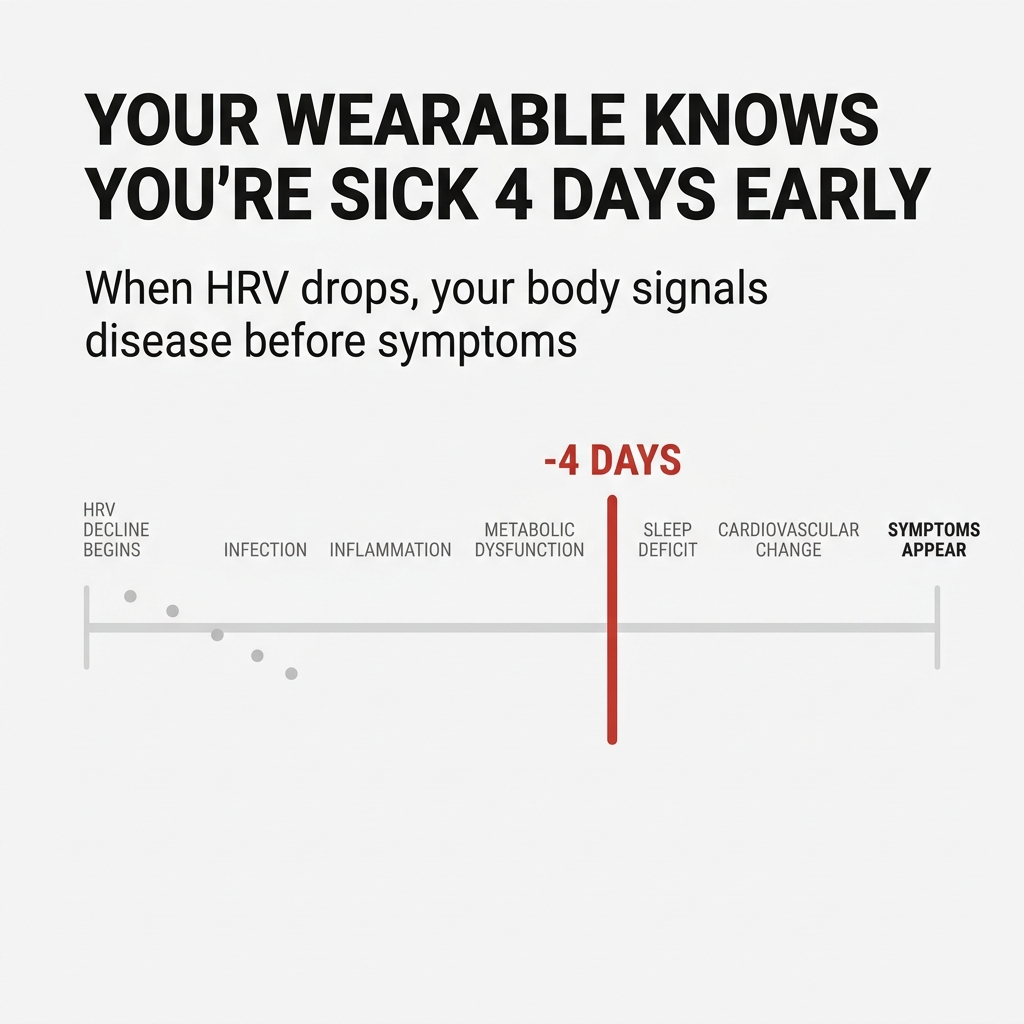
They buy a device, wear it for three nights, and immediately start judging themselves against the app’s recommendations. Sleep score too low. HRV below optimal. Recovery not high enough. Resting heart rate not where they expected.
That is not interpretation. That is a premature conclusion.
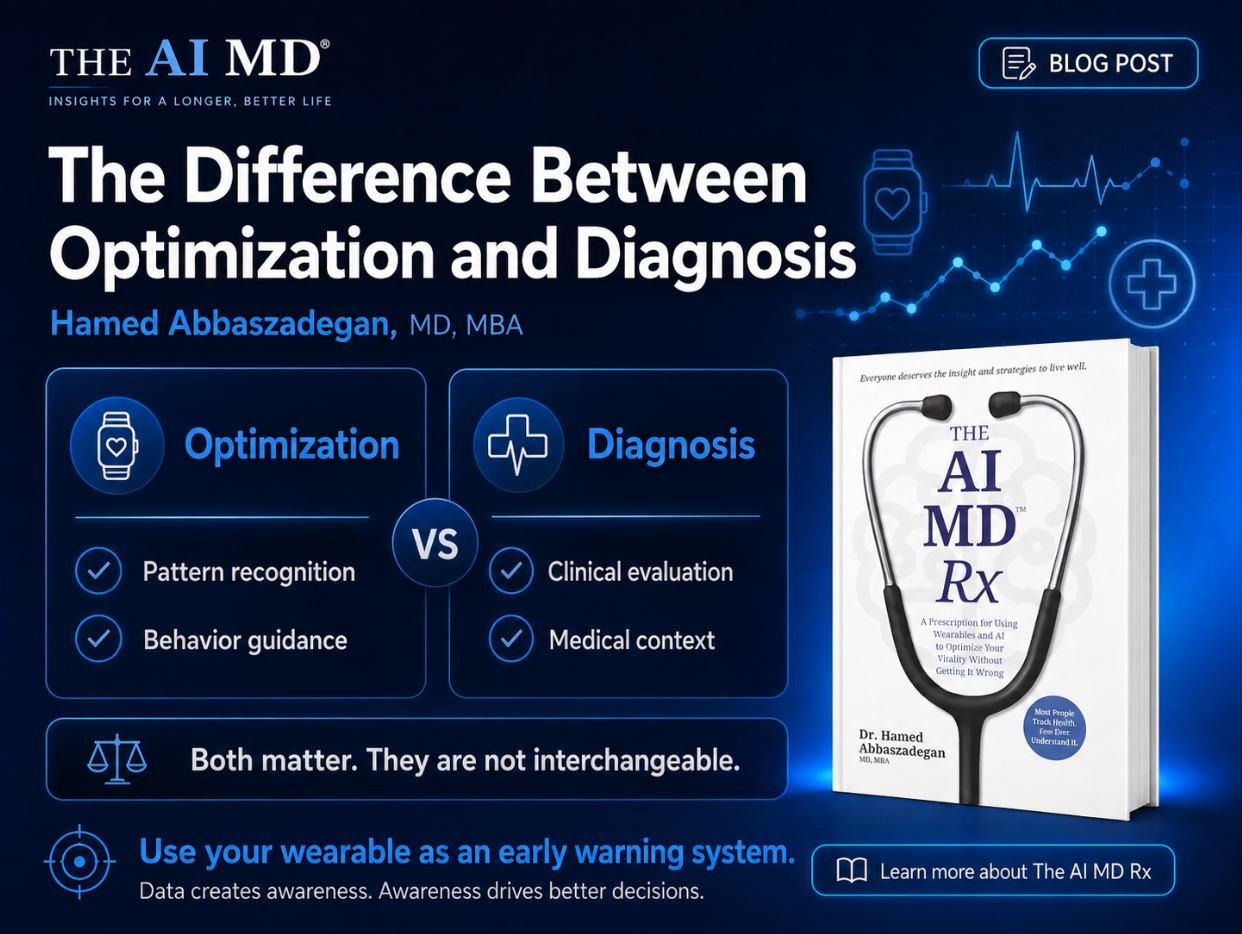
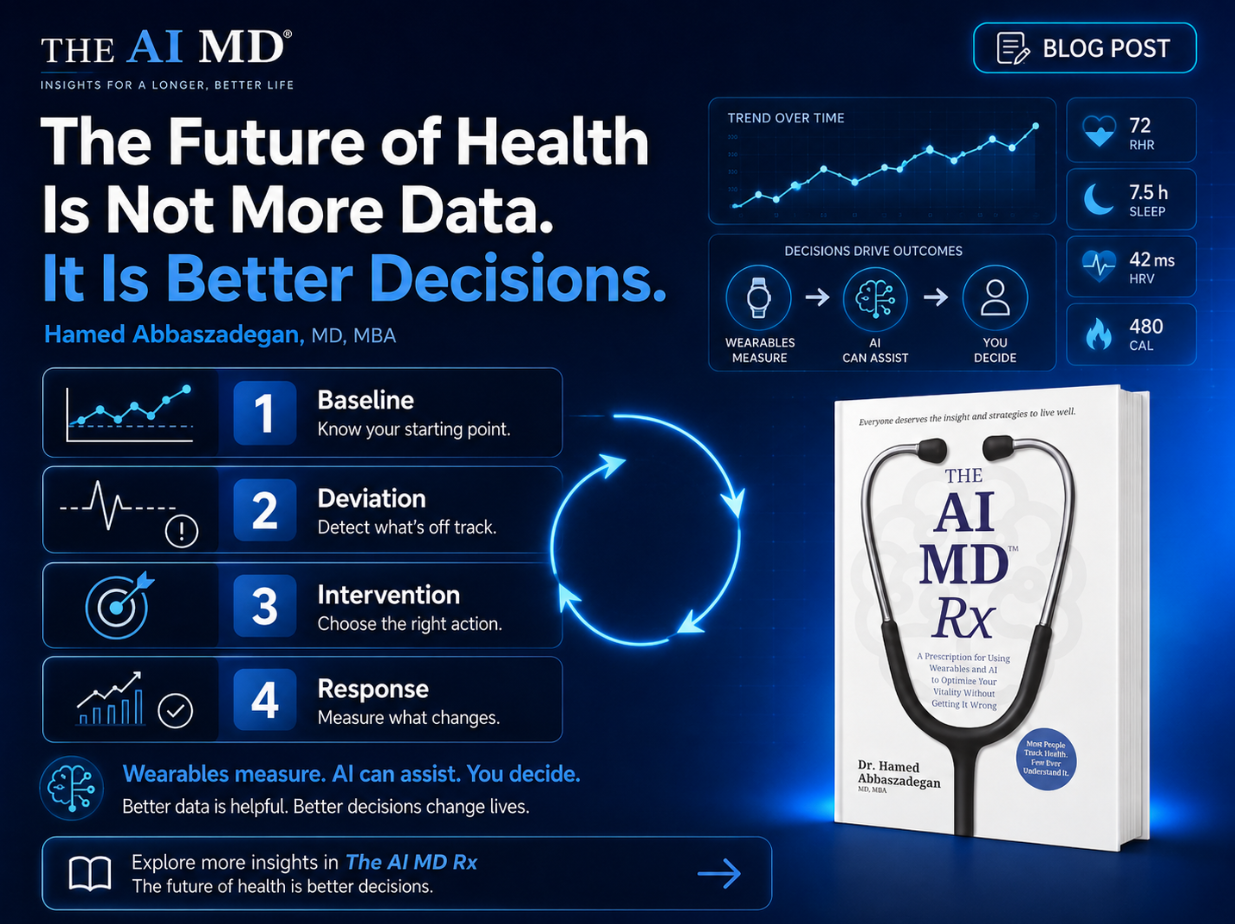
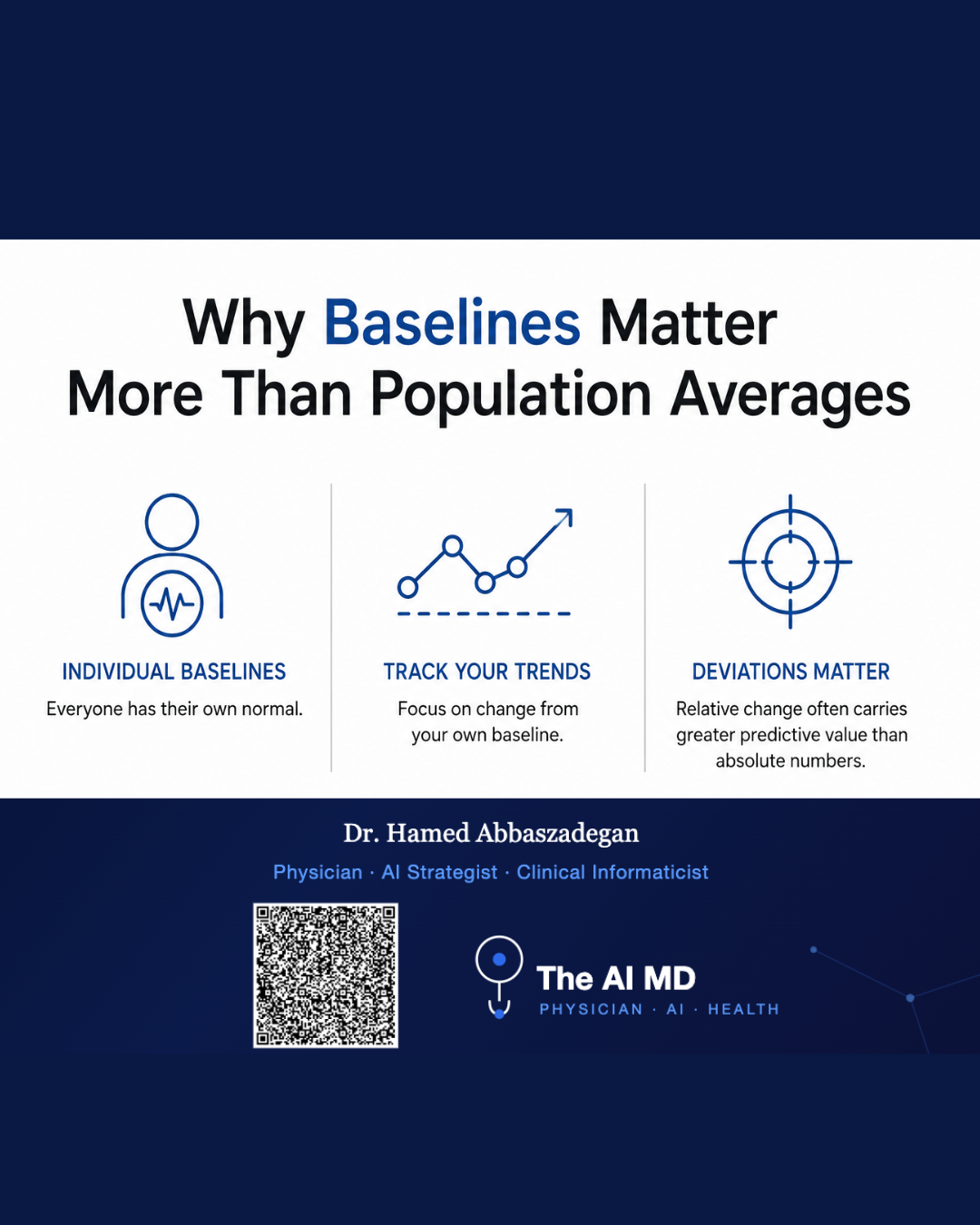
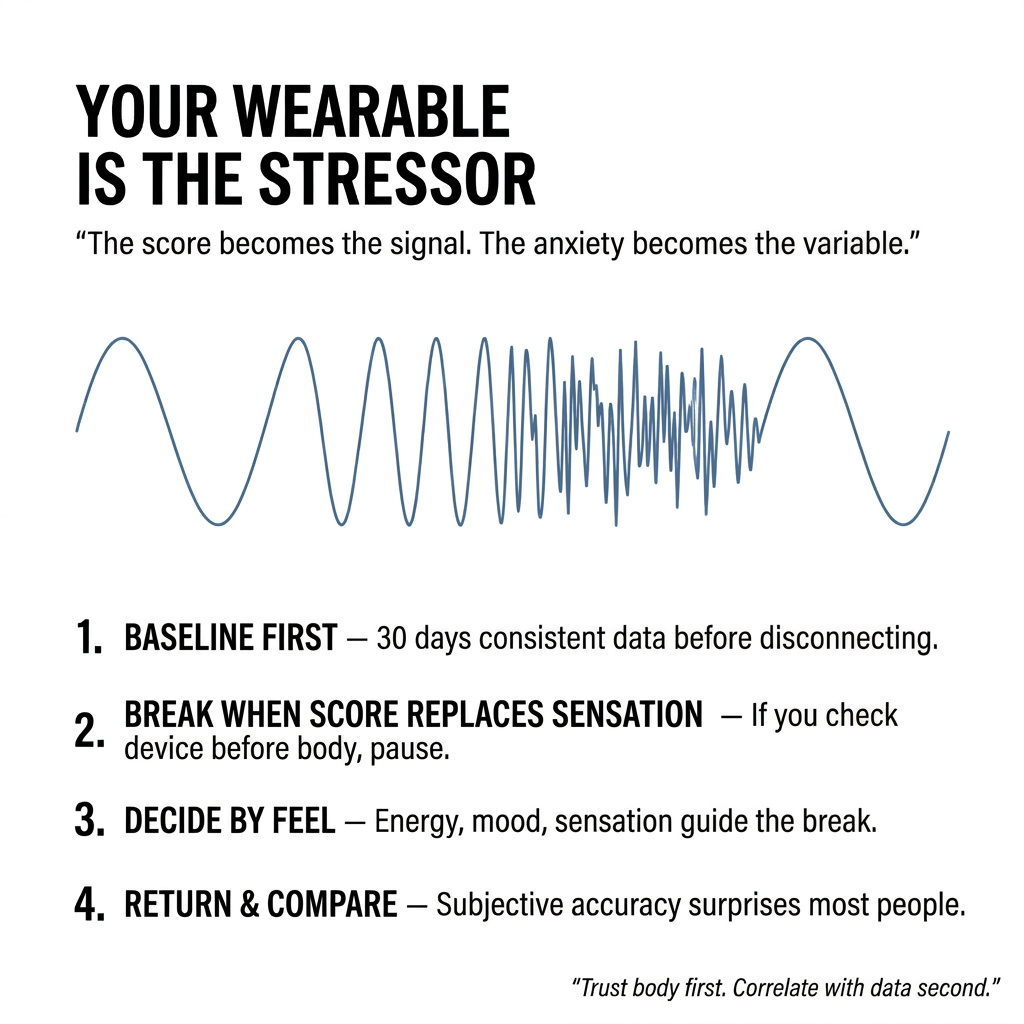
The first 30 days of wearable data should not be used for aggressive optimization. It should be used for observation. You are establishing your personal baseline. Your device is learning your physiology, and you are learning how your body responds to sleep, stress, training, nutrition, travel, alcohol, illness, and recovery.
The mistake is trying to optimize before you understand your normal.
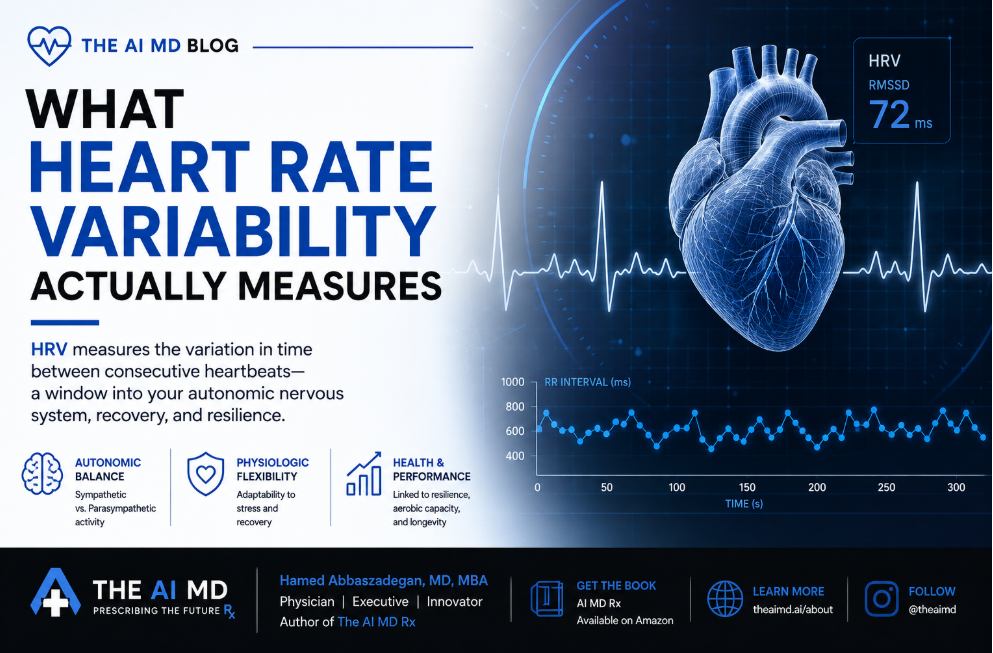
A 30-day baseline gives you something more valuable than a population average. It gives you your range. Your HRV range. Your resting heart rate pattern. Your sleep efficiency trend. Your respiratory rhythm. Your recovery profile. Once you understand that, you can identify meaningful deviations instead of reacting to every fluctuation.
This is the foundation of The AI MD Rx.
Not “what should your number be?”
The better question is: what does this number mean for you?
📖 Get your copy on Amazon:
https://www.amazon.com/AI-MD-Rx-Prescription-Wearables/dp/B0H38BTM83
🌐 Learn more about Dr. Abbaszadegan and The AI MD:
https://theaimd.ai/about
📲 Follow The AI MD for evidence-based insights on AI, digital health, wearable technology, longevity, and the future of medicine:
https://www.instagram.com/theaimd/






%20(1880%20x%20940%20px)%20(3%20x%204%20in)%20(1).png)


.png)


Stay Connected
If you’d like these insights delivered straight to your inbox, you can sign up below. You’ll receive evidence-based perspectives on AI in healthcare, practical implementation guidance, and updates on speaking engagements and media appearances.