
Hamed Abbaszadegan, MD, MBA

August 10, 2026
Hamed Abbaszadegan, MD, MBA
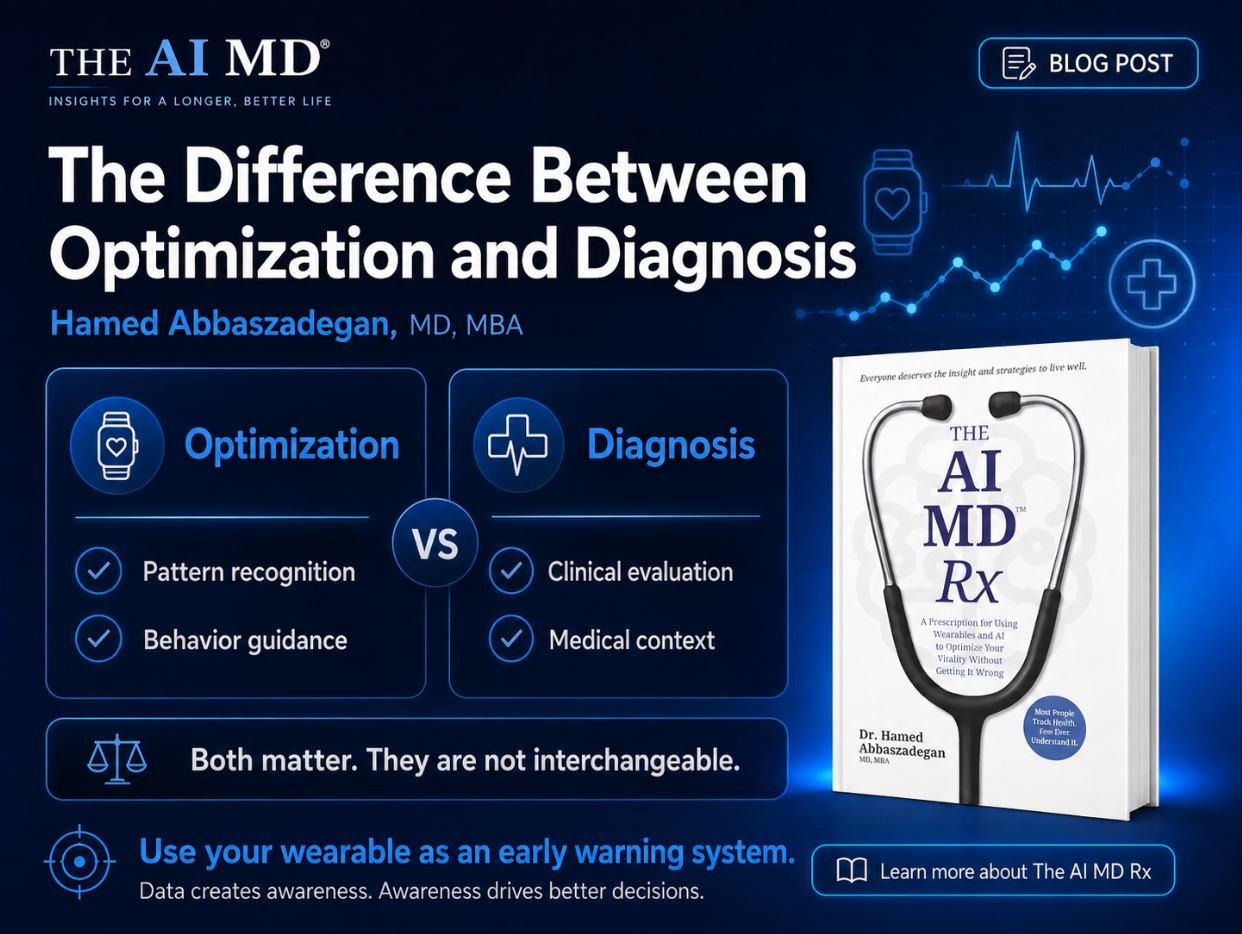
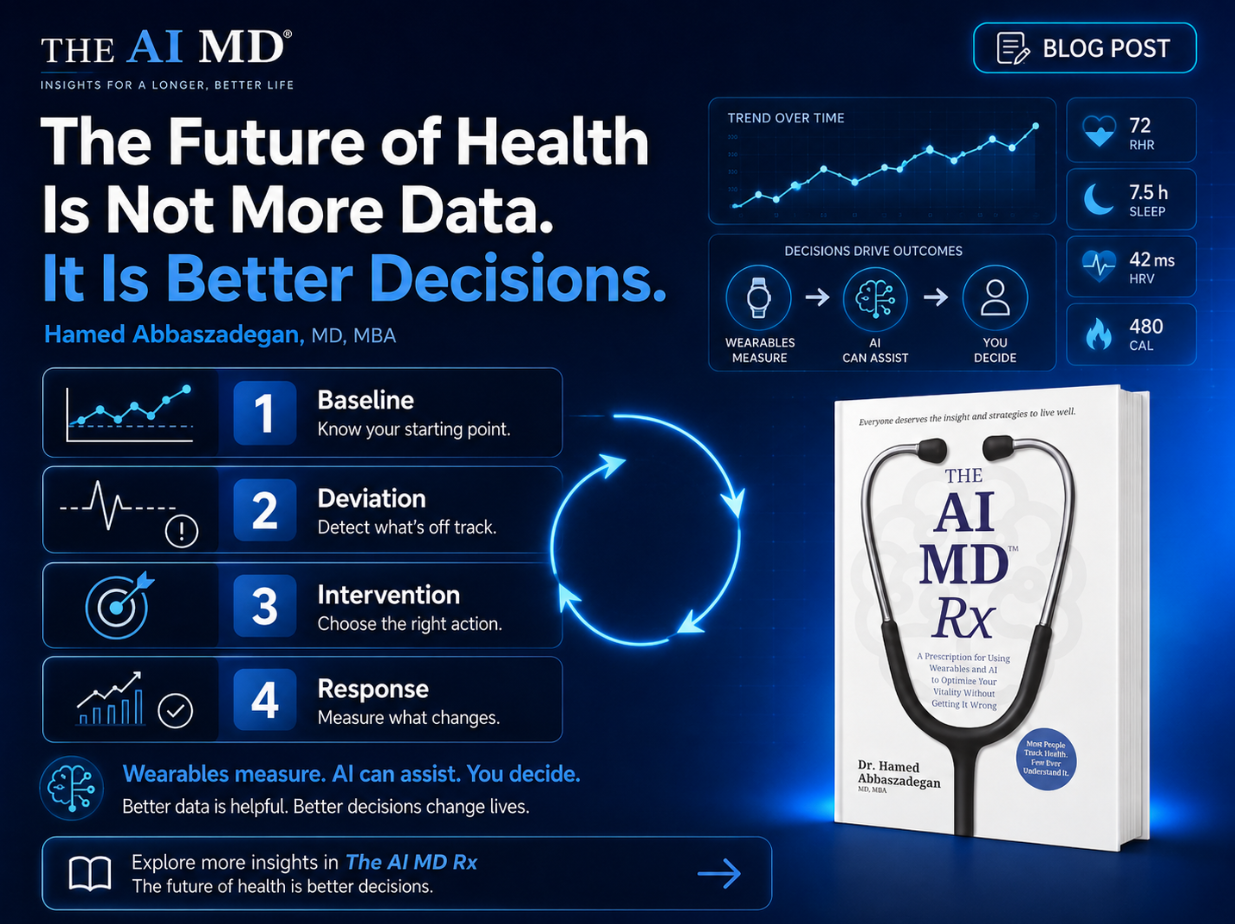
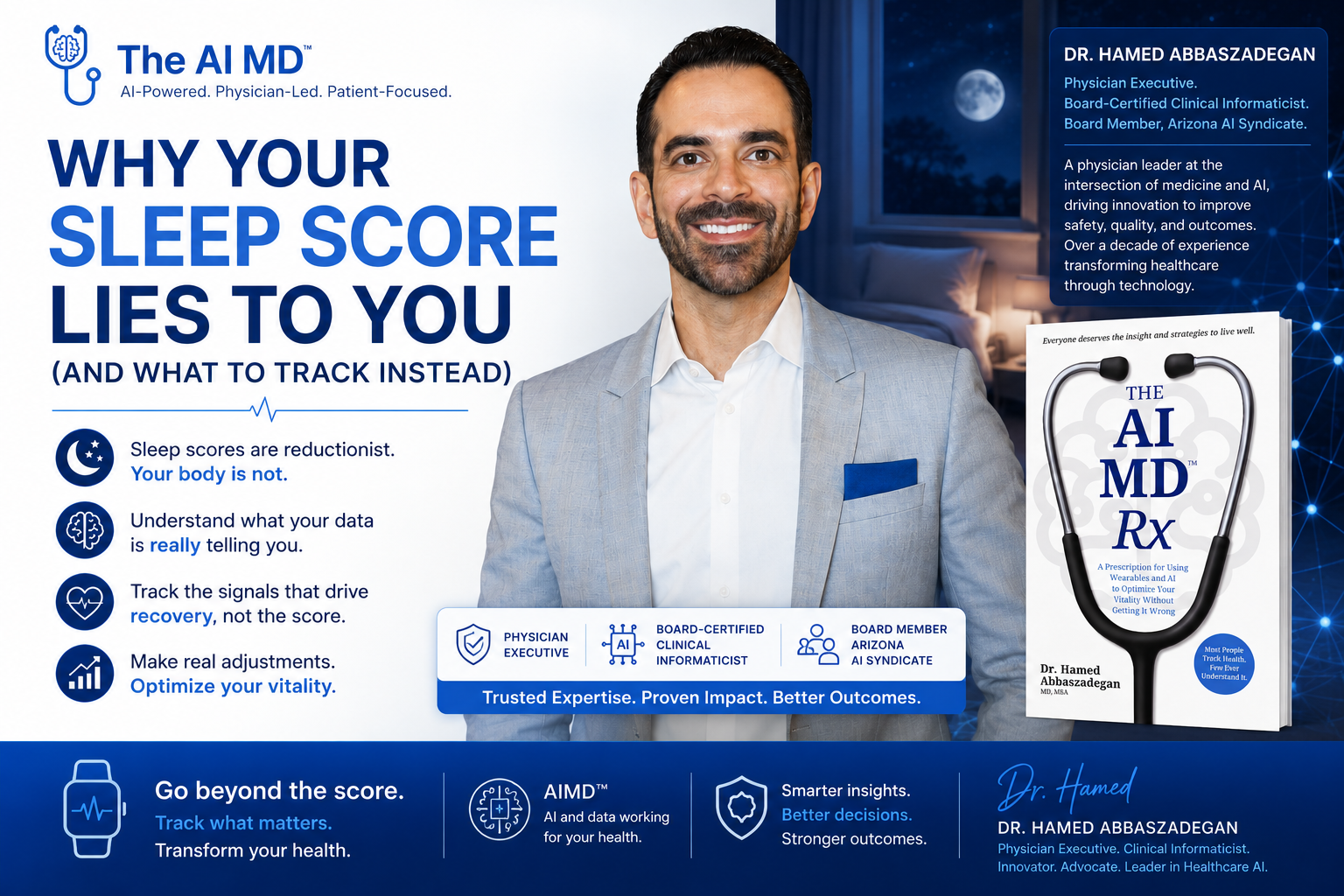
Your wearable can help you optimize your health.
That does not mean every metric is a diagnosis.
This distinction matters.
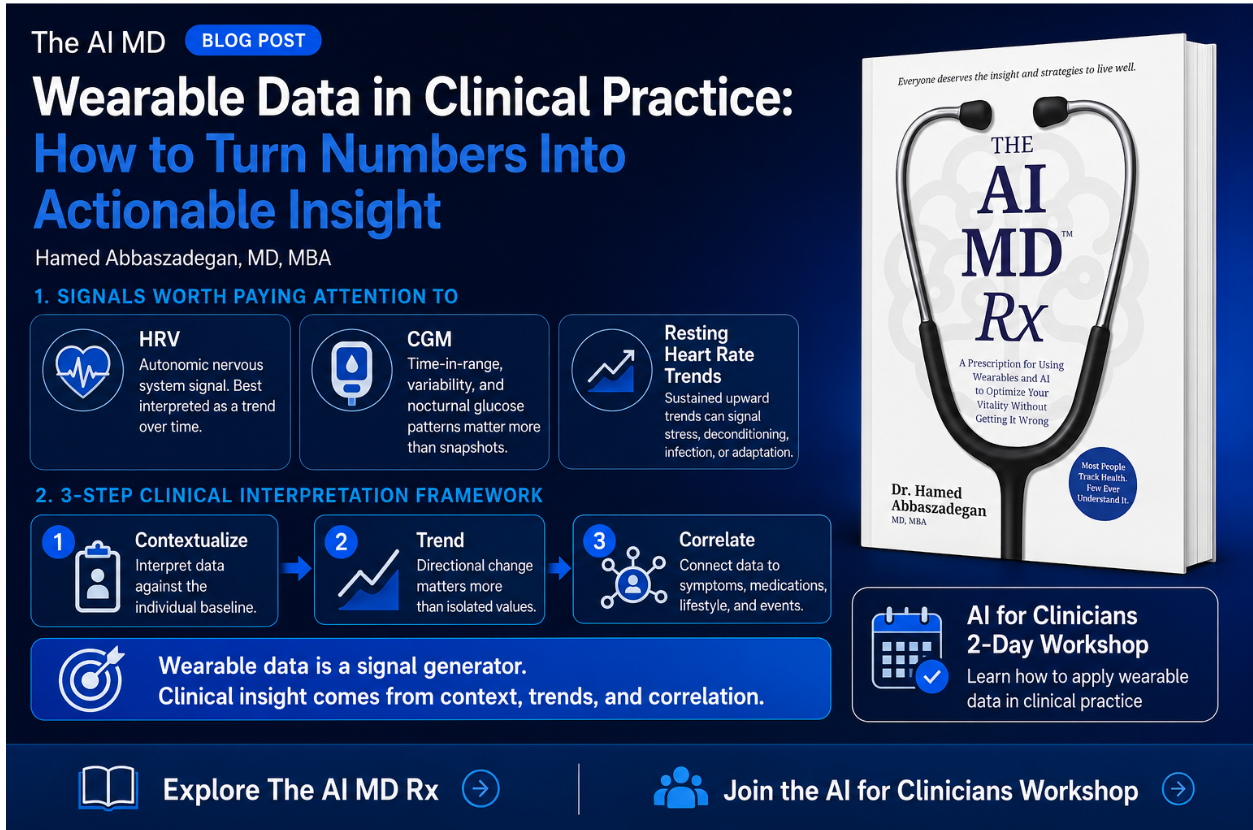
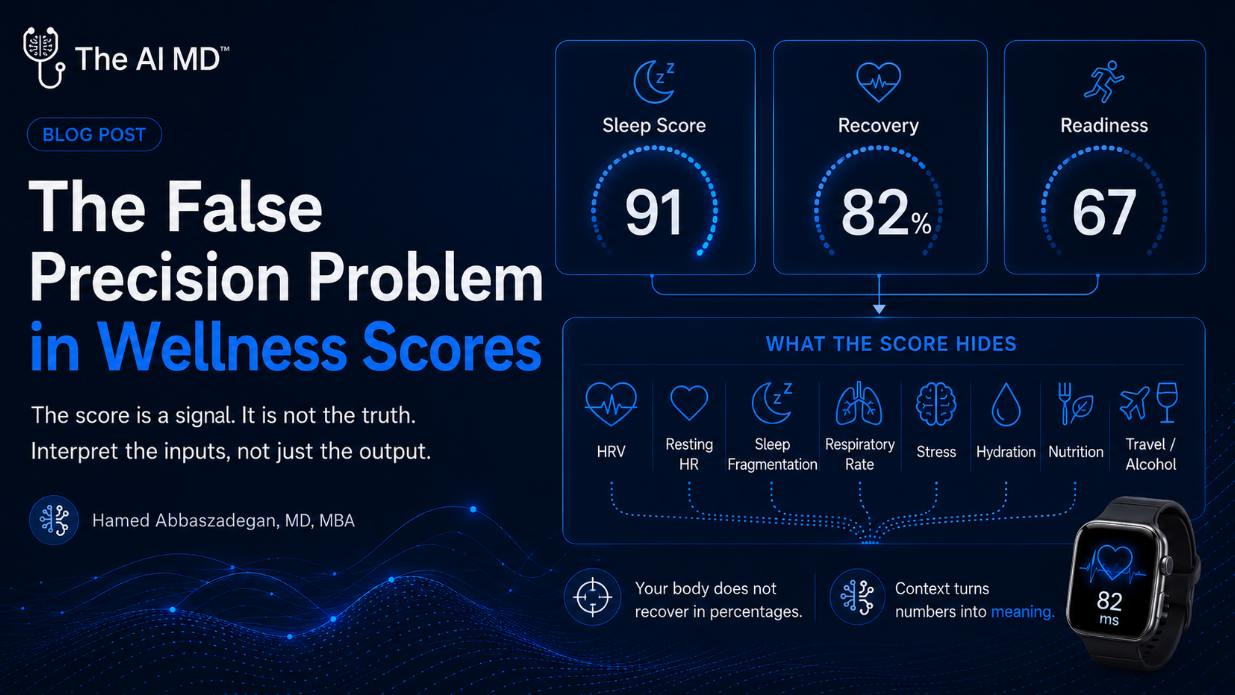
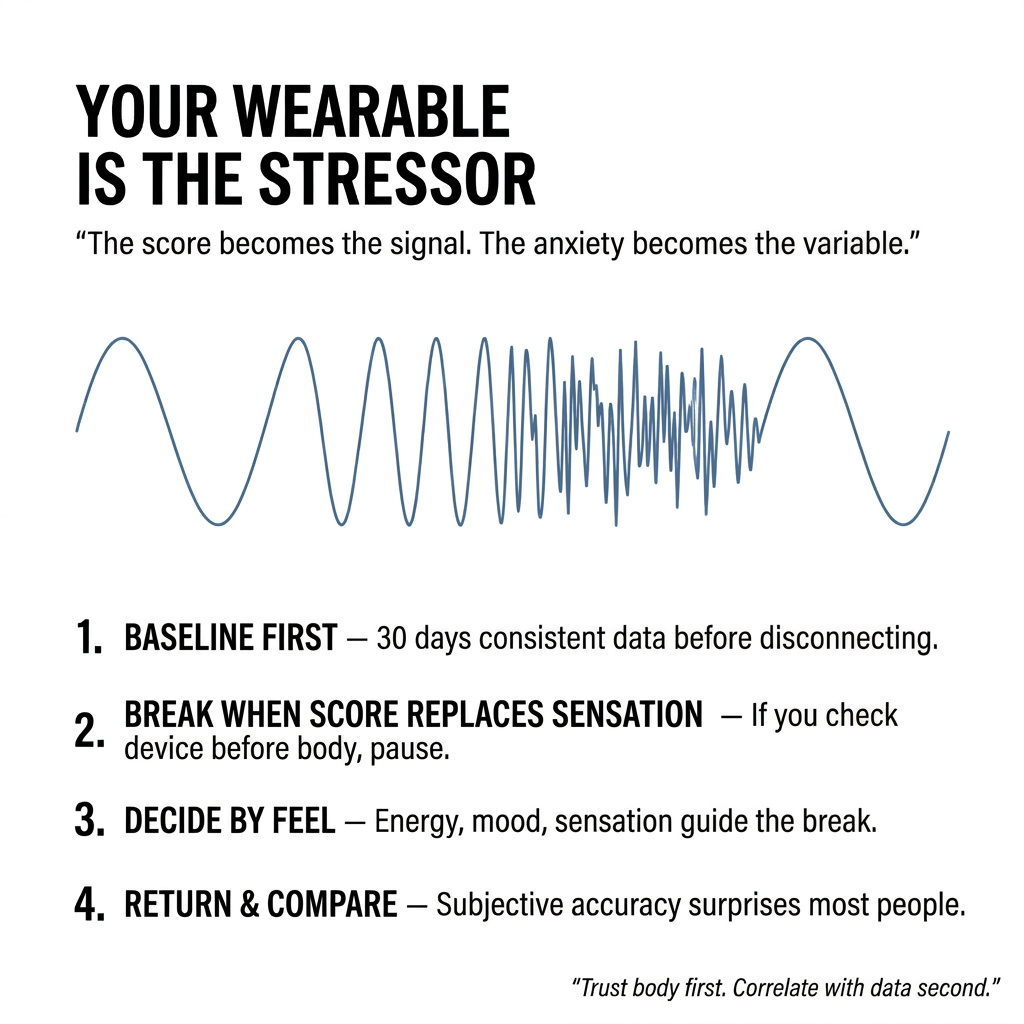
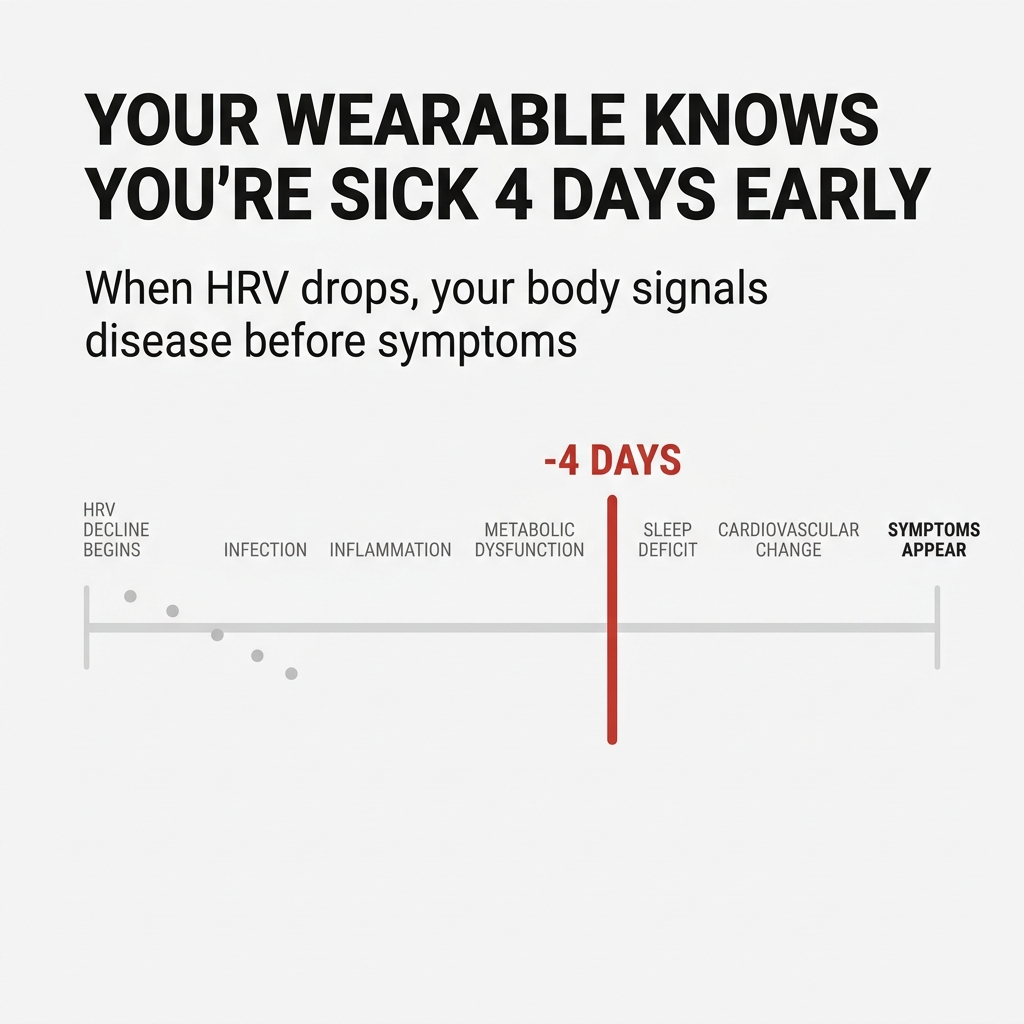
Wellness metrics can guide behavior. They can help you recognize patterns in sleep, stress, recovery, and training. They can show you when your physiology is drifting away from your baseline. They can help you make smarter decisions before symptoms appear.
But not every wearable metric carries the same clinical weight.
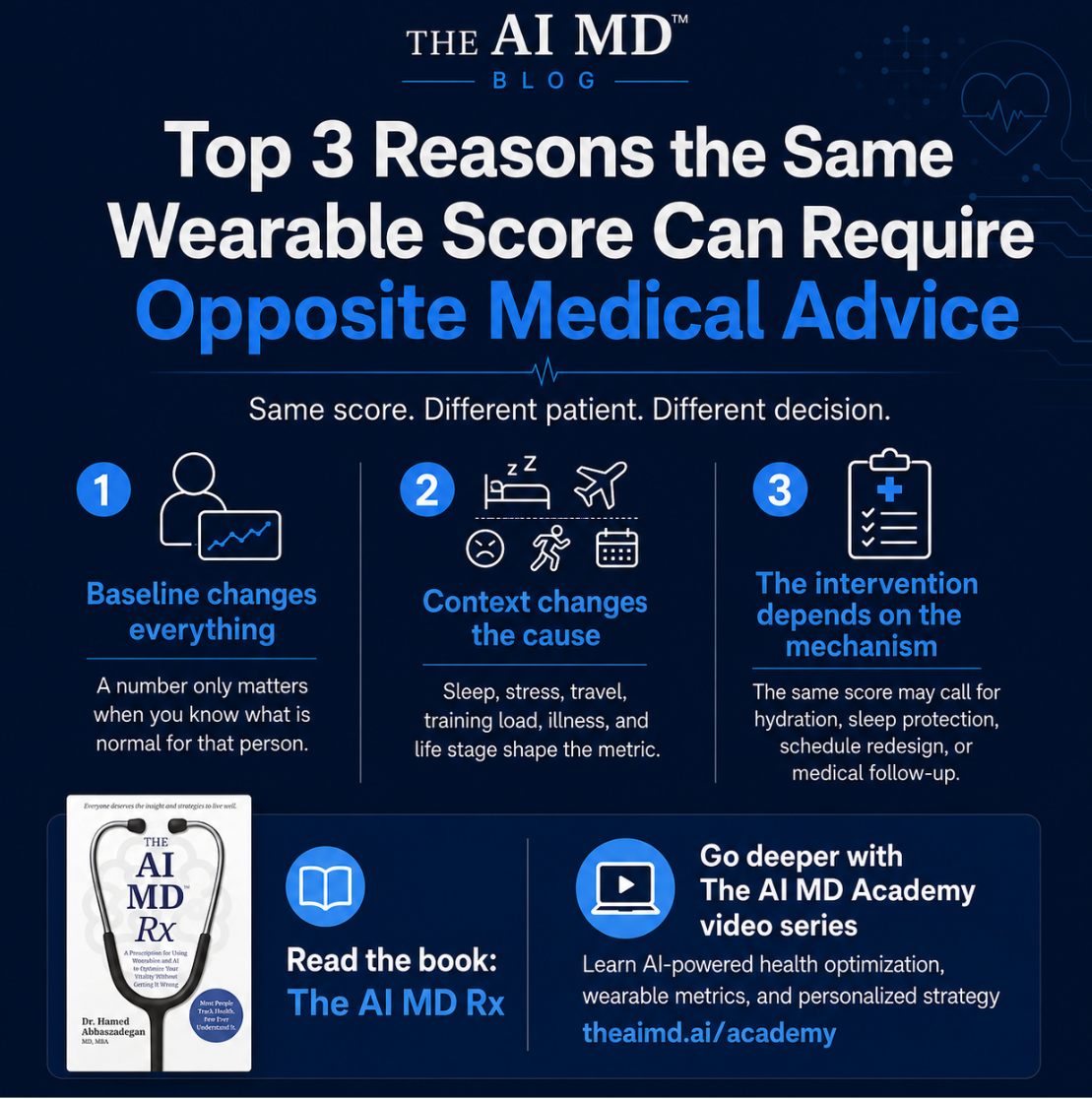
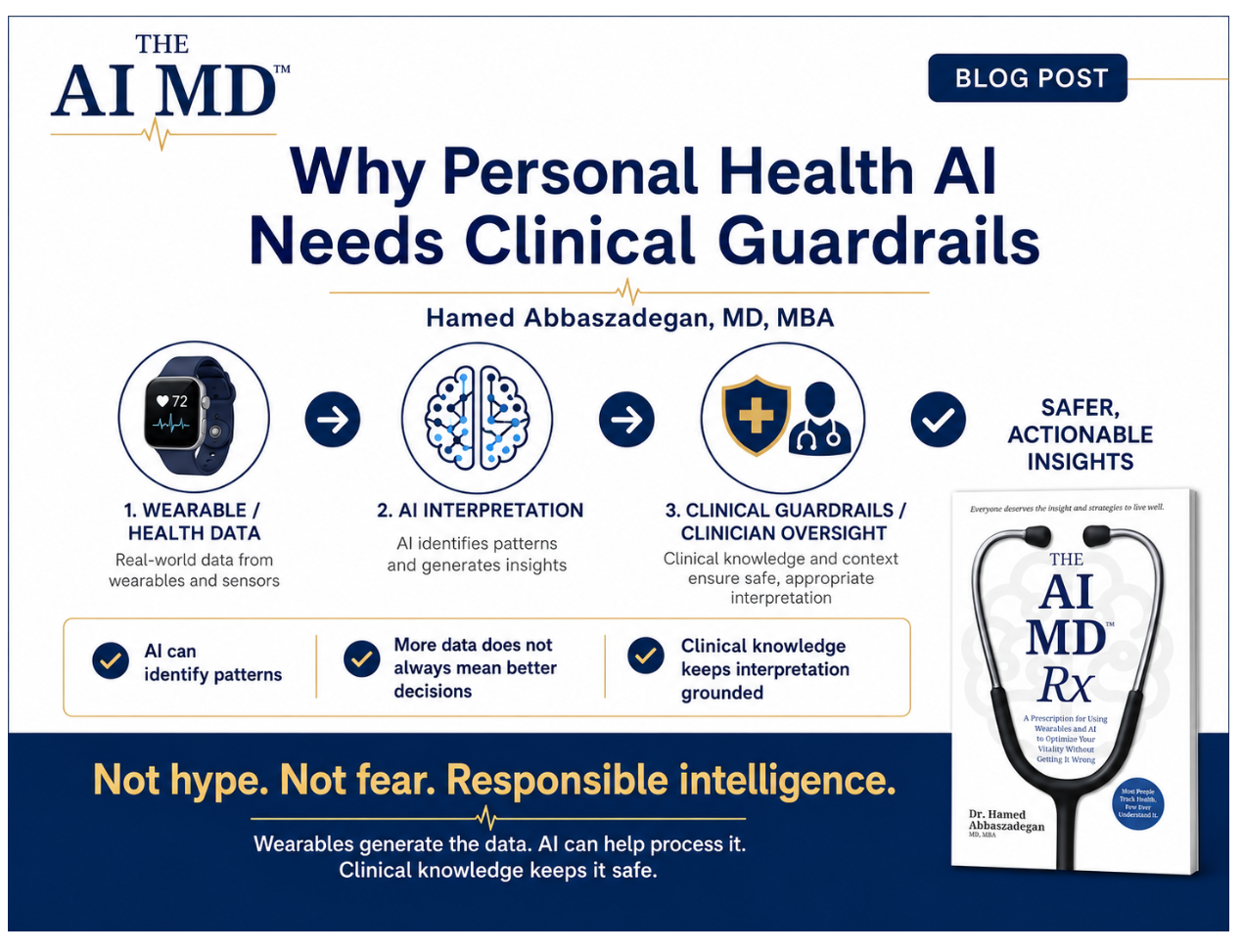
Some features are designed for general wellness. Others are regulated medical features. A sleep score is not the same as an ECG reading. A readiness score is not the same as an irregular rhythm alert. A stress estimate is not the same as a validated clinical diagnosis.
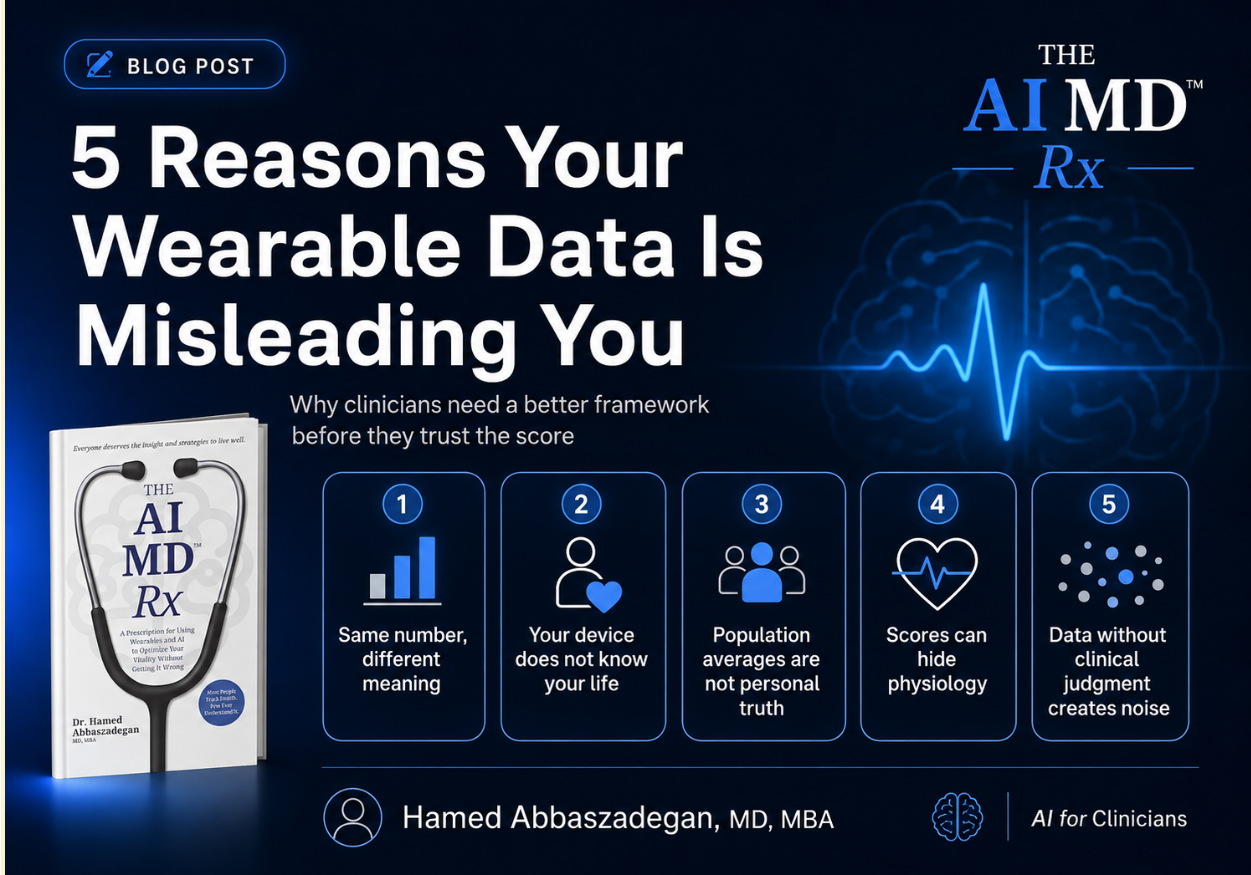
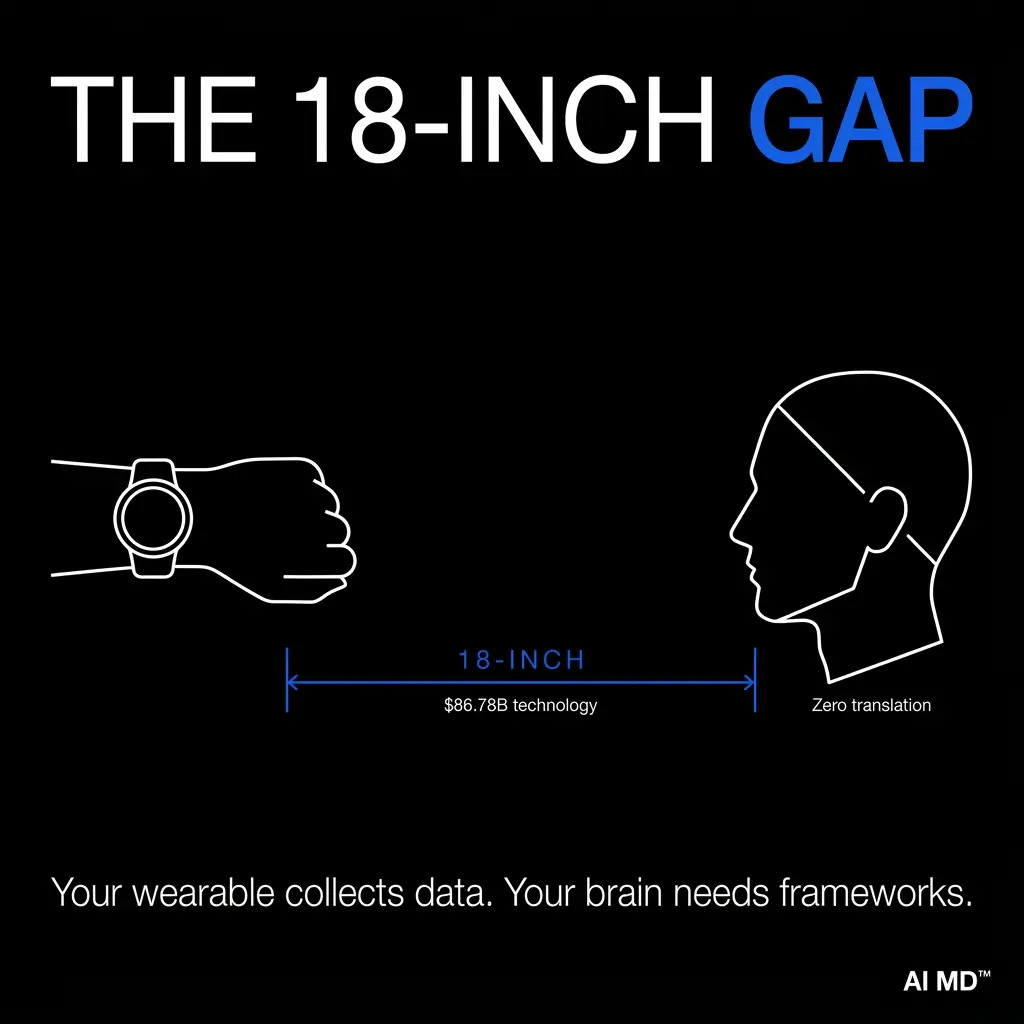
The mistake is treating all wearable data the same.
Optimization requires pattern recognition. Diagnosis requires clinical evaluation, validation, and medical context. Both matter. They are not interchangeable.
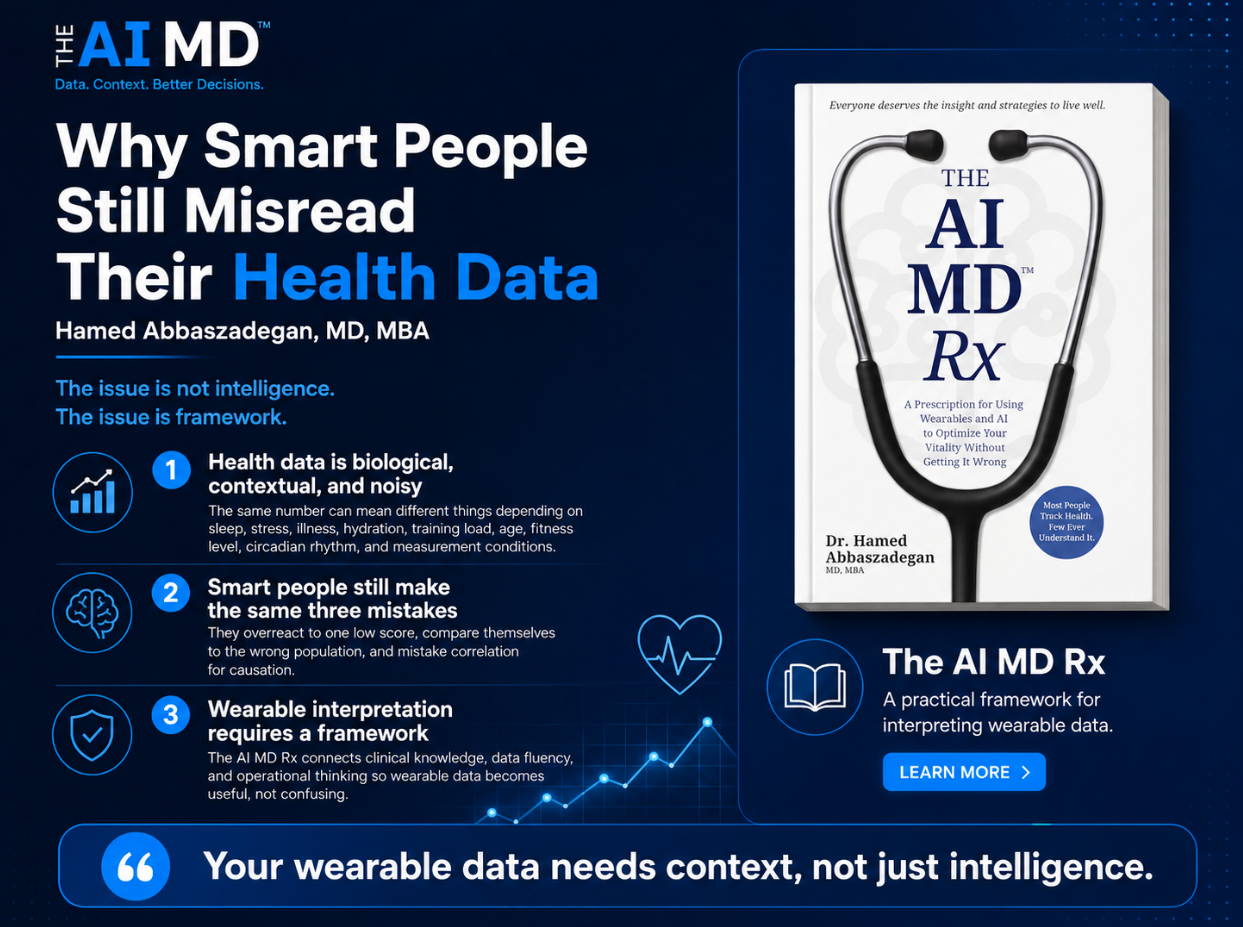
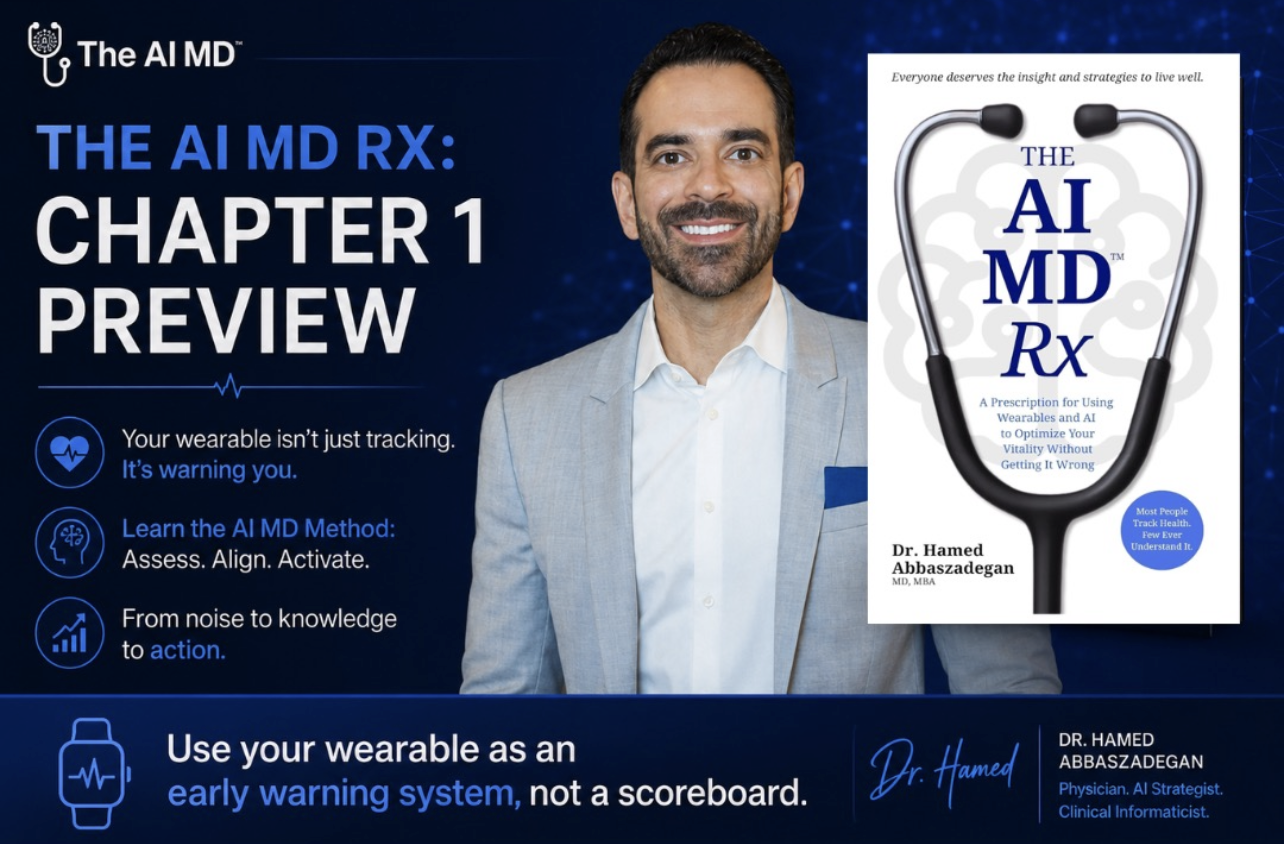
The AI MD Rx teaches you how to understand the difference.
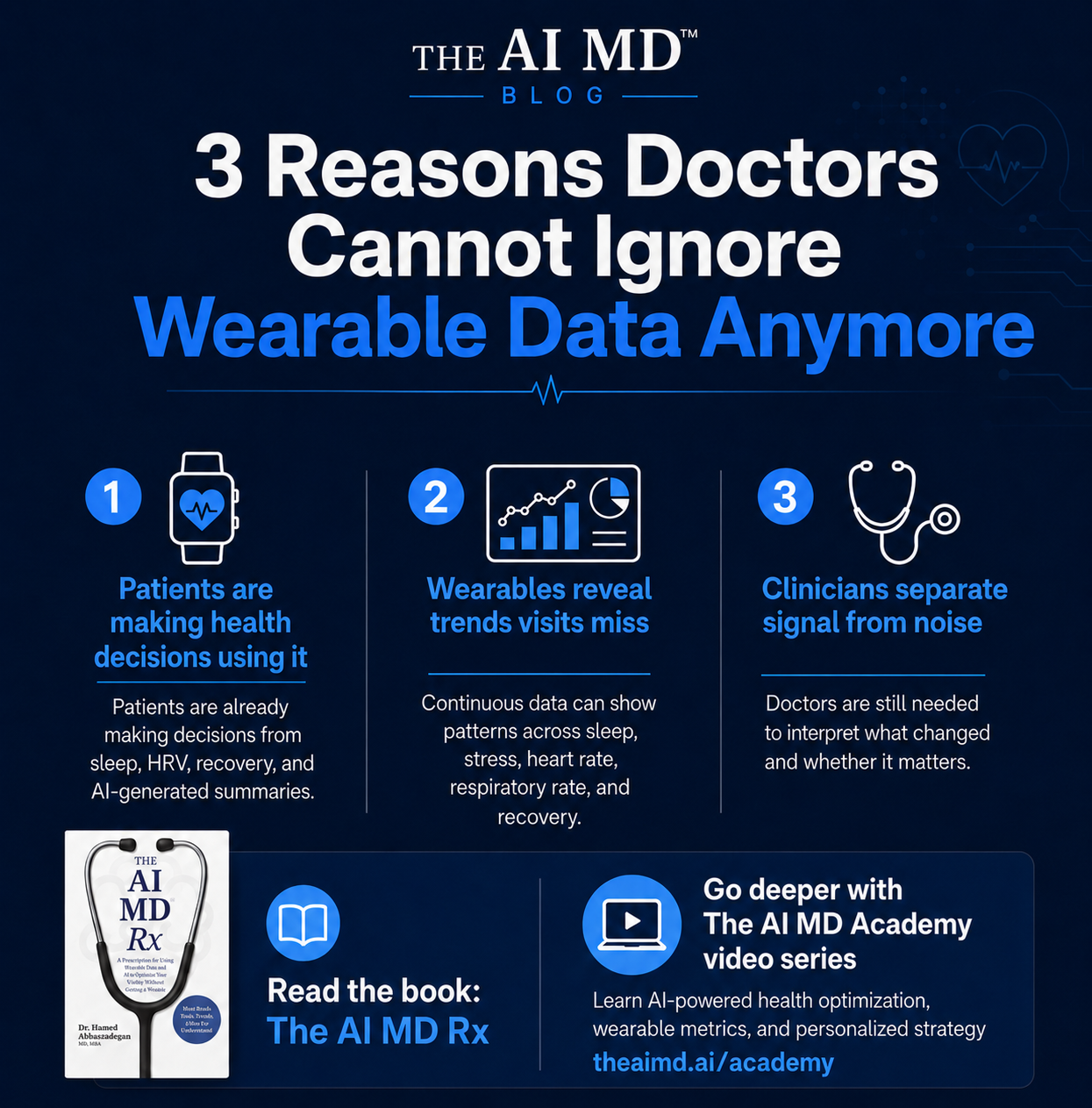
Use your wearable as an early warning system. Use your clinician for medical diagnosis and treatment decisions. The power is knowing when to observe, when to intervene behaviorally, and when to seek clinical follow-up.
That is the maturity wearable users need now.
Not panic.
Not dismissal.
Interpretation.
📖 Get your copy on Amazon:
https://www.amazon.com/AI-MD-Rx-Prescription-Wearables/dp/B0H38BTM83
🌐 Learn more about Dr. Abbaszadegan and The AI MD:
https://theaimd.ai/about
📲 Follow The AI MD for evidence-based insights on AI, digital health, wearable technology, longevity, and the future of medicine:
https://www.instagram.com/theaimd/







%20(1880%20x%20940%20px)%20(3%20x%204%20in)%20(1).png)


.png)


Stay Connected
If you’d like these insights delivered straight to your inbox, you can sign up below. You’ll receive evidence-based perspectives on AI in healthcare, practical implementation guidance, and updates on speaking engagements and media appearances.