
Hamed Abbaszadegan, MD, MBA

June 12, 2026
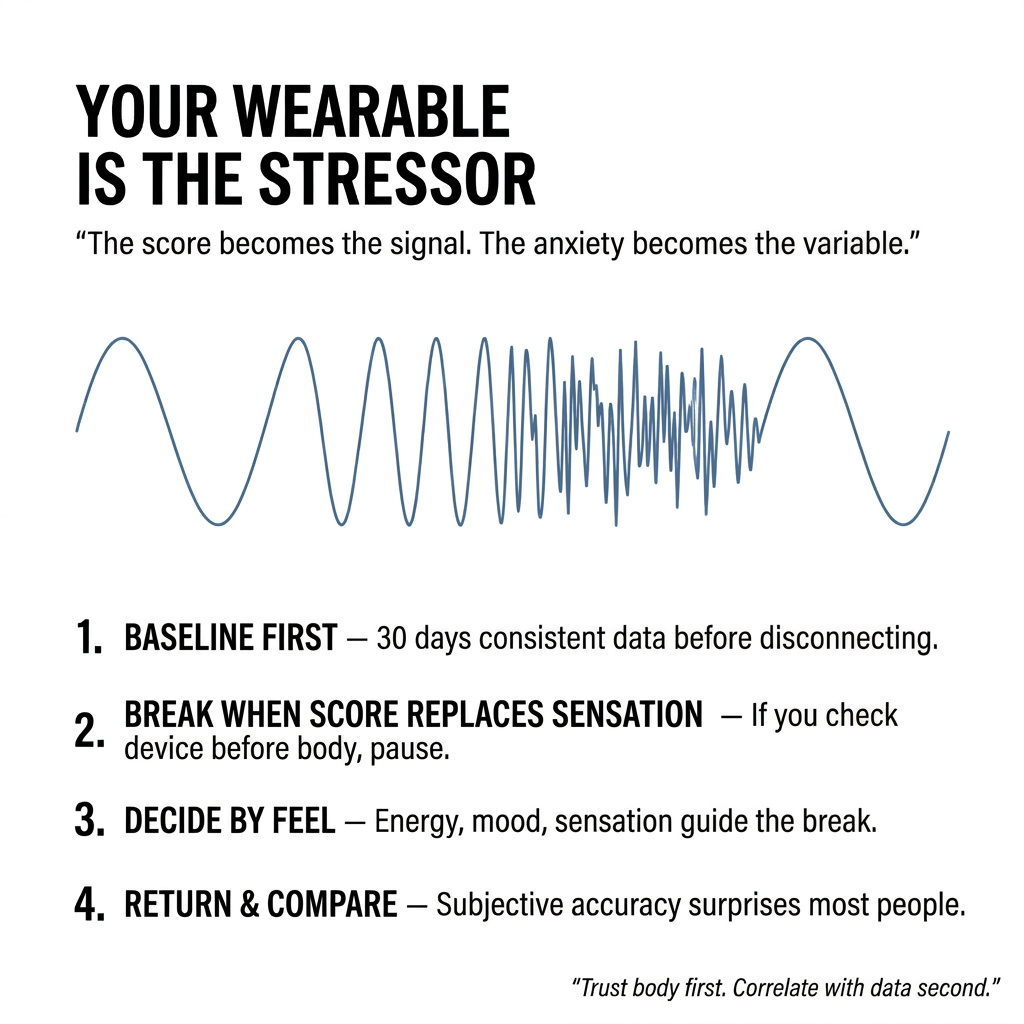
Stop tracking your recovery. Start recovering.
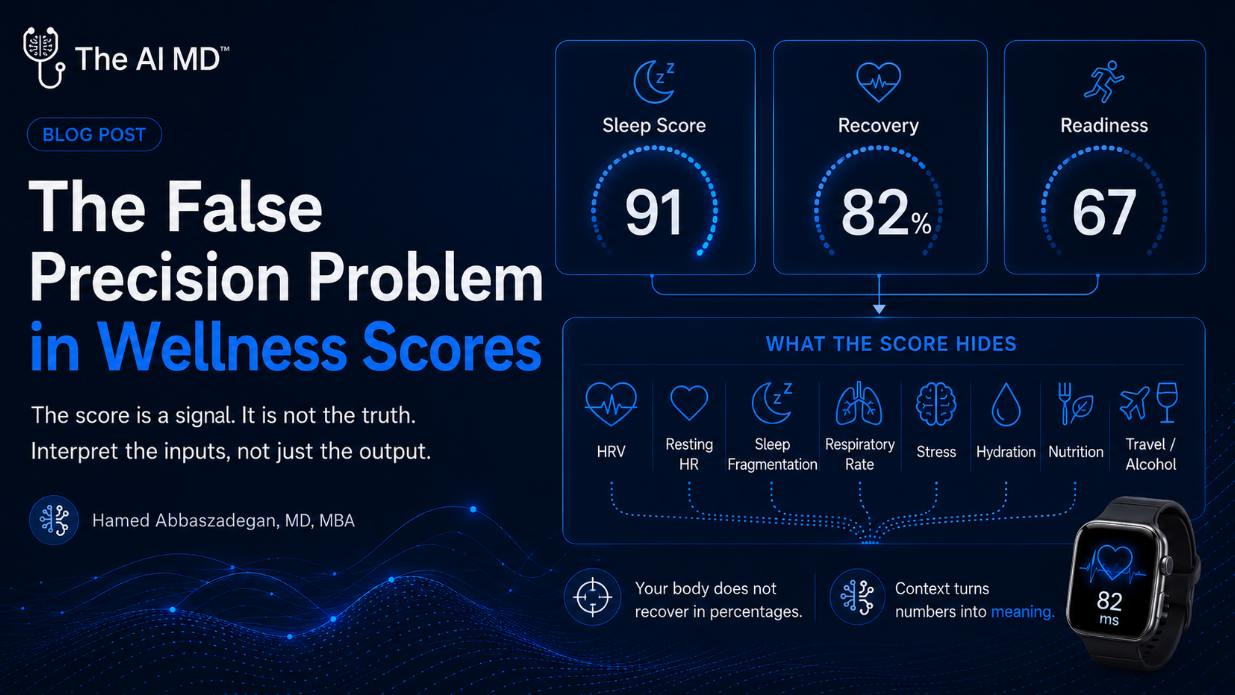
The score becomes the signal. The anxiety around the score becomes the variable. You're no longer tracking health. You're performing for a device. The patient wakes up feeling great, checks their wearable, their recovery score is low and suddenly they're questioning whether to train. The device created doubt where none existed 30 seconds earlier.
This isn't measurement. This is interference.
The phenomenon has a name: orthosomnia. Sleep anxiety driven by wearable data. But it goes beyond sleep. When you optimize for the score instead of the physiology, the feedback loop inverts.
Your HRV drops because you're stressed about your HRV.
Your sleep quality suffers because you're anxious about your sleep quality.
The tool designed to reduce physiological noise becomes the noise.
This is why The AI MD Rx protocol includes periodic wearable holidays. Not as self-care rather as a clinical strategy to restore measurement validity.
Here's how it works:
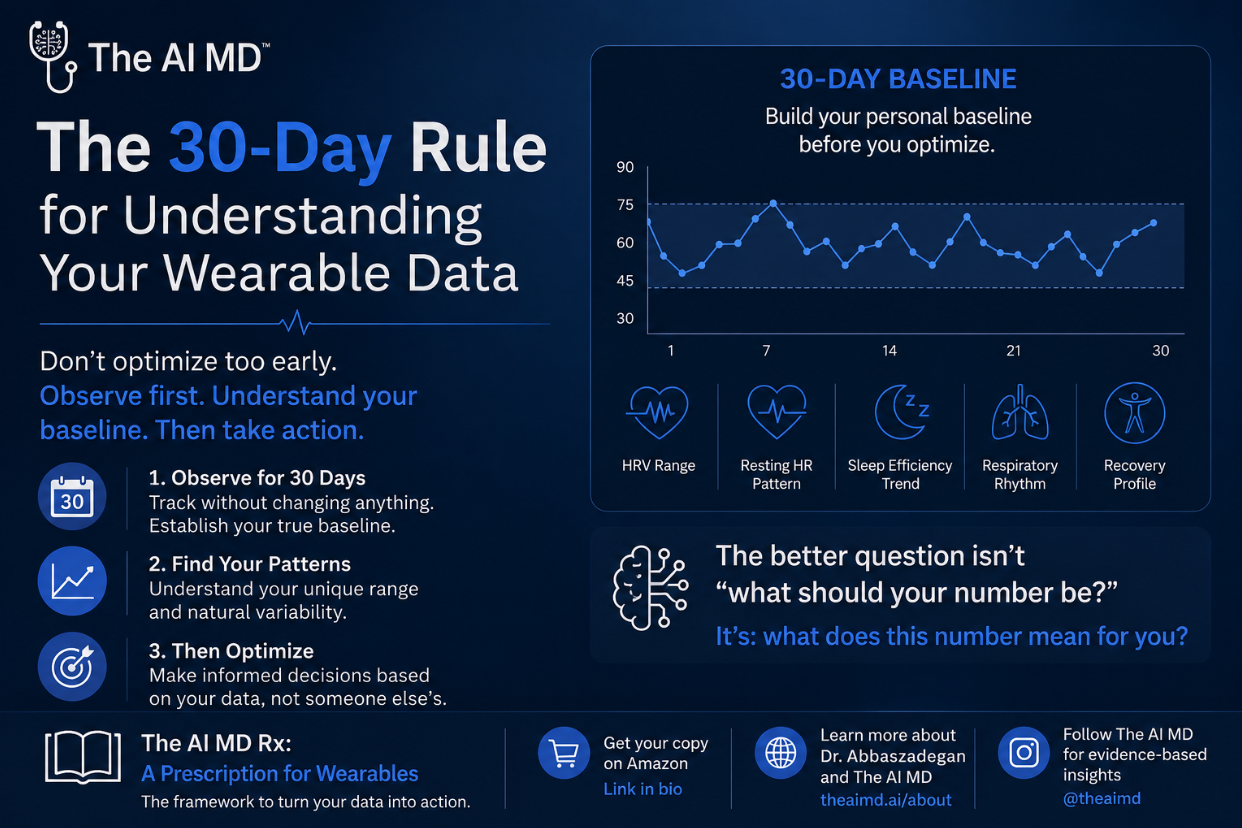
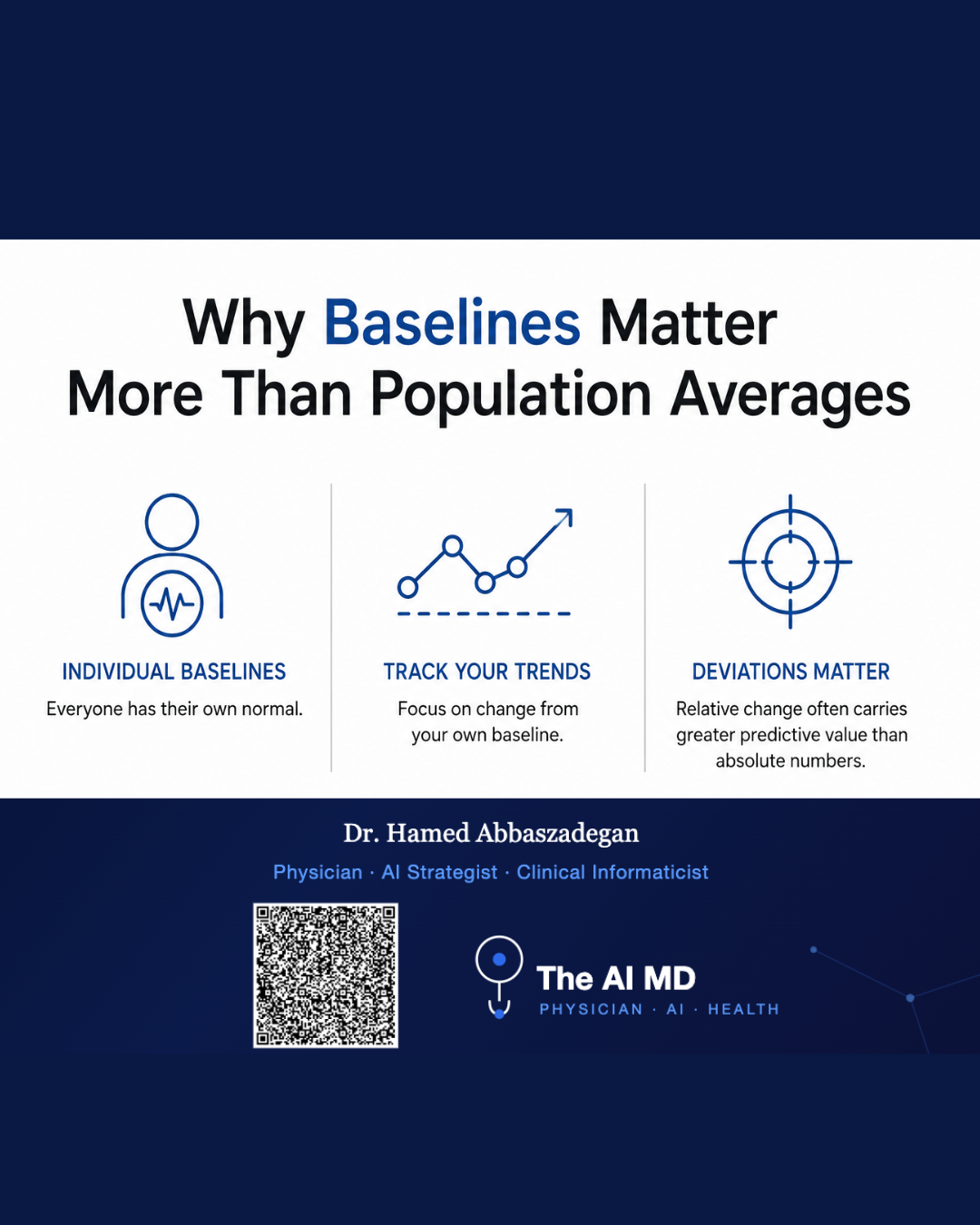
1) Establish baseline data first. You need around a month of consistent tracking to understand your patterns before disconnecting.
2) Take strategic breaks when score-checking replaces body awareness. If you check your recovery score before checking how you feel, there's your signal for a break.
3) During the break, make decisions based on subjective measures. Energy level. Mood. Physical sensation. The things you relied on before you had a device quantifying them.
4) Return to tracking after a week (or longer if needed). Compare your decision-making during the break to your typical data-driven approach. Most people discover their subjective assessment was more accurate than they thought.
The goal is not to abandon wearables. It is to prevent the measurement tool from becoming the stressor you're trying to measure. When you return to tracking after a break, the data means something again. You're measuring physiology, not performance anxiety. One type of tracking improves outcomes. The other creates problems you then need to solve.
The full protocol is in the book. When to extend breaks, how to spot biofeedback distortion early, which metrics stay reliable when others don't.
But the principle is simple: Trust your body first, correlate with data second.
Not the other way around.
📖 Get your copy on Amazon:
https://www.amazon.com/AI-MD-Rx-Prescription-Wearables/dp/B0H38BTM83
🌐 Learn more about Dr. Abbaszadegan and The AI MD:
https://theaimd.ai/about
📲 Follow The AI MD for evidence-based insights on AI, digital health, wearable technology, longevity, and the future of medicine:https://www.instagram.com/theaimd/




%20(1880%20x%20940%20px)%20(3%20x%204%20in)%20(1).png)



.png)


Stay Connected
If you’d like these insights delivered straight to your inbox, you can sign up below. You’ll receive evidence-based perspectives on AI in healthcare, practical implementation guidance, and updates on speaking engagements and media appearances.