
Hamed Abbaszadegan, MD, MBA

July 10, 2026

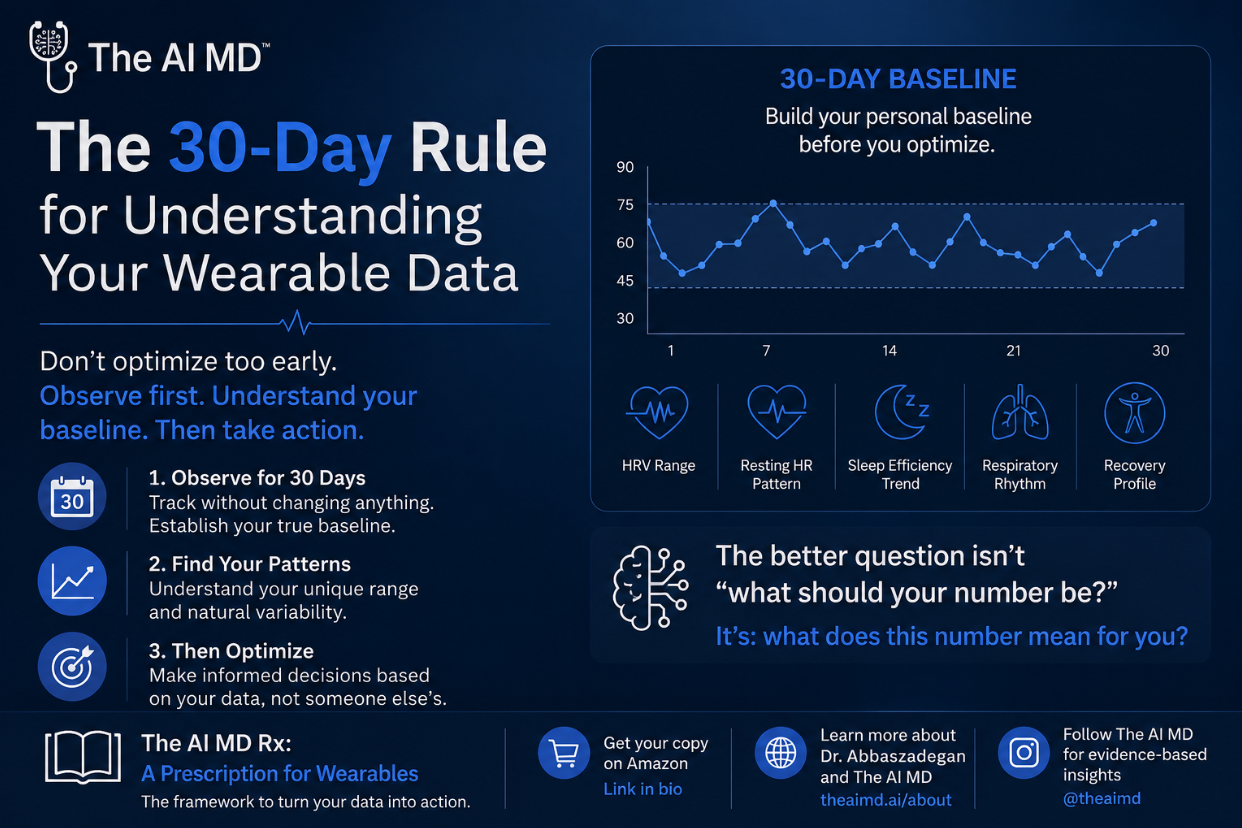
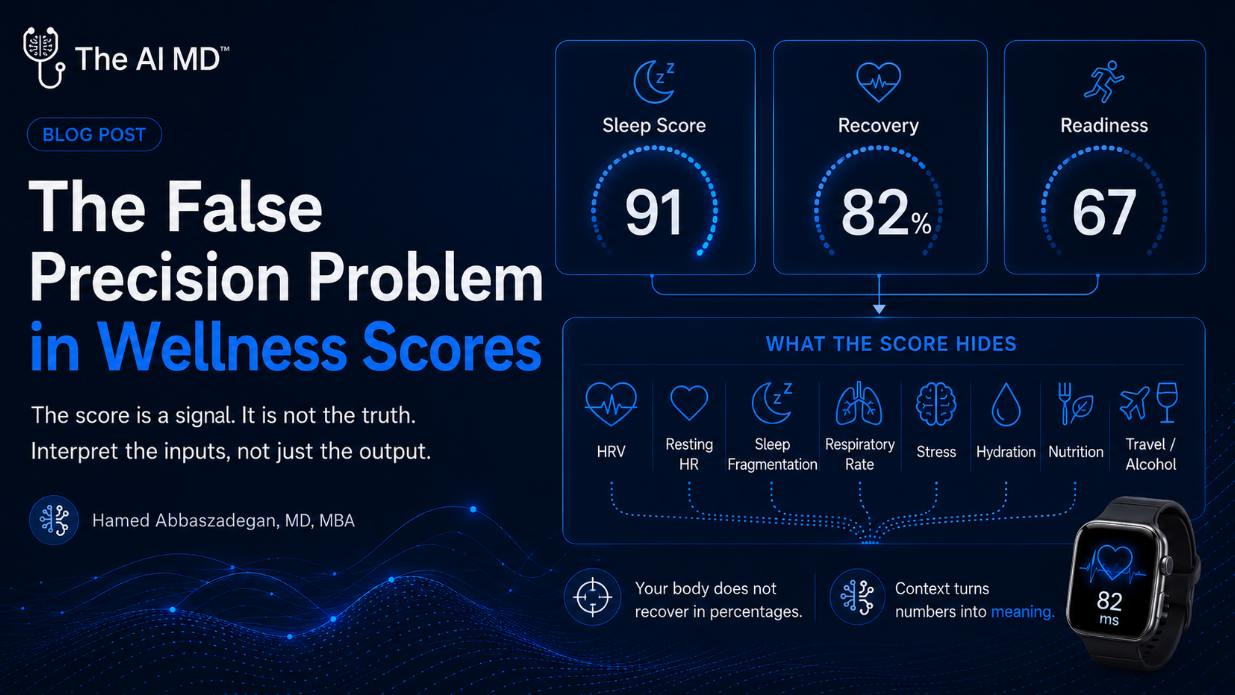
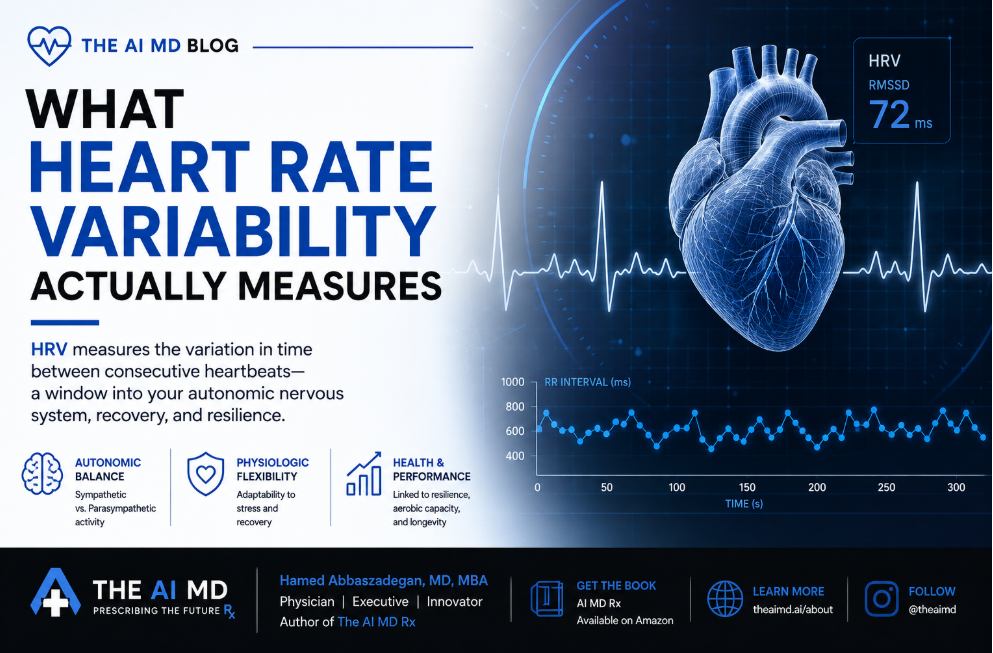
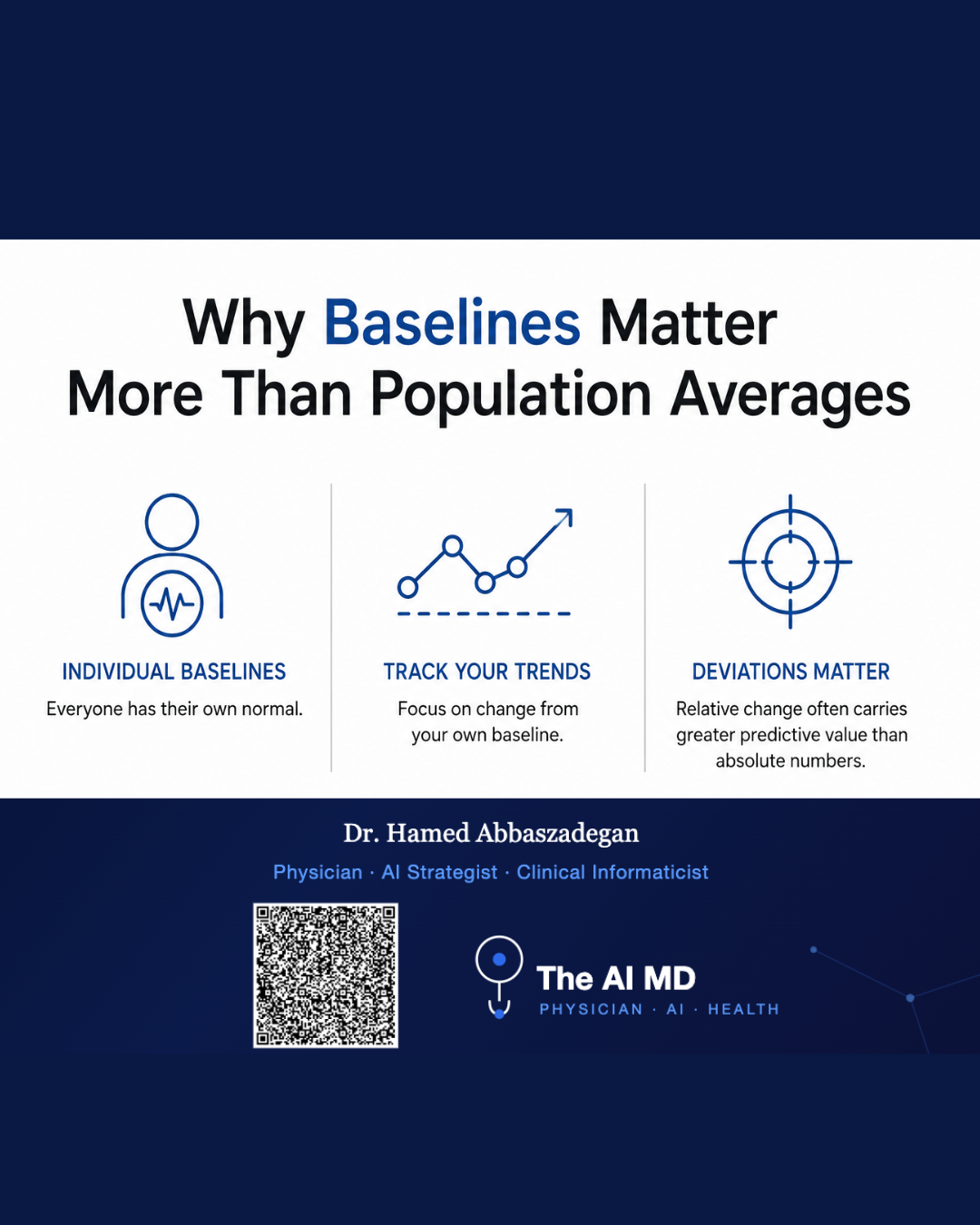
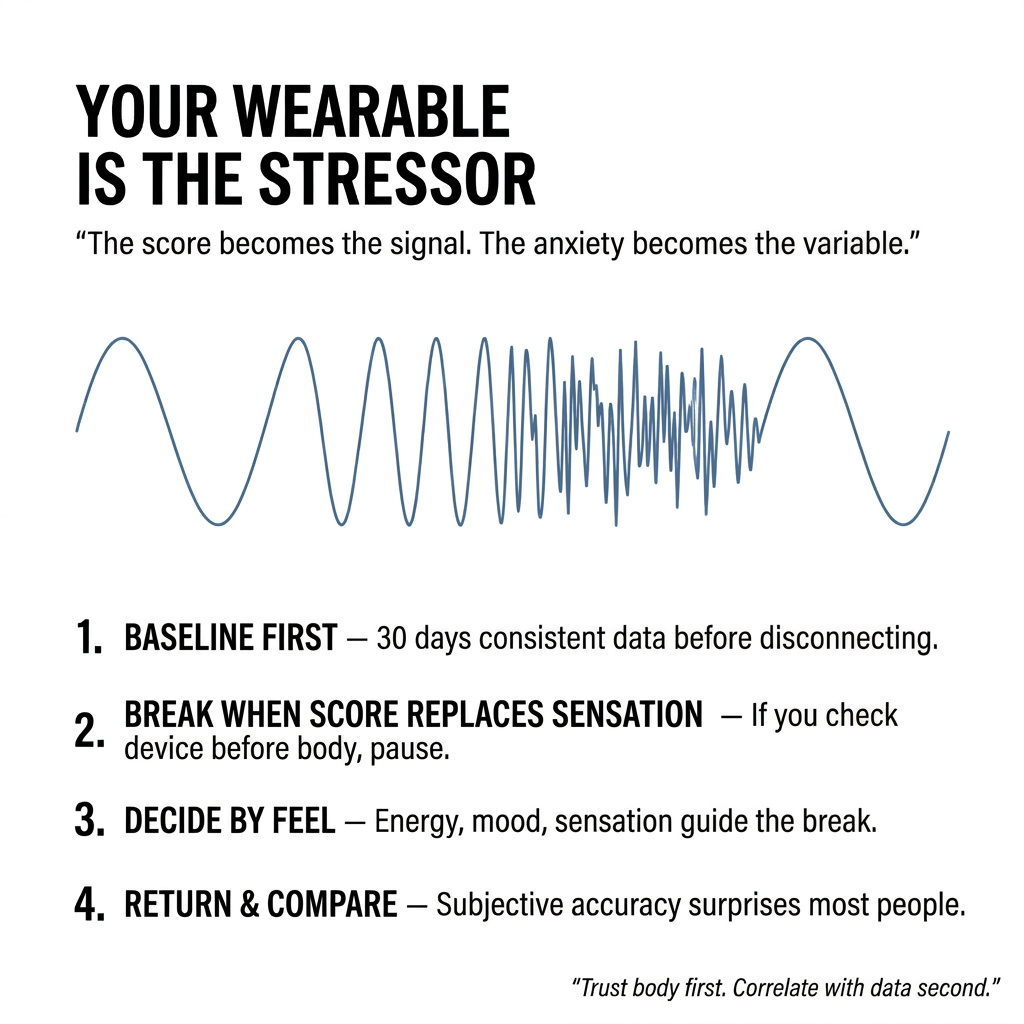
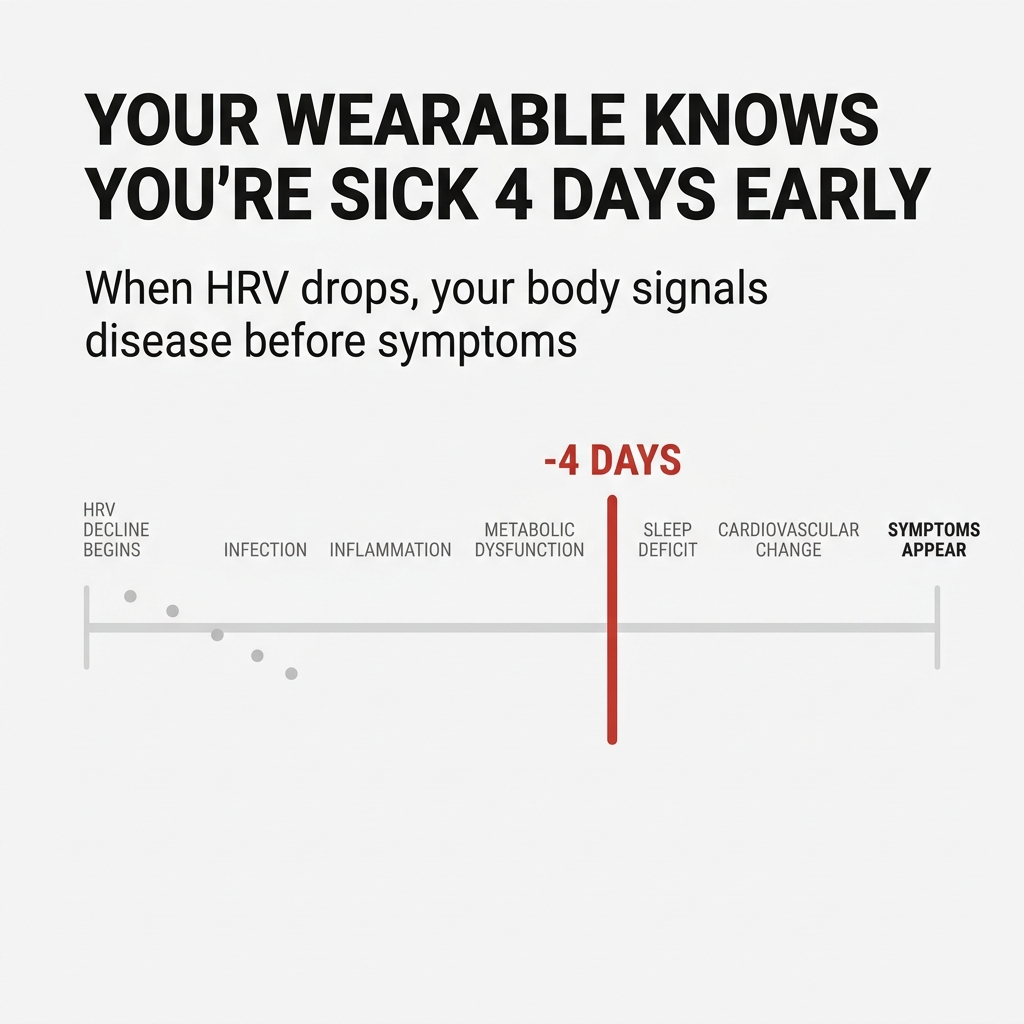
Your HRV dropped overnight. Interesting. Your HRV dropped three nights in a row while resting heart rate climbed and sleep efficiency declined. Now we have a pattern. Single data points are noise. Three-day trends are a signal.
I helped developed AI governance standards for healthcare operations because I watched people make decisions based on insufficient data windows. Here is the 72-hour framework I teach:
1) Day 1: Observe, do not react. One night of low HRV or poor sleep could be measurement error, one glass of wine too close to sleep, or a room that was too warm. Note it. Do nothing.
2) Day 2: Confirm direction Second consecutive night of declining metrics? Patterns might be starting to form. Start annotating behavior. What changed in your routine?
3) Day 3: Pattern confirmed, intervention begins Third consecutive night? This is no longer noise. Your body is telling you something. Time to adjust training load, sleep hygiene, timing of liquids, stress management, nutrition or some other influencing factor only you might know..
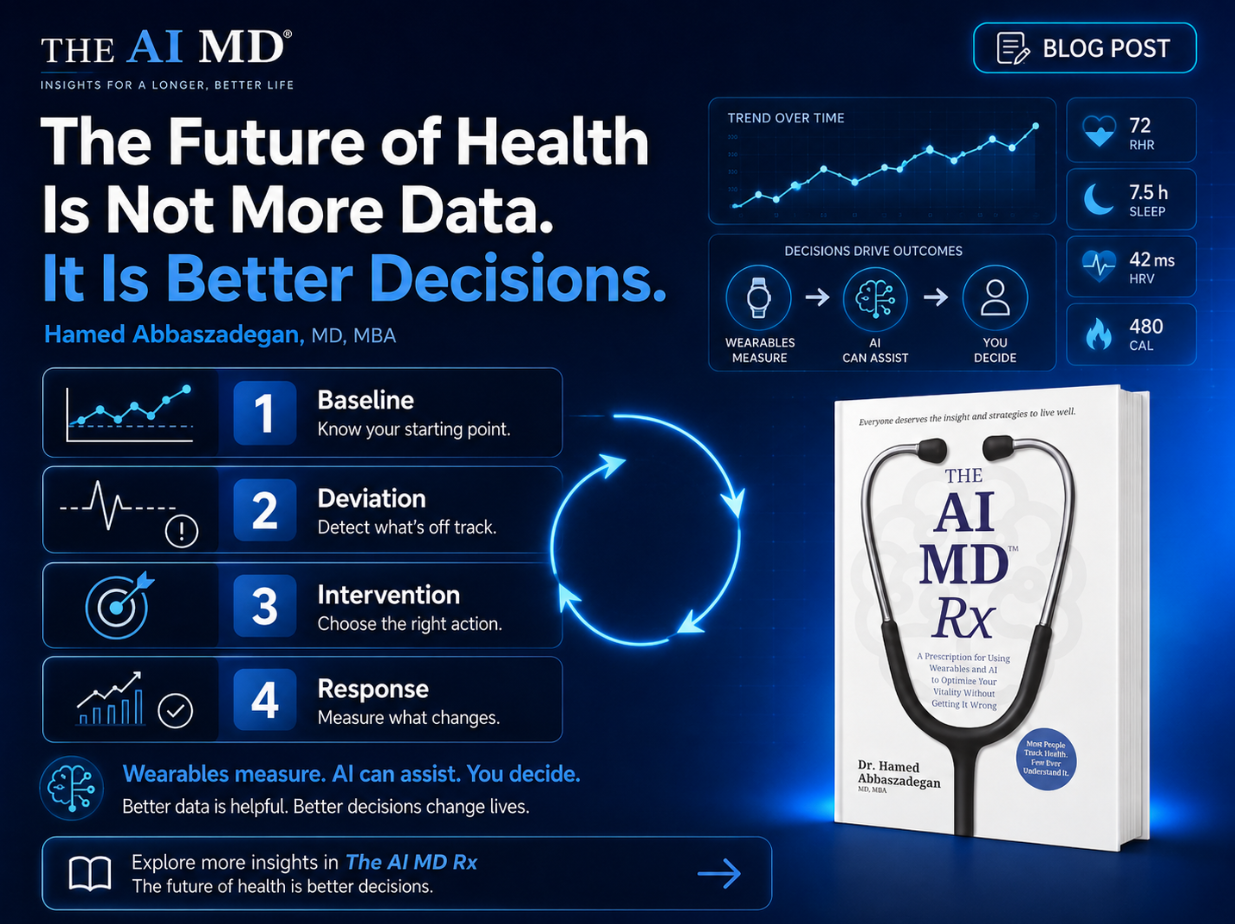
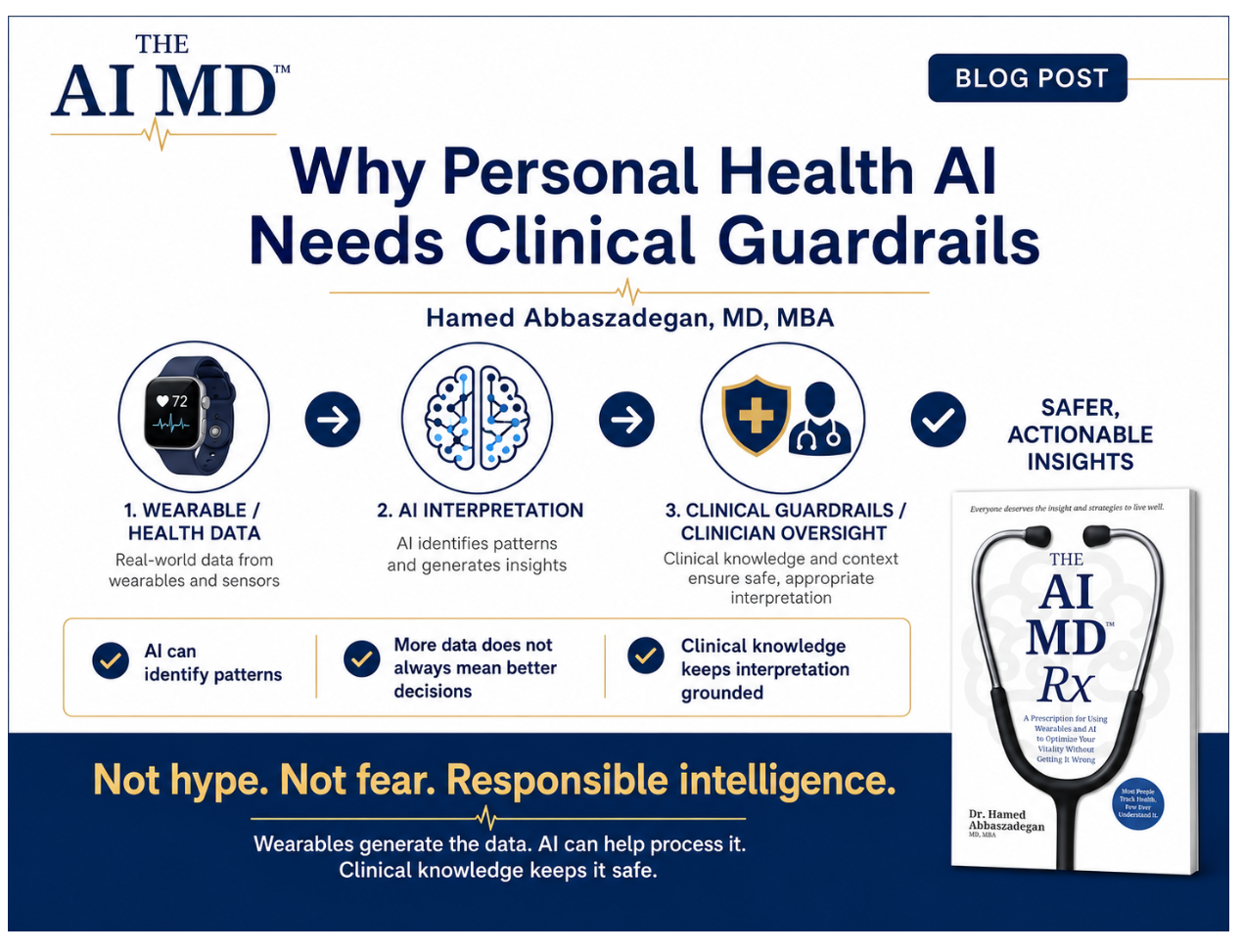
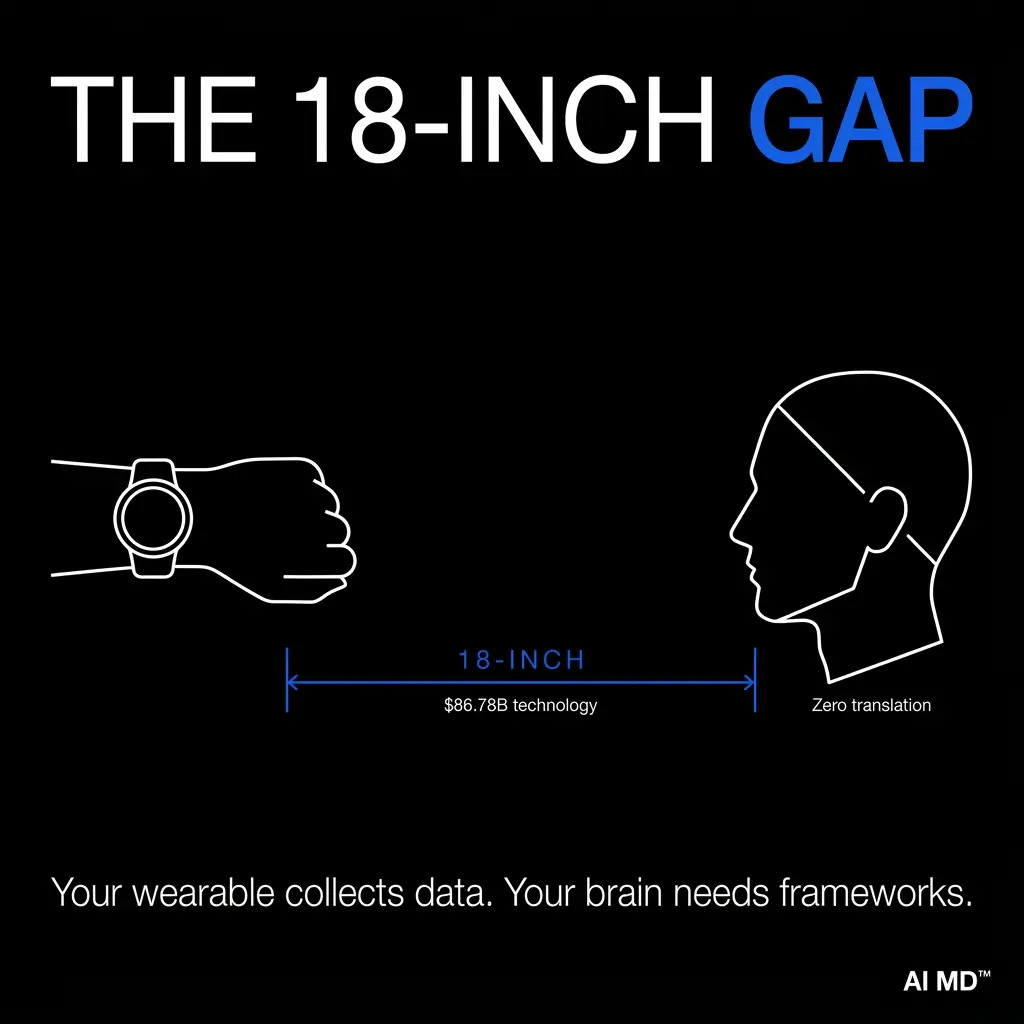
Over 50% of wearables now leverage AI for more precise health tracking and predictive health insights, particularly in chronic disease management. The technology caught up. Your device can detect patterns across time. But accuracy without interpretation is just expensive noise. Most people react to every daily fluctuation. They overtrain on high recovery days and panic on low HRV mornings. The data science principle is simple: increase your sample size before drawing conclusions. 72 hours gives you three data points. Enough to distinguish the beginnings of trend from outlier. The AI MD Rx teaches you how to recognize patterns across time-series measurements. When to act. When to wait. How to distinguish meaningful deviation from normal fluctuation. You learn how to read the trend line, not the daily number. Your wearable updates every morning. The pattern recognition framework is in the book.
📖 Get your copy on Amazon:
https://www.amazon.com/AI-MD-Rx-Prescription-Wearables/dp/B0H38BTM83
🌐 Learn more about Dr. Abbaszadegan and The AI MD:
https://theaimd.ai/about
📲 Follow The AI MD for evidence-based insights on AI, digital health, wearable technology, longevity, and the future of medicine:
https://www.instagram.com/theaimd/






%20(1880%20x%20940%20px)%20(3%20x%204%20in)%20(1).png)


.png)


Stay Connected
If you’d like these insights delivered straight to your inbox, you can sign up below. You’ll receive evidence-based perspectives on AI in healthcare, practical implementation guidance, and updates on speaking engagements and media appearances.