
Hamed Abbaszadegan, MD, MBA

July 10, 2026
I am double board-certified in Internal Medicine and Clinical Informatics.
I spent six years as Program Director of the Clinical Informatics Fellowship at University of Arizona College of Medicine Phoenix. I developed AI governance standards for healthcare operations through Healthcare Standards Institute.
I still needed a framework to interpret my own wearable data. Clinical training teaches you what metrics mean. It does not teach you how to integrate continuous personal data streams into daily decision-making. Here is what a decade at the intersection of clinical operations, data science, and health technology strategy taught me:
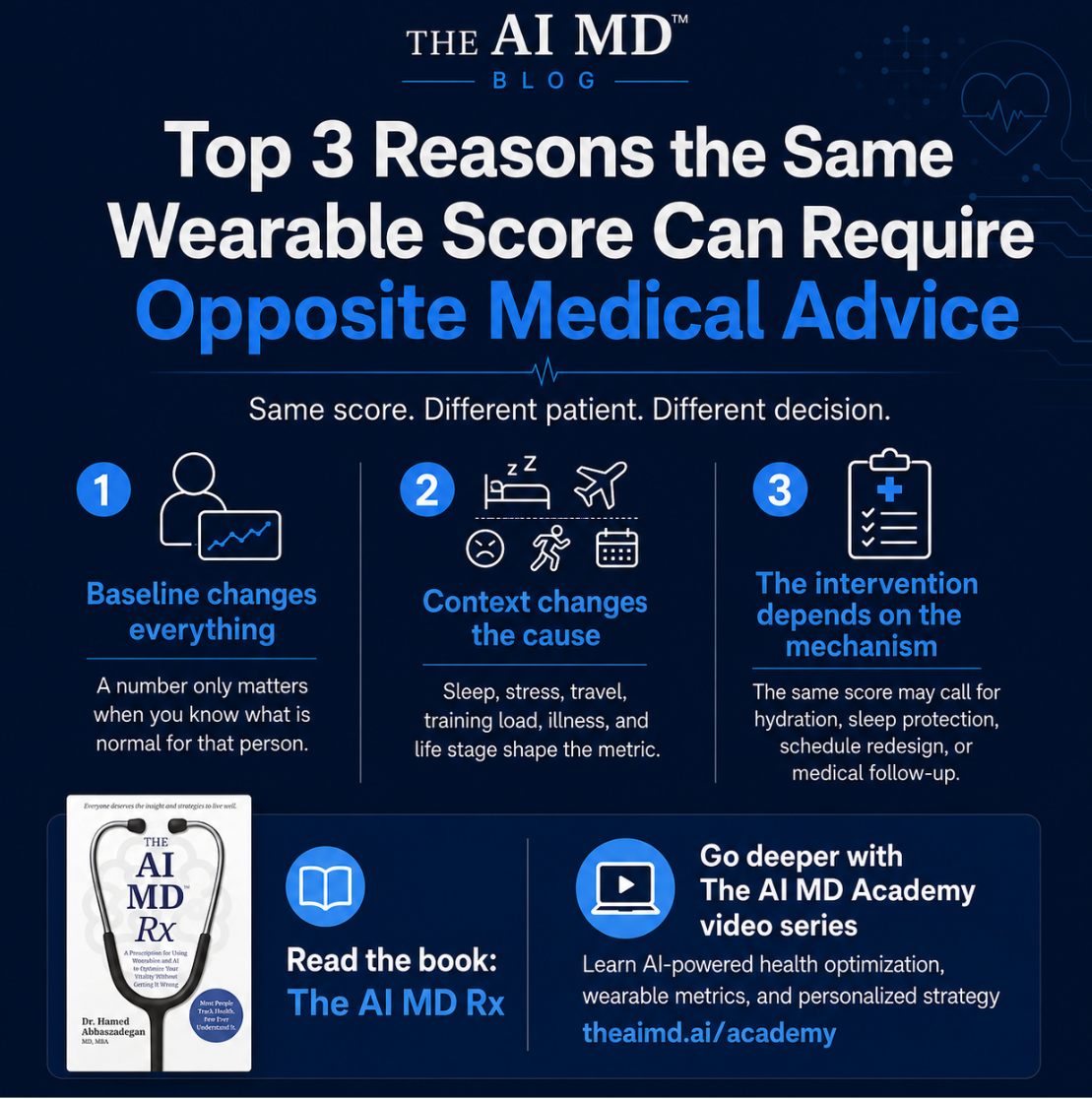
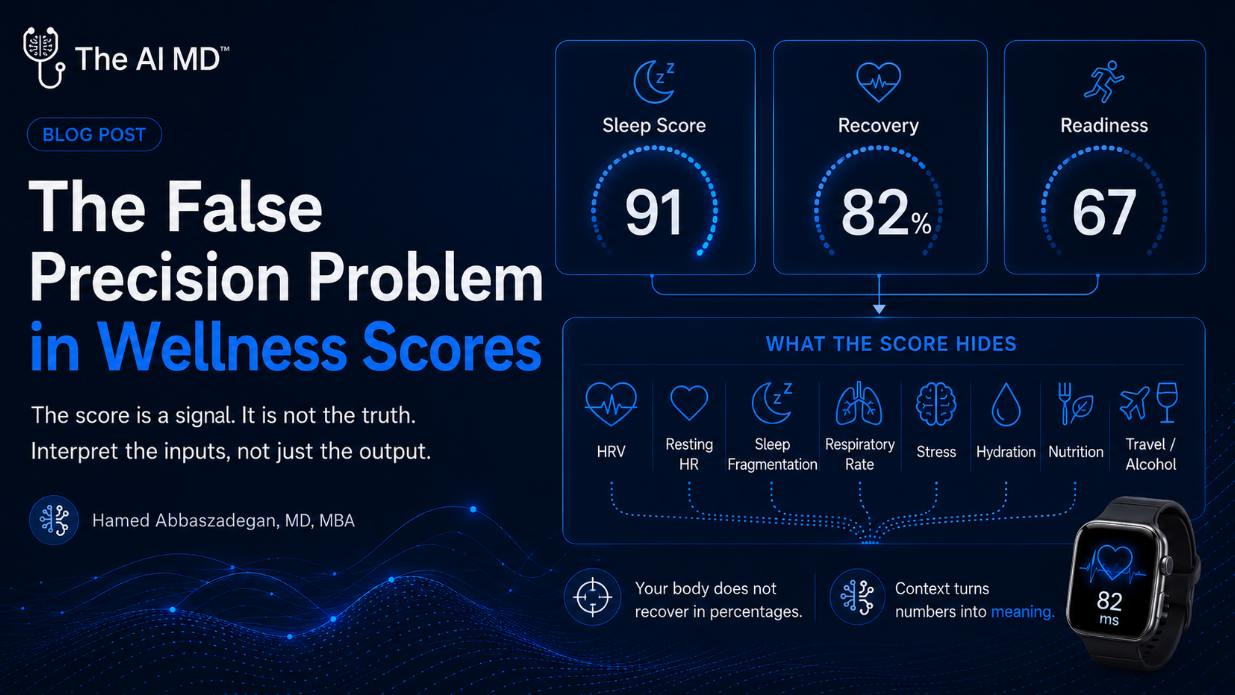
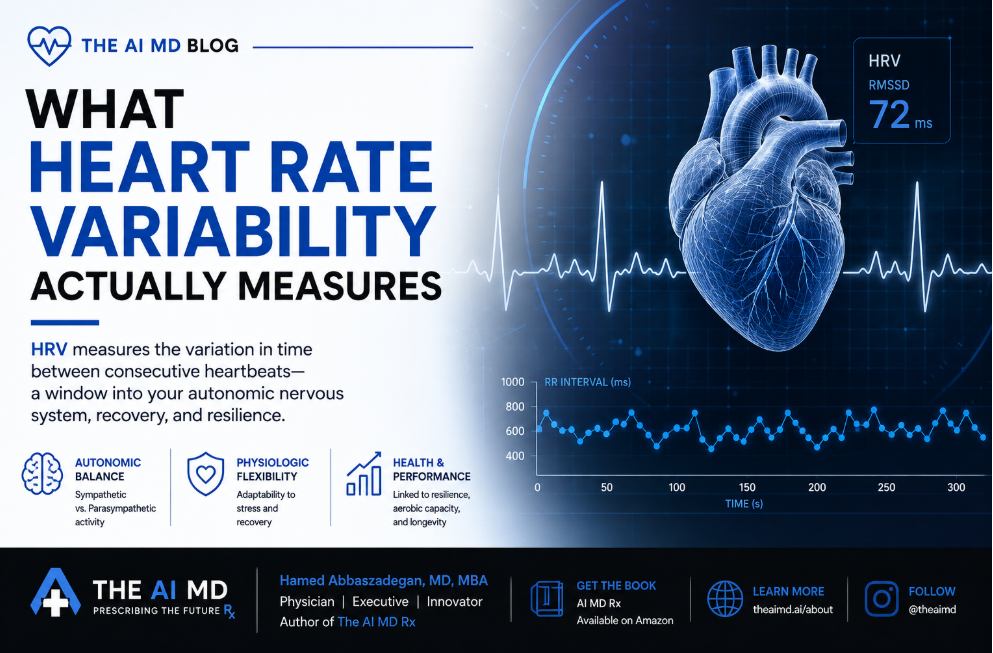
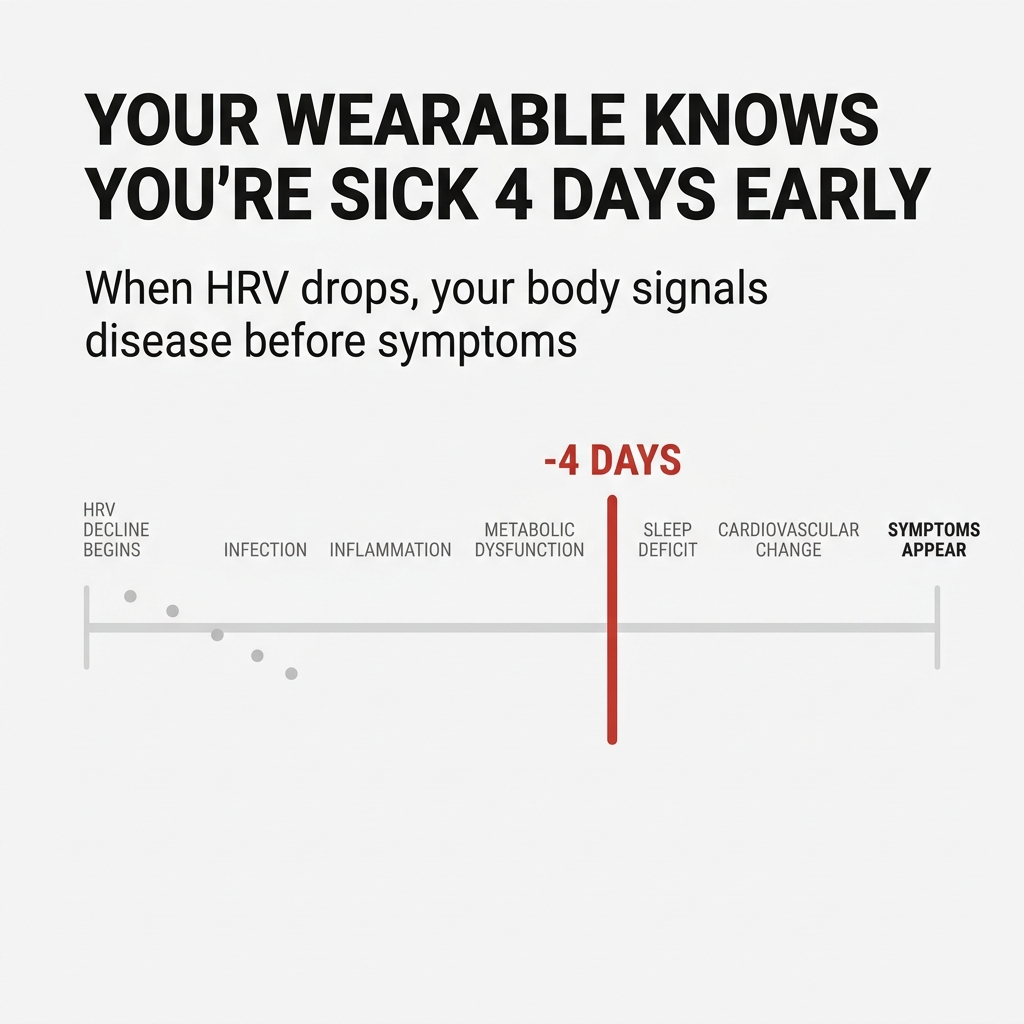
1) Clinical knowledge without data fluency misses the pattern I can tell you what HRV measures physiologically. That does not tell me what a 20% drop over three days means for my specific training load and stress profile.
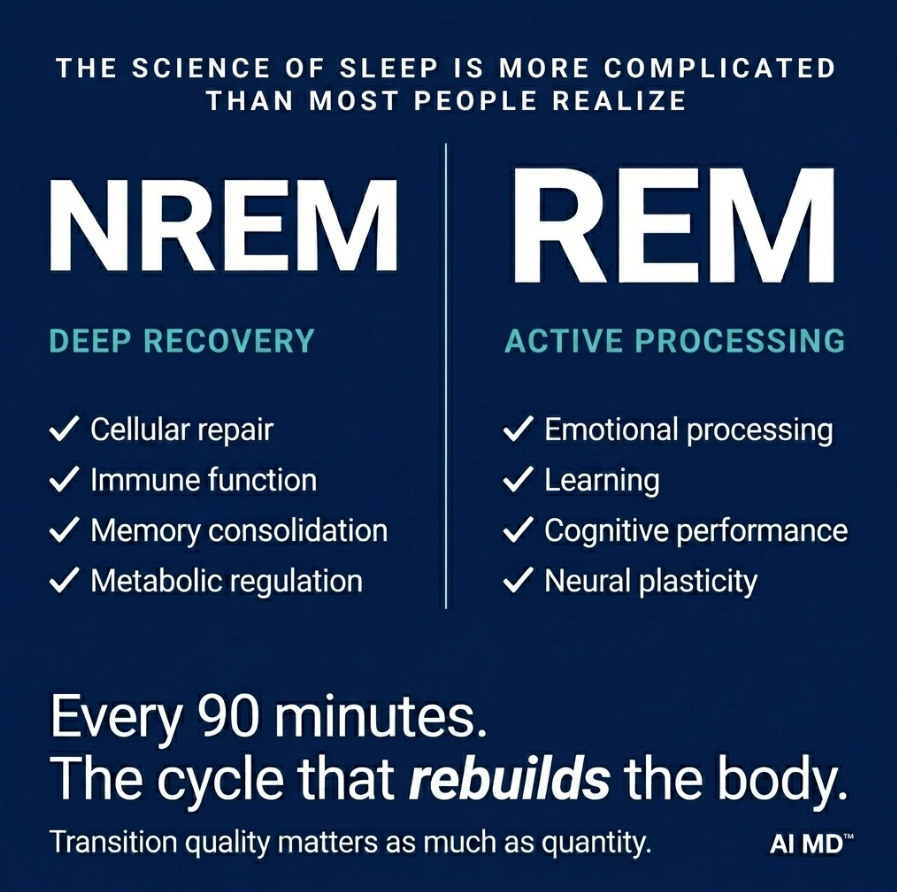
2) Data science without clinical knowledge misses the mechanism I can identify statistically significant trends in my sleep architecture. That does not tell me whether the cause is circadian misalignment, sleep apnea risk, or autonomic dysfunction.
3) Both without operational expertise misses the intervention I can diagnose the problem. I can quantify the pattern. But knowing which intervention actually works at scale requires implementation experience most clinicians never get.
This is why most physicians do not have the data science background. Most data scientists do not have clinical training. Most wellness coaches have neither. I operate at the intersection of all three. Not three separate skill sets. One integrated capability.
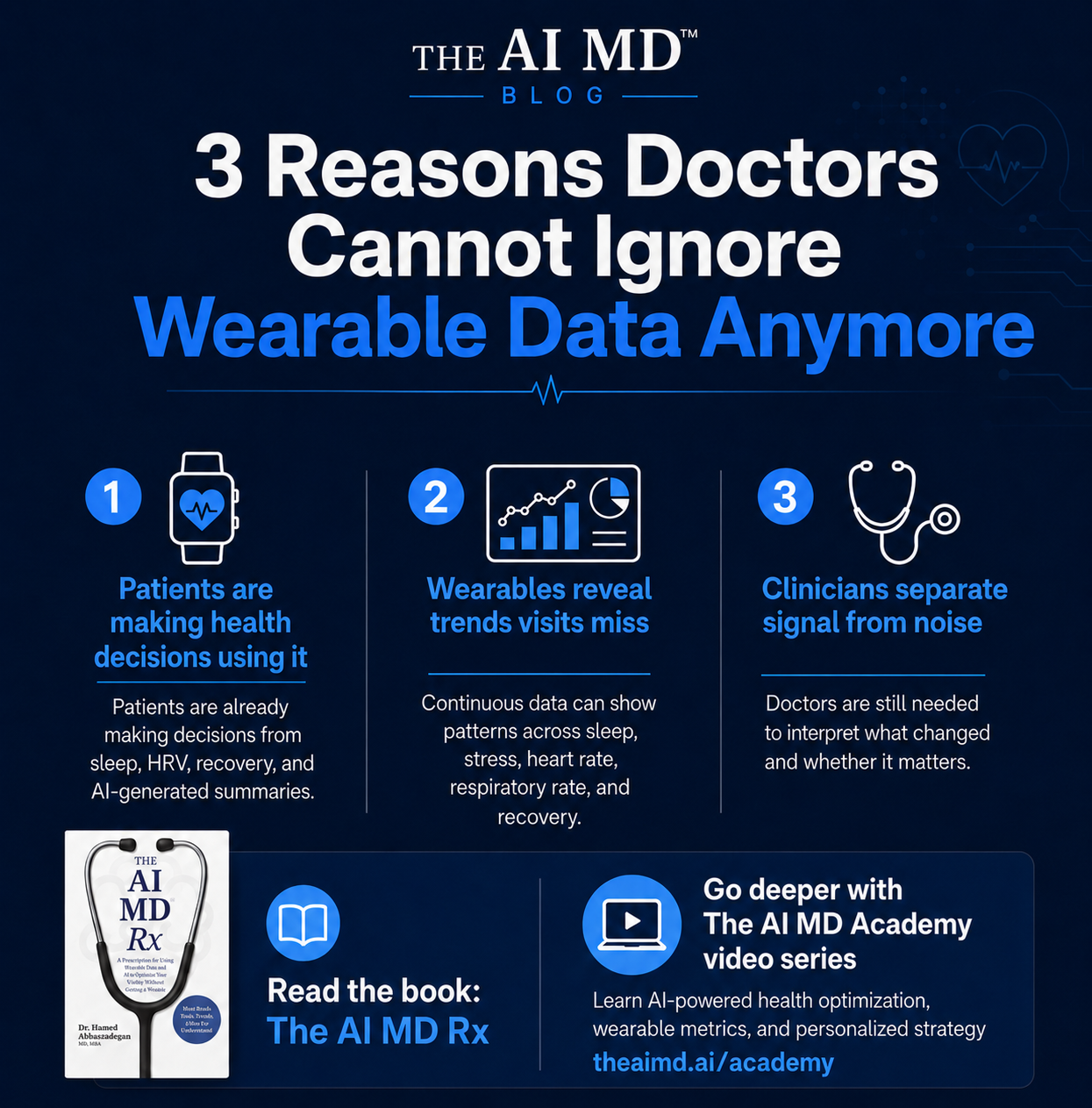
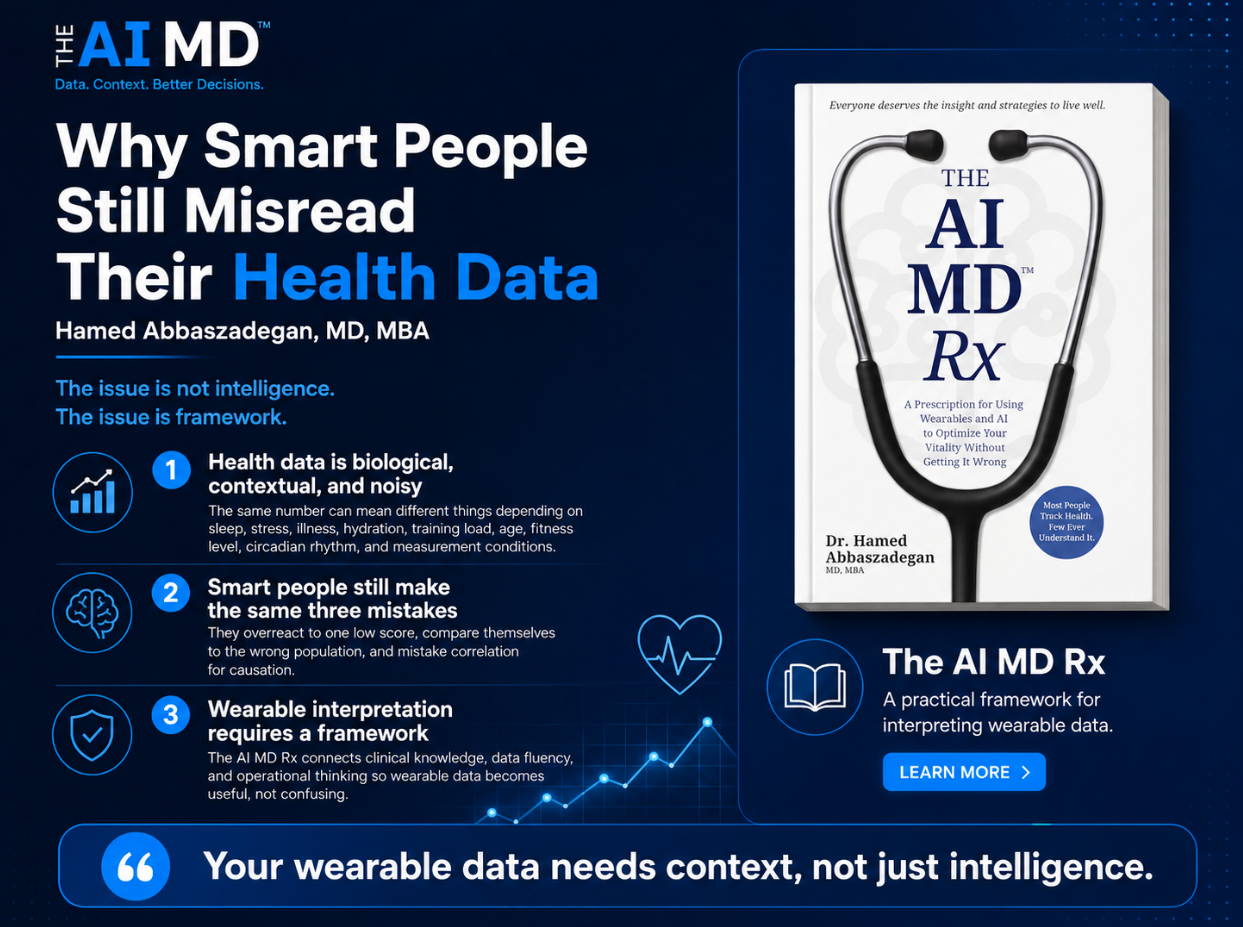
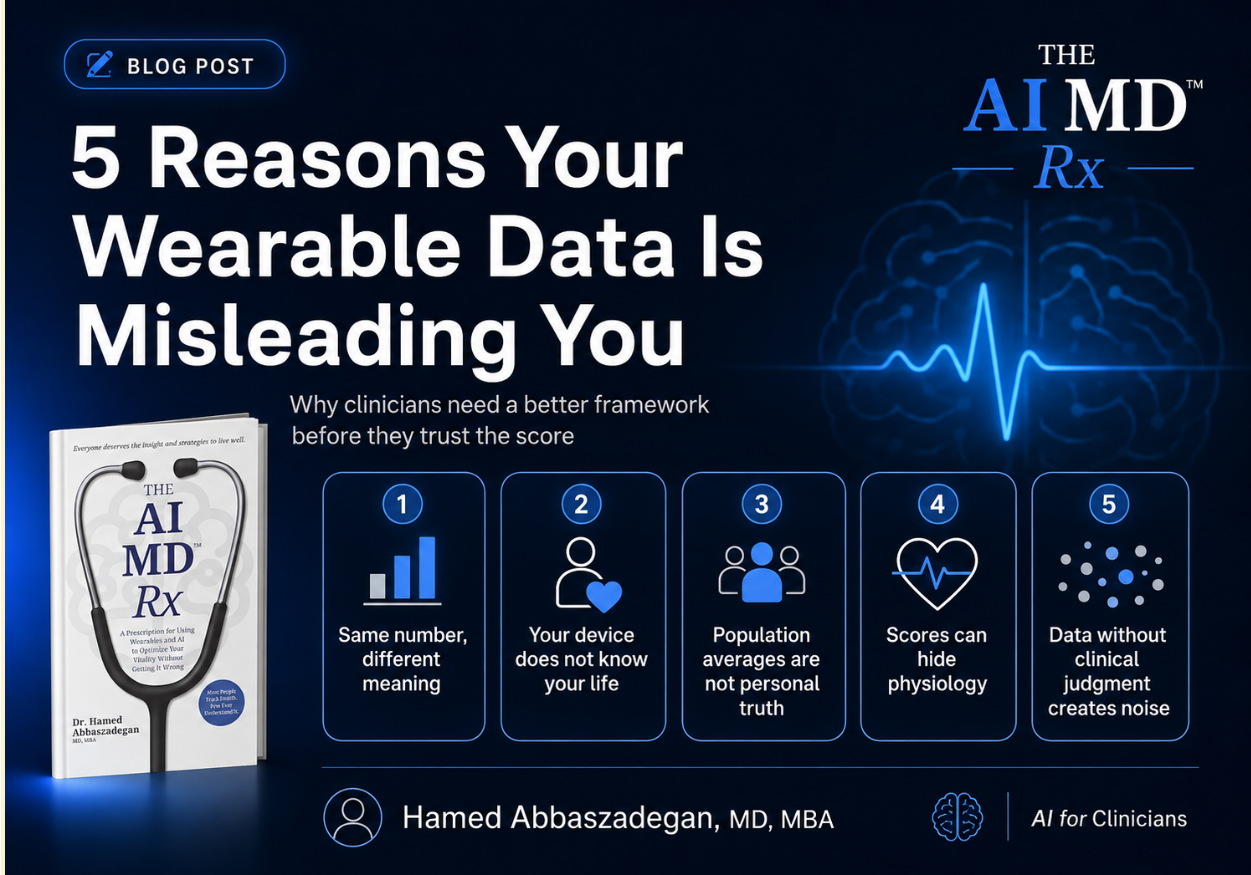
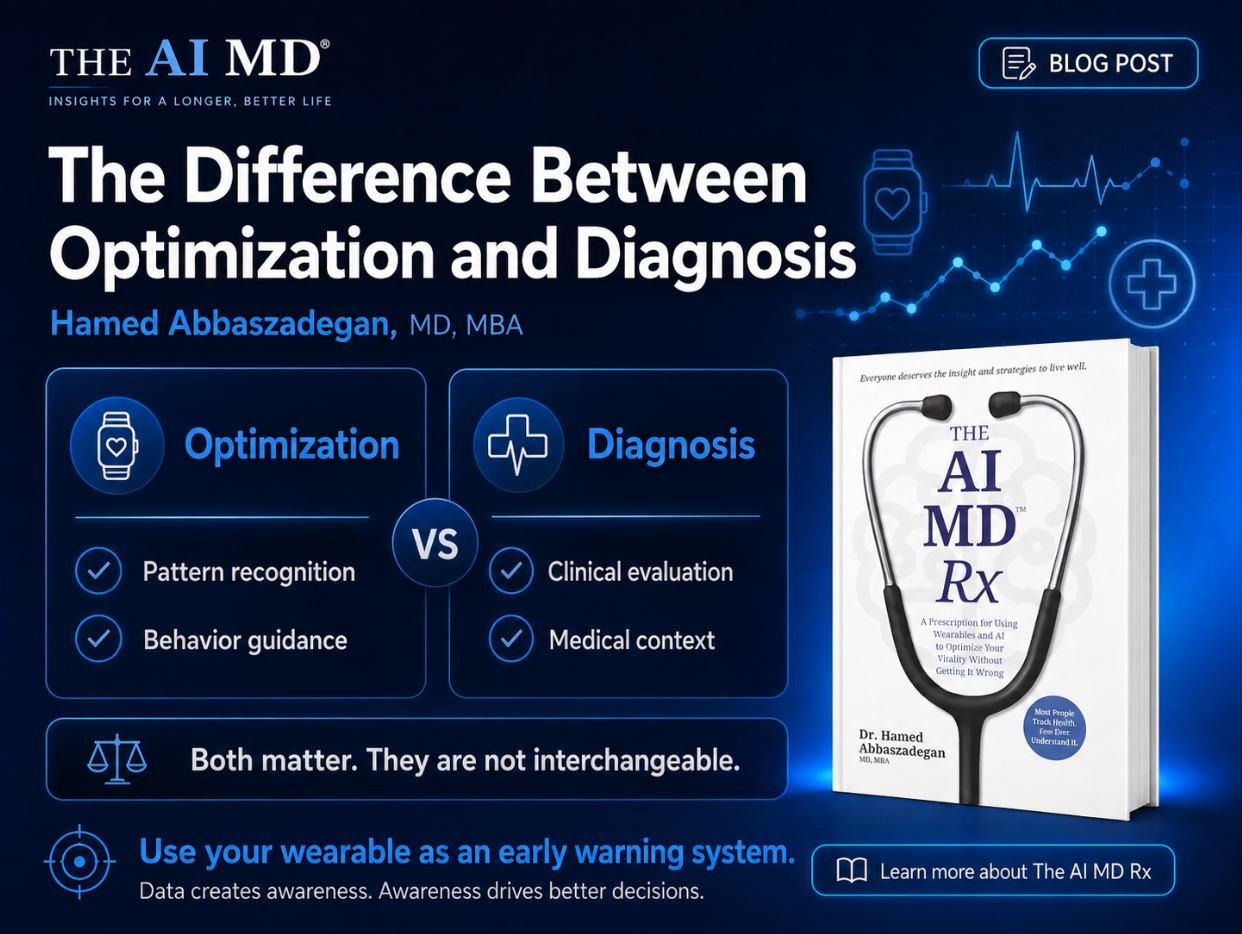
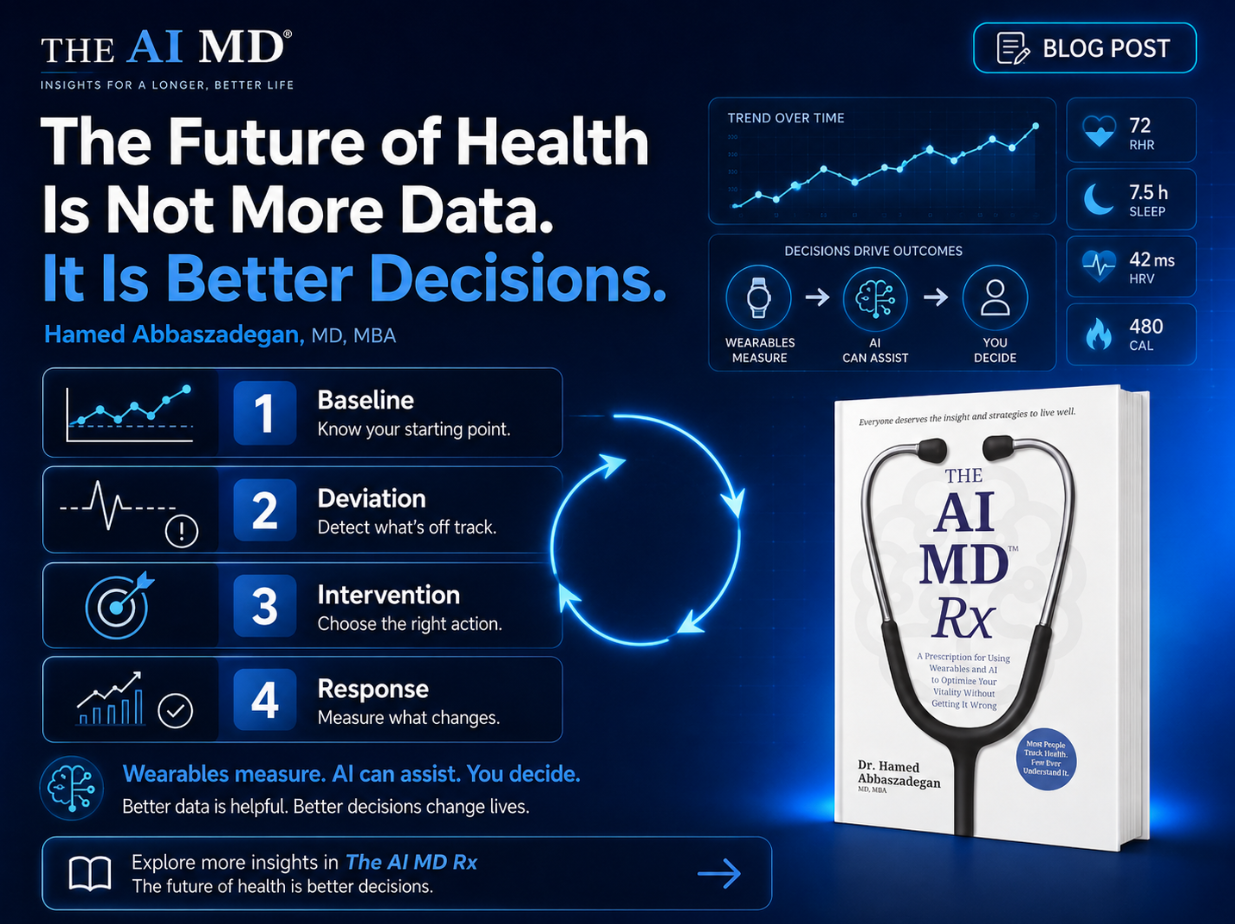
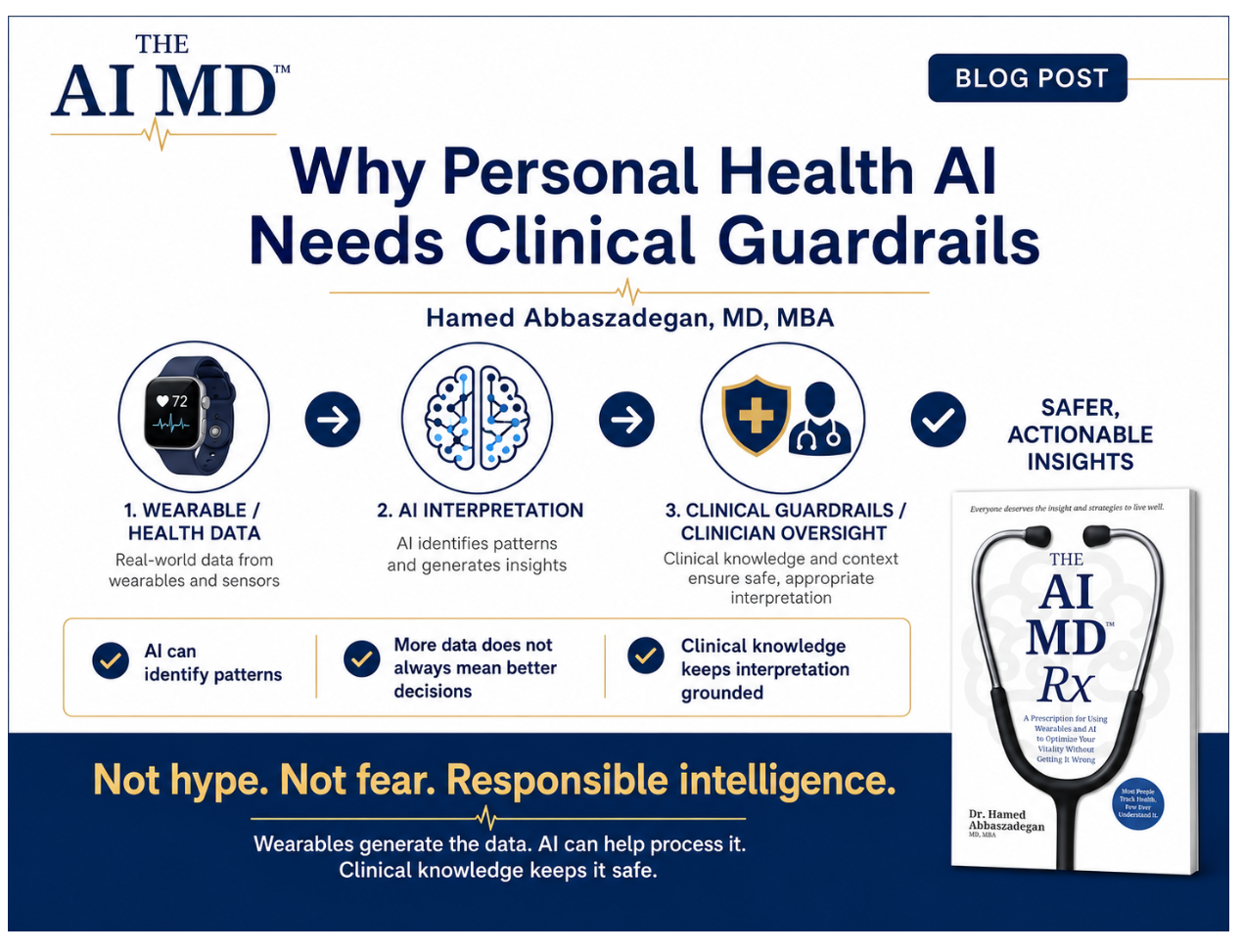
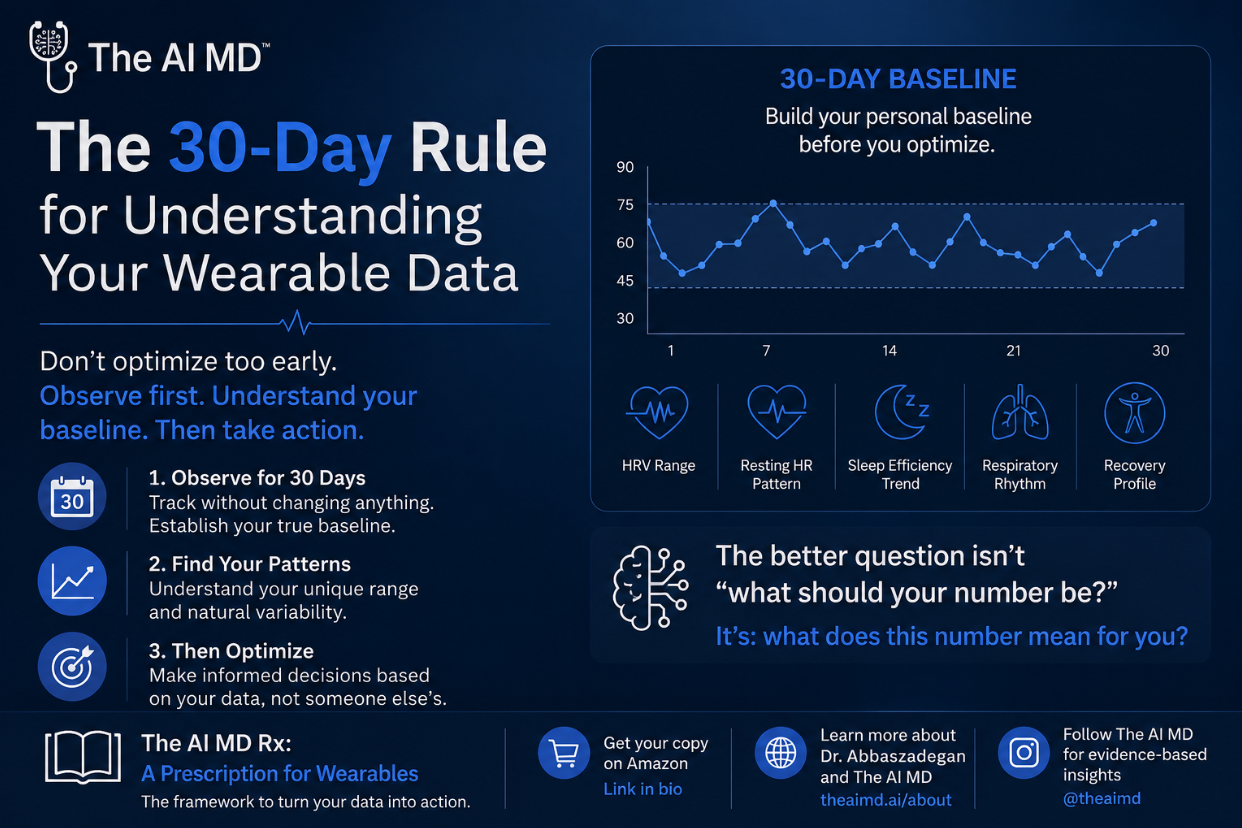
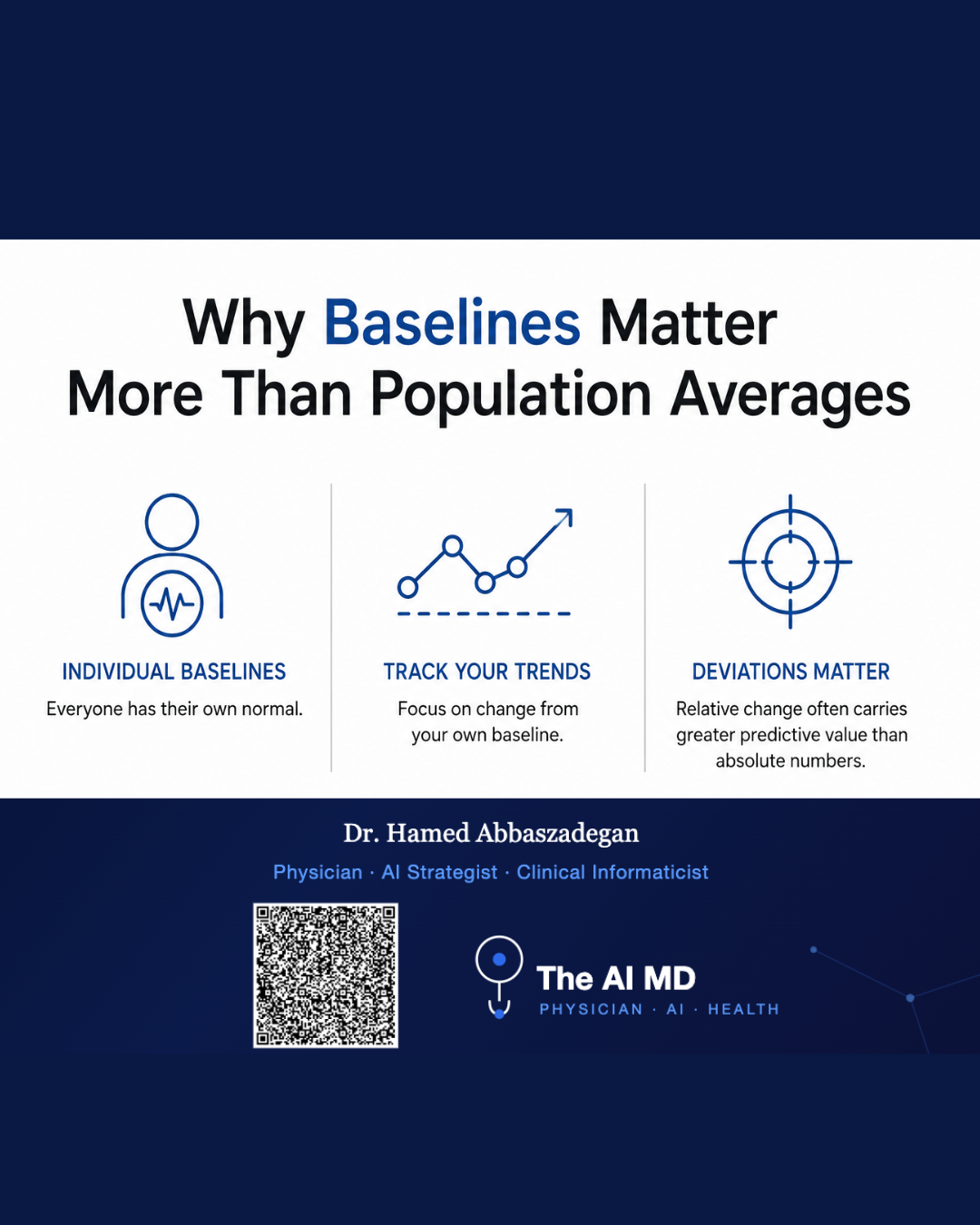
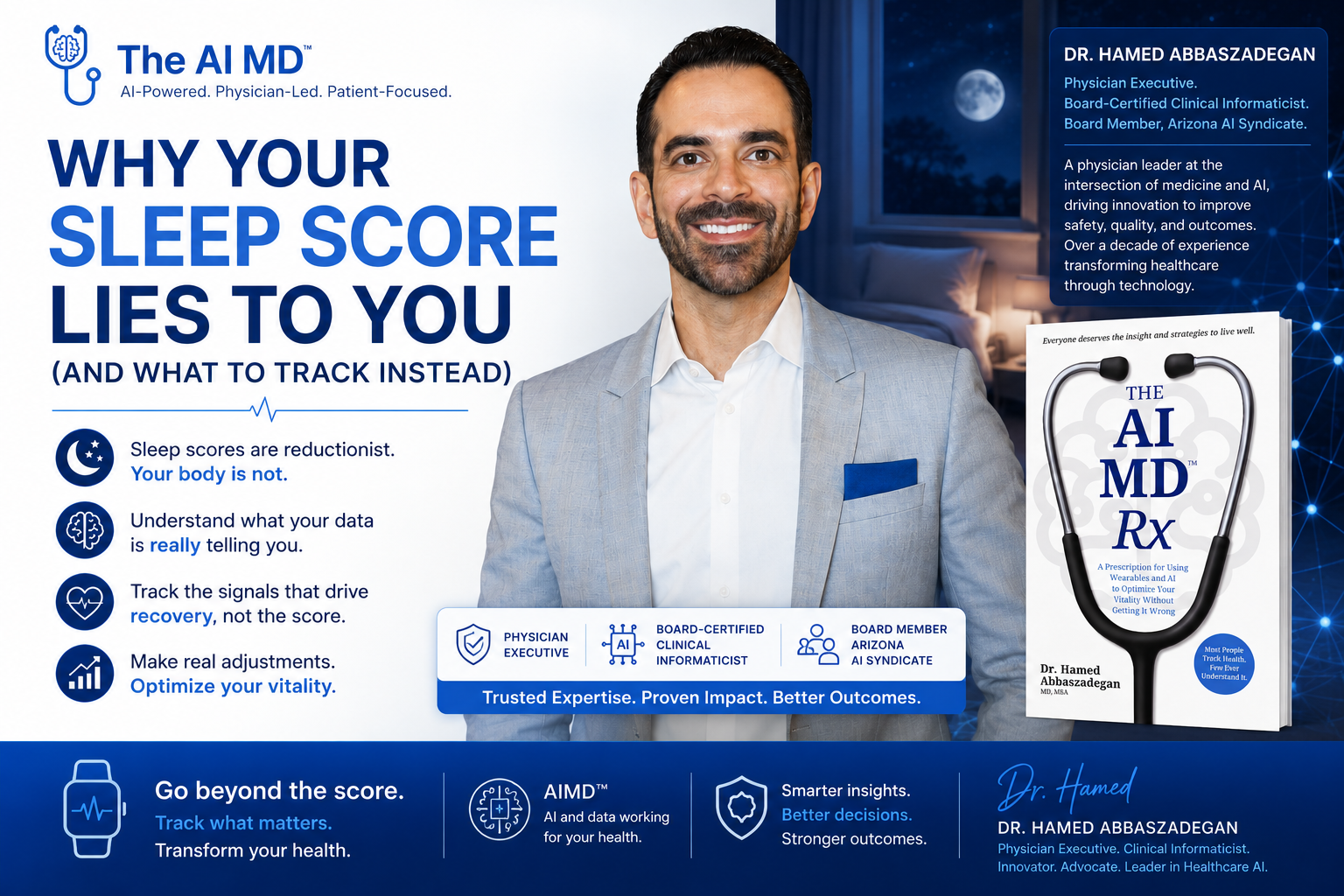
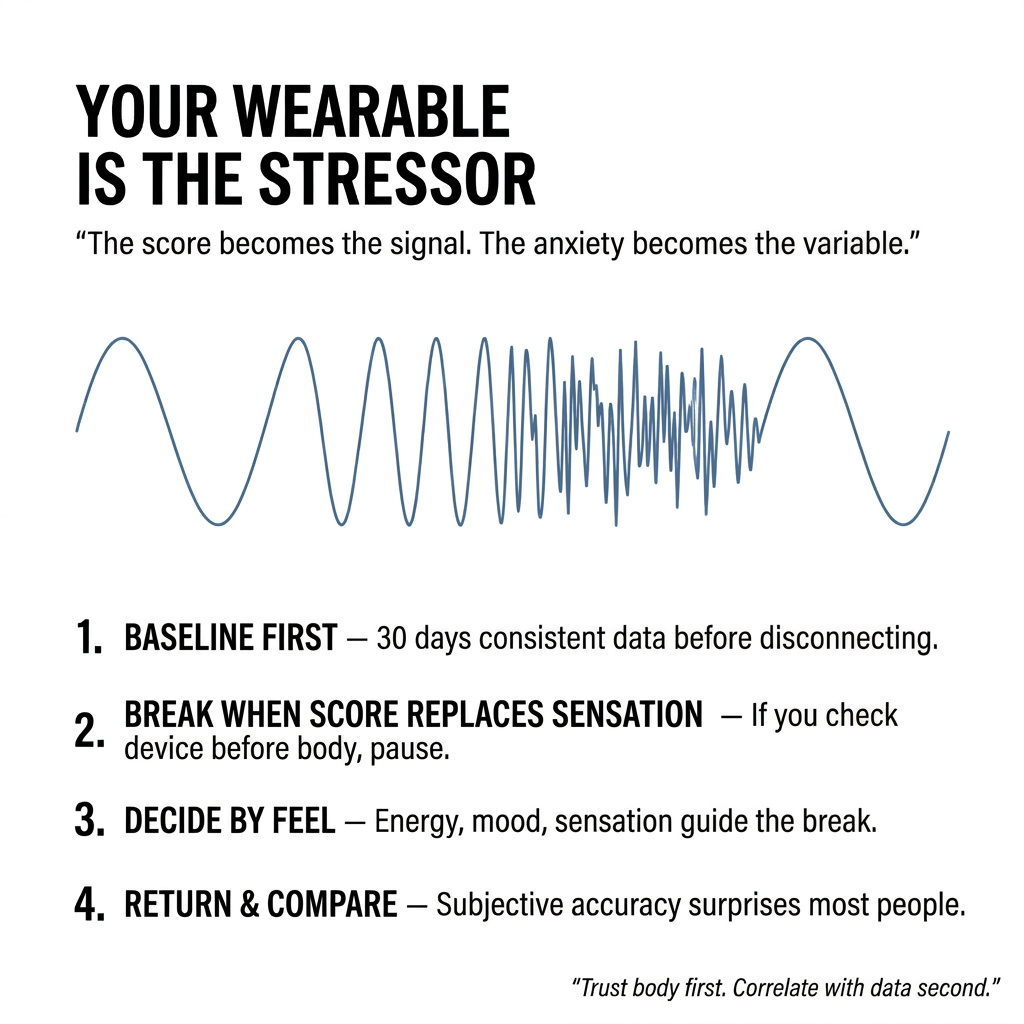
The AI MD Rx is the framework I built for myself, then refined across years of clinical informatics work, then structured for anyone wearing a device. Not theory. Not academic research. The exact interpretation protocol that translates what you are measuring into what you should do about it. You establish your personal baseline. You recognize meaningful deviation. You distinguish signal from noise. You design interventions before disease states develop.
The technology exists. The data exists. The frameworks exist.
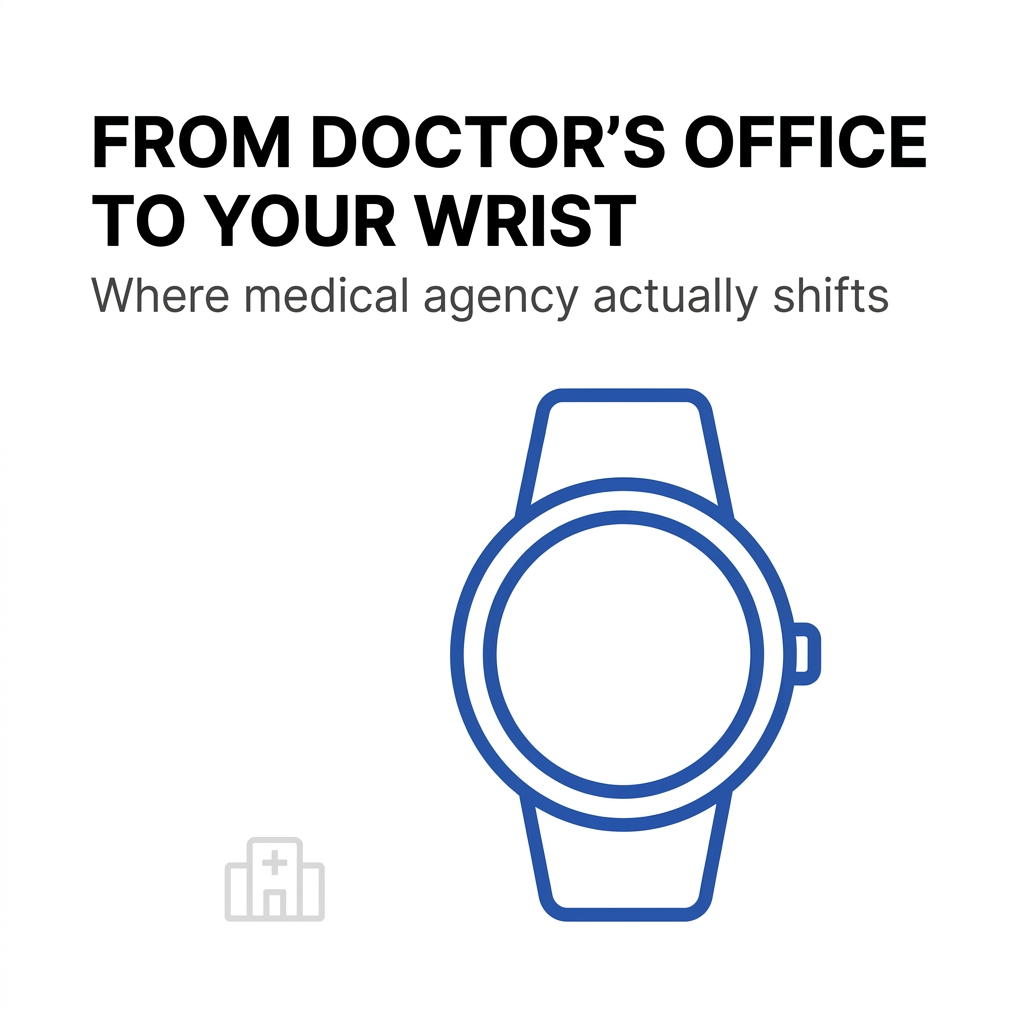
What you do next determines whether your wearable becomes the most powerful health tool you own or just another expensive step counter.
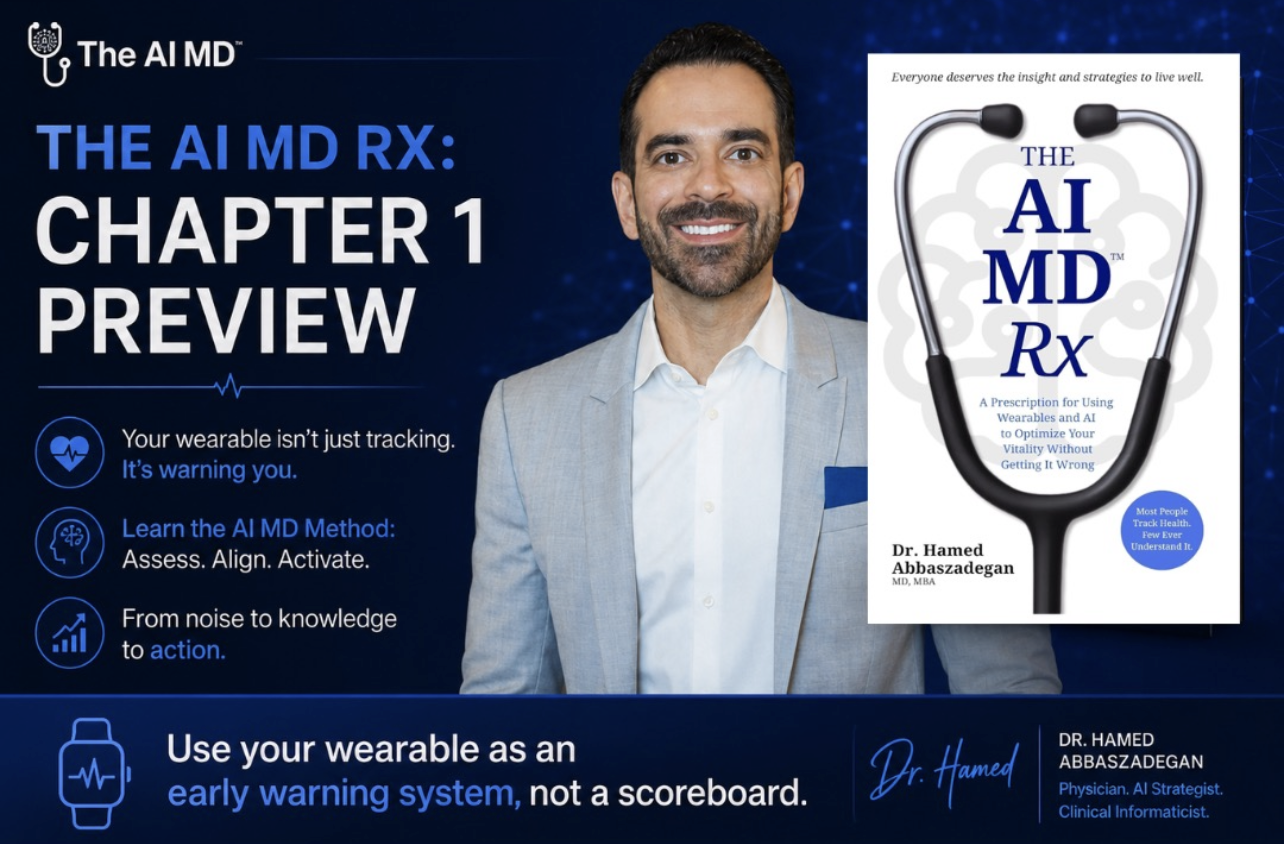
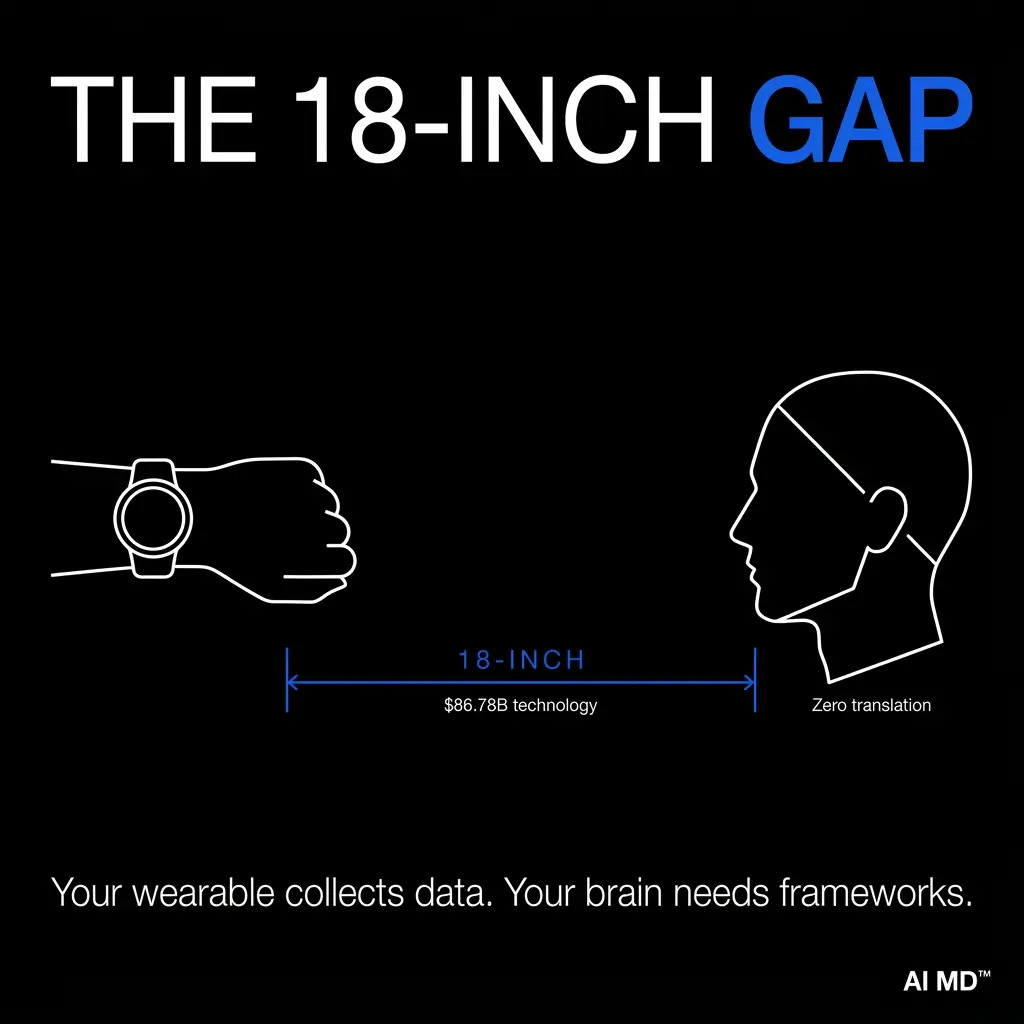
The problem is not your device. The problem is the 18-inch gap between your wrist and your brain. Get The AI MD Rx and start translating your data into action. Your wearable is already doing its job. Now it is time to do yours.
📖 Get your copy on Amazon:
https://www.amazon.com/AI-MD-Rx-Prescription-Wearables/dp/B0H38BTM83
🌐 Learn more about Dr. Abbaszadegan and The AI MD:
https://theaimd.ai/about
📲 Follow The AI MD for evidence-based insights on AI, digital health, wearable technology, longevity, and the future of medicine:
https://www.instagram.com/theaimd/






%20(1880%20x%20940%20px)%20(3%20x%204%20in)%20(1).png)


.png)


Stay Connected
If you’d like these insights delivered straight to your inbox, you can sign up below. You’ll receive evidence-based perspectives on AI in healthcare, practical implementation guidance, and updates on speaking engagements and media appearances.